Opinion: When exams fail students — rethinking evaluation in Indian education
India’s exam-centric model confuses memory with knowledge, speed with intelligence, and language proficiency with understanding


By Stany Steevan
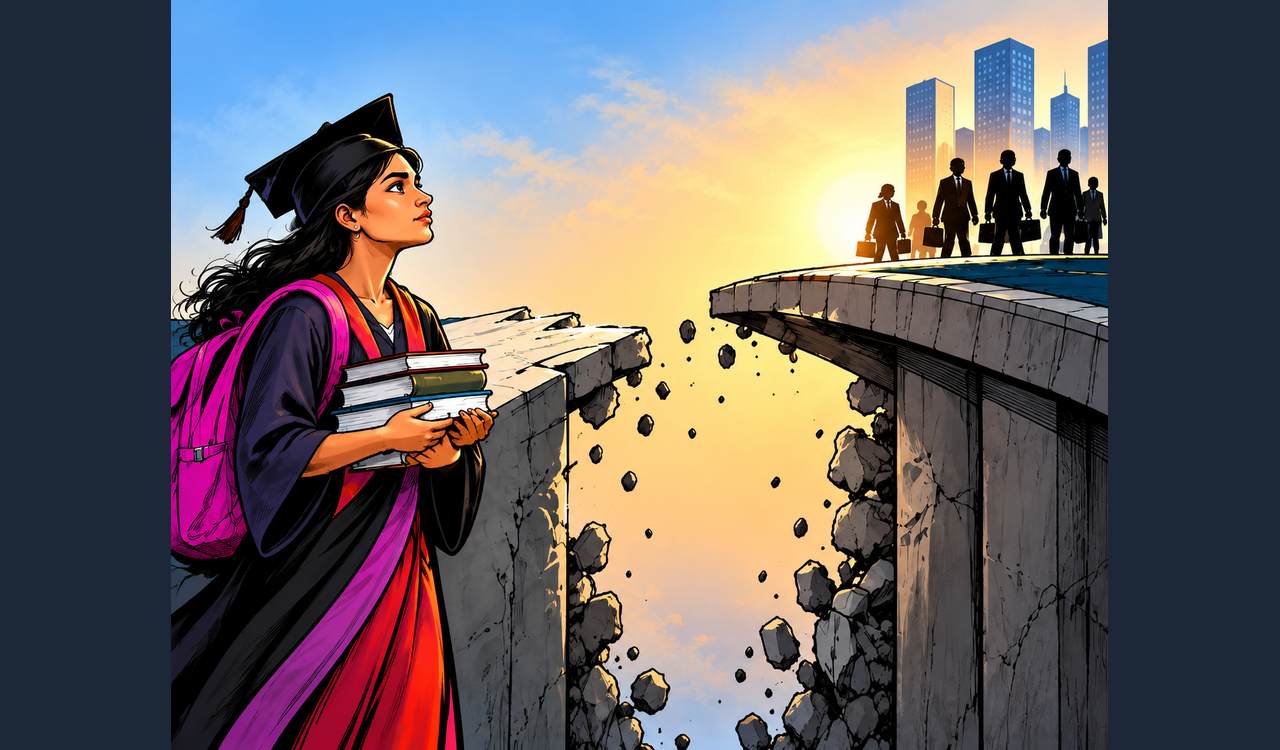
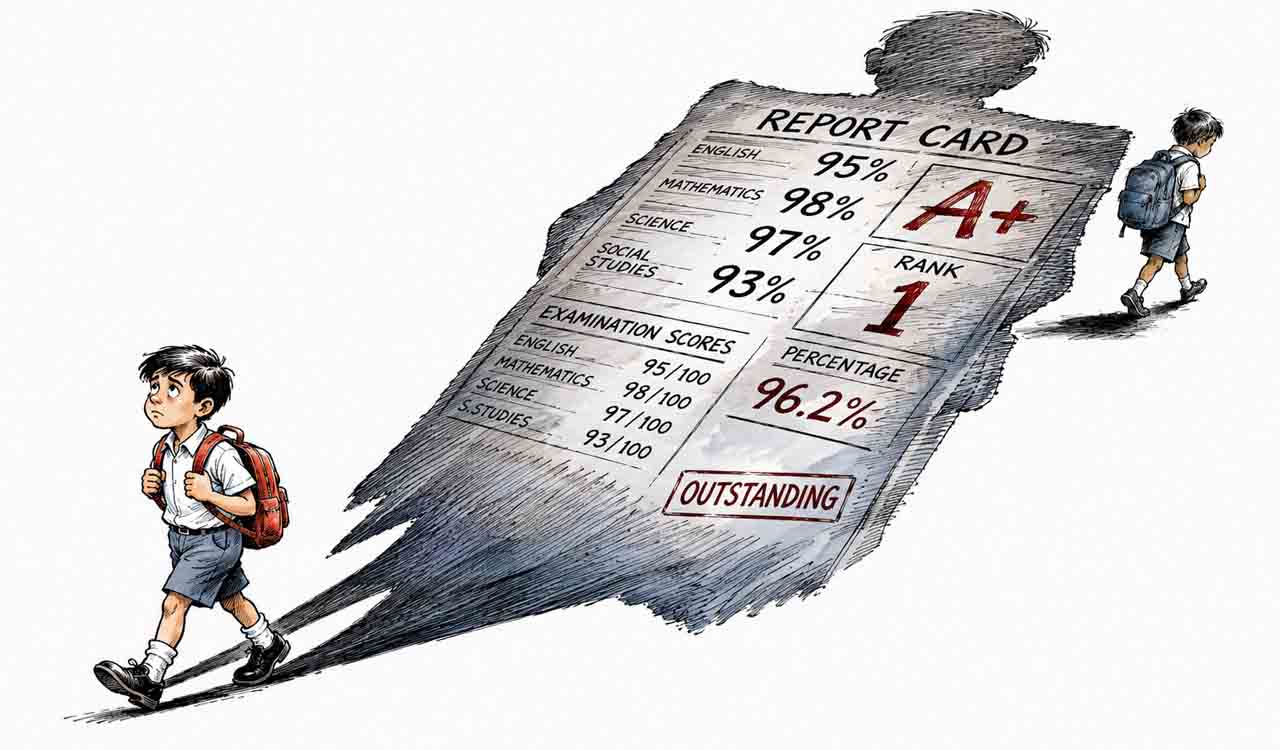
In India, the academic journey of a student often culminates in a number, a percentage, a rank, or a grade. That number becomes a social identity. It determines college admissions, career pathways, parental pride, and, in many cases, self-worth. Every year, board exam results dominate headlines, and toppers are celebrated as symbols of excellence. But beneath this celebration lies a serious educational question: can a three-hour written examination truly measure intelligence, talent, and human potential? The answer, increasingly, appears to be no.
Also Read
India’s examination system, inherited largely from colonial administrative structures, was designed to filter, rank, and classify students. It was never designed to understand them. Even today, despite educational reforms, the system remains deeply examination-centric.
Success in education is still narrowly equated with performance in written tests, often under rigid time constraints and standardised formats. This model presents a structural problem: it confuses memory with knowledge, speed with intelligence, and language proficiency with understanding.
Lived Reality
A student may deeply understand a concept yet fail to express it effectively in exam language. Another may memorise entire textbooks and reproduce them with precision, earning high marks without genuine comprehension. In such a system, assessment becomes less about learning and more about performance.
The consequences are visible everywhere. One of the most powerful cultural critiques of this system came through Taare Zameen Par, where the protagonist, Ishaan, struggles with traditional academics but possesses extraordinary artistic imagination. Though fictional, the story reflects the lived reality of countless Indian children. Many students are labelled “weak” simply because their strengths lie outside the narrow framework of written examinations.
This is not an isolated concern. Howard Gardner, a leading educational psychologist, argued that intelligence is not singular but multiple, encompassing linguistic, logical, spatial, interpersonal, musical, bodily-kinesthetic, and other domains. Yet schools primarily reward only two types of intelligence: linguistic and logical.
What happens to the child who is brilliant in design, leadership, innovation, or practical problem-solving? Often, they remain invisible. Consider the case of Thomas Edison, who was once dismissed by formal schooling but went on to revolutionise technology. Or Steve Jobs, whose educational journey did not fit conventional standards but whose creativity reshaped the digital age. Even in India, many entrepreneurs and innovators succeeded not because of examinations but because of skills developed beyond classrooms.
Classroom Teaching
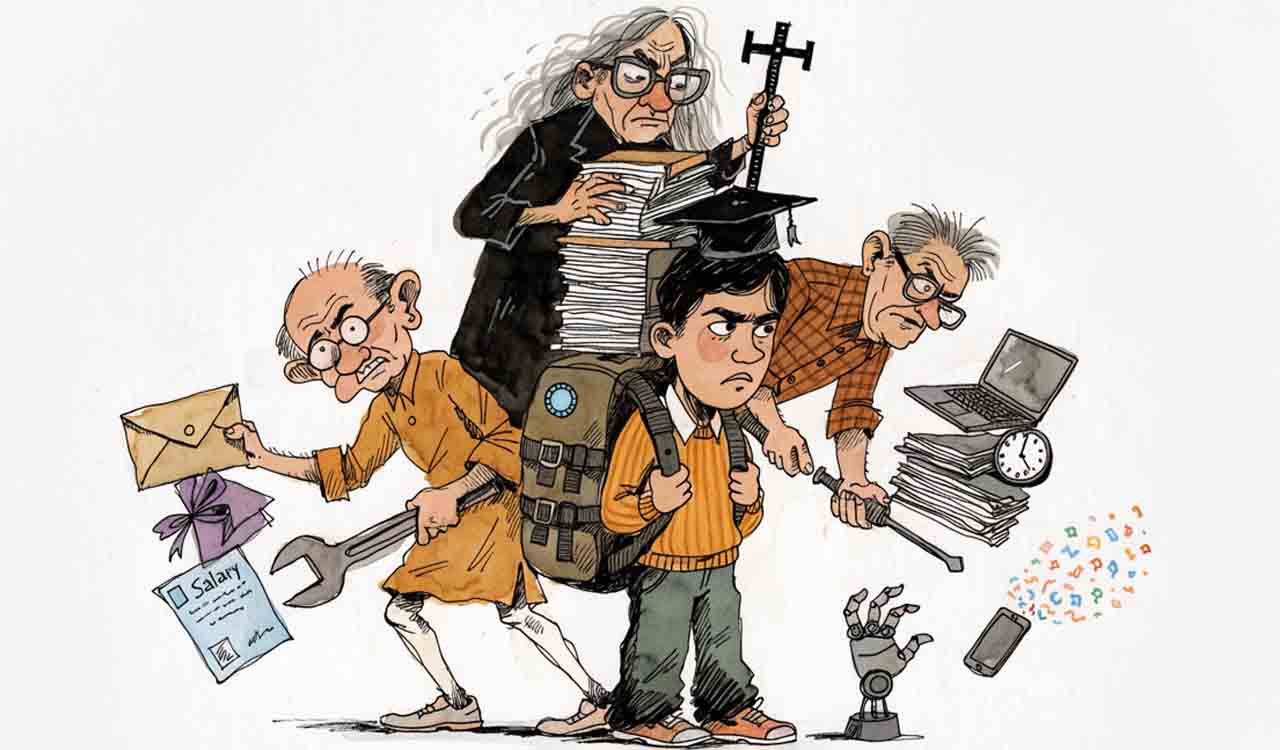
The problem becomes sharper when one examines the structure of classroom teaching itself. In many schools, learning has become exam-oriented rather than knowledge-oriented. Teachers often “teach for the test,” focusing on likely questions, model answers, and scoring strategies. Students learn quickly that success lies not in curiosity but in prediction. This creates a culture of academic coaching rather than intellectual growth.
A marks-driven culture risks losing talent that cannot be measured by a three-hour test. The real tragedy is not when a student fails an exam, but when an exam fails to recognise a student’s potential
The same applies to commerce education. While science students at least engage in laboratory experiments and arts students may participate in fieldwork or performances, commerce education often remains heavily theoretical. Students learn concepts like marketing, accounting, and entrepreneurship without practical exposure to markets, business behaviour, or financial decision-making.
Imagine teaching marketing without asking students to sell a simple pen on the street. That experience would teach negotiation, consumer psychology, confidence, and rejection-management skills that no textbook chapter can adequately convey.
Similarly, a child making a paper boat understands design, symmetry, material limitations, and experimentation in ways no written explanation can replicate. This is the essence of experiential learning. John Dewey famously argued that education is not preparation for life; education is life itself. Learning must emerge through experience, reflection, and interaction with the world.
Unfortunately, our assessments rarely reward this kind of learning. The pressure generated by examinations also creates serious psychological consequences. Every year, exam seasons bring anxiety, depression, and emotional distress among students. For many, marks become a measure of identity. A poor score is not seen as temporary academic feedback but as a permanent personal failure.
This culture is dangerous. It narrows aspirations and discourages risk-taking. Students stop asking questions because questions are not rewarded. They stop experimenting because mistakes reduce marks. Creativity declines because standardisation punishes originality. Even teachers become constrained. A teacher may wish to encourage discussion, projects, and field engagement, but institutional pressure to produce “results” often forces them back into rote pedagogy.
So, what must change?
First, assessment must become multi-dimensional. A student’s performance should be evaluated through a combination of written exams, practical tasks, projects, presentations, group discussions, and reflective journals. Written examinations should remain one component, not the only component.
Second, schools must integrate application-based questioning. Instead of asking students to define concepts, ask them how they would use them. For instance, instead of asking “What is demand?” in economics, ask: How would you increase demand for a local product in your town? This shift tests understanding, creativity, and contextual thinking.
Third, every discipline must include practical exposure. Commerce students should engage with local businesses, conduct market surveys, and participate in simulated enterprises. Political science students should observe governance institutions. Sociology students should conduct field interviews. Education cannot remain confined to textbooks.
Fourth, teacher training must evolve. Teachers need support in designing alternative assessments, facilitating experiential learning, and encouraging critical thinking. Assessment reform cannot happen without pedagogical reform.
Fifth, parents and society must redefine success. A child scoring 75% but possessing leadership, empathy, and innovation may be better prepared for life than a child scoring 98% through memorisation. Social attitudes toward marks need transformation.
India’s National Education Policy (NEP) has already recognised some of these challenges by emphasising competency-based learning and reducing rote memorisation. But policy vision must translate into classroom reality. That requires institutional courage. Examinations are not inherently wrong. They provide structure, discipline, and measurable standards. But when they become the sole measure of worth, they distort education itself.
The purpose of education is not to produce high-scoring answer sheets. It is to produce thinking individuals, responsible citizens, creative minds, and capable human beings. A society that values only marks risks losing talent that does not fit conventional moulds. The real tragedy is not when a student fails an exam; it is when an exam fails to recognise a student.
If India is serious about building an innovative, skilled, and humane generation, it must reform how it evaluates learning. The future belongs not to those who memorise best, but to those who think, adapt, and create. And no three-hour exam can fully measure that.

(The author is Assistant, Office of the Controller of Examination, St Joseph’s University, Bengaluru)

Related News