Opinion: Politics of India-US trade ties — can strategic convergence survive economic friction?
Strategic convergence has brought India and the US closer, but competing economic interests could expose the limits of their partnership


By Martand Jha
The India-US economic relationship has evolved into a geopolitical quagmire, especially for India. Over the past one and a half decades, bilateral economic relations between the two nations have been seen as an extension of the broader strategic framework in which their ties have developed. Key areas such as defence, investment, trade, technology and the movement of skilled professionals have become increasingly interconnected.
Also Read
However, ties between the two nations have continued to face significant friction. The primary reasons include differences over tariffs and market access, agricultural protection, digital regulation, and intellectual property. In simple terms, differences in industrial policies have cast a shadow over the overall strategic partnership.
In February 2026, the two countries announced a framework for an Interim Agreement following trade negotiations that began in February 2025. This was a significant development in bilateral economic ties. The negotiations not only addressed customs duties but also reflected differing understandings of what constitutes a fair trading relationship, as well as competing economic priorities.
The Trump administration emphasised reciprocity, pressing India to reduce its tariff and non-tariff barriers, and expand American access to the Indian market. India sought greater access for its exports while attempting to protect sensitive domestic sectors and preserve policy space for development-related priorities.
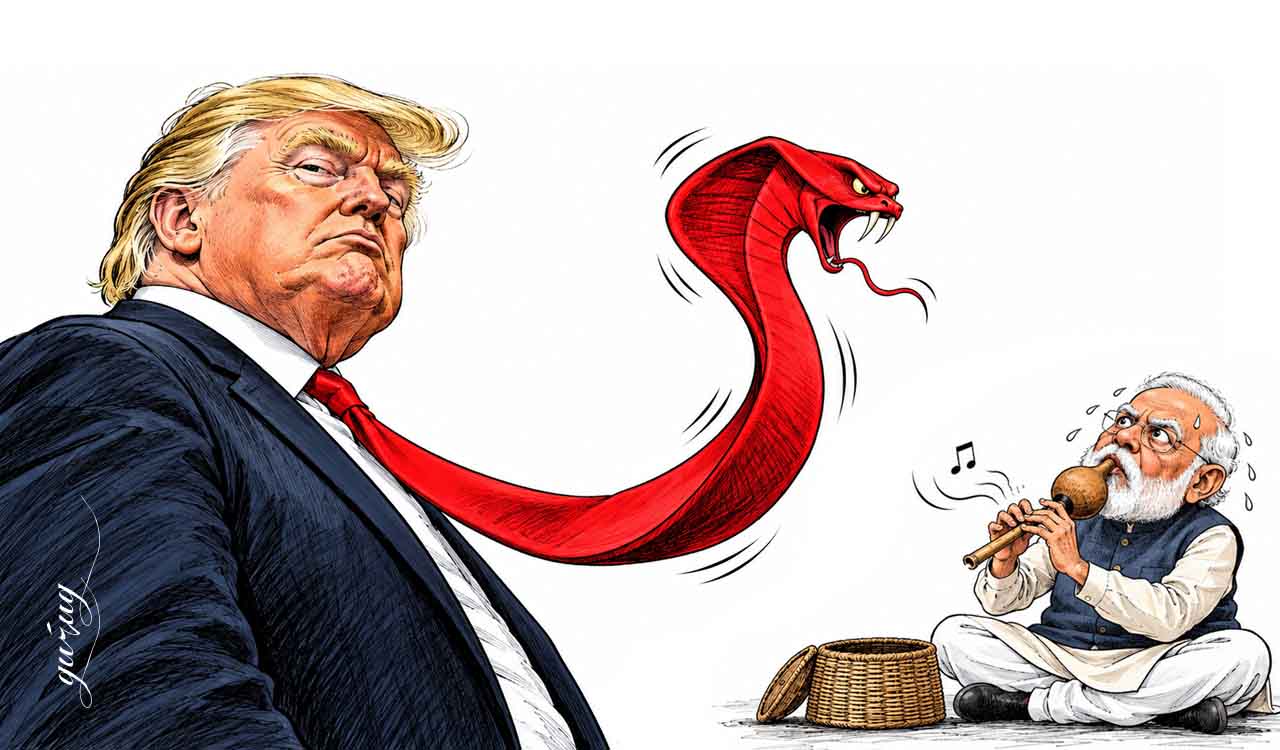
This shows that the politics of bilateral ties extends beyond trade negotiations and agreements. It also highlights how two large democracies seek to balance domestic economic interests with geopolitical objectives. However, this raises a fundamental question: can strategic convergence between the United States and India withstand their many disagreements over trade and economic policy?
Economic Bargaining
The transformation of India-US bilateral ties since the early 2000s has been remarkable. The US perception of India moved from the Cold War-era suspicion to a strategic partnership encompassing defence, technology, energy and commerce. Arguably, the bilateral economic ties have become one of the key foundations of this transformation.
The combined trade in goods and services between the two reached an estimated $239.6 billion in 2025. Trade in goods stood at around $149.1 billion, while services amounted to about $90.4 billion. During the same time, the US recorded a goods trade deficit of $58.4 billion with India.
These numbers show why trade has become a politically sensitive issue in Washington. The US increasingly views its ties with India through the lens of reciprocity. In 2025, US trade policy placed an emphasis on large and persistent goods trade deficits, tariff disparities, and non-tariff barriers. India’s relatively high average import tariffs became a focus of US trade policy.
From India’s perspective, tariffs were not merely instruments of protectionism. Historically, they have served several purposes, including protecting key industries, promoting domestic manufacturing and preserving a degree of policy flexibility for the government. As a result, tariff reductions also have implications for India’s domestic politics. For instance, agricultural imports are a politically sensitive issue, particularly in northern Indian States, given the large population dependent on the country’s agricultural sector.
The trade negotiations were shaped by this differing perspective. While the Trump administration approached the issue from the lens of reciprocal market access, the Indian side had to balance its international commitments against domestic, economic and political constraints.
Trade Negotiations
Along with the trade negotiations, the two countries also initiated the US–India COMPACT initiative, linking commerce with technology, defence and strategic cooperation. They set a target of more than doubling their bilateral trade to $500 billion by 2030. The US adopted an assertive negotiating stance on tariff policy. This became evident in April 2025, when the Trump administration introduced its reciprocal tariff framework. Washington argued that differences in tariff rates and non-tariff barriers contributed to persistent US trade deficits. India responded with concern to the policy.
The outcome of India-US trade deals will hinge not just on diplomacy, but on how both governments navigate domestic political pressures
The political impact was much greater than its immediate commercial effect. Tariffs thus became a key negotiating instrument for the US, putting pressure on New Delhi to open up certain parts of its market while also giving India an incentive to seek concessions from Washington.
The Indo-US joint statement in February 2026 marked a significant step in bilateral ties. The two sides announced a framework for an Interim Agreement and also reaffirmed their intention to continue negotiating a broader Bilateral Trade Agreement. Under that framework, India had agreed to eliminate or reduce tariffs on a wide range of US industrial and agricultural products. The US, in turn, announced that it would apply an 18% reciprocal tariff rate to qualifying Indian goods, subject to the agreement’s terms and conditions.
The proposed framework also covered a range of areas, including non-tariff barriers, digital trade, standards, supply chains, technology and economic security. This demonstrates that the negotiations were no longer confined to the conventional customs duties.
Politics of Reciprocity
Reciprocity is central to the Trump administration. The US has argued that American firms face unusually high barriers when attempting to enter Indian markets. These firms have expressed particular concerns about agricultural goods, medical devices, information and communications technology and industrial products.
India’s position has been more complex. It has gradually reduced tariffs on several products, including certain items identified by the US as ‘priority goods’. Both parties also discussed greater market access for selected American agricultural and medical products. However, greater market access for US exporters has domestic consequences in India. American agricultural exports could compete with Indian producers and potentially put them under considerable pressure. Similarly, reductions in industrial tariffs could affect domestic manufacturers that have benefited from tariff protection.
New Delhi wants to attract foreign investments and integrate Indian companies into global supply chains, while also developing domestic manufacturing capacity. Although these objectives can complement each other, they can also come into conflict.
The negotiations have therefore revealed the distinctly political character of trade policy. A concession that appears economically beneficial when assessed in terms of aggregate trade can trigger opposition from a particular industry, region or interest group. Consequently, the final shape of the trade agreements will depend not only on diplomatic negotiations but also on how Washington and New Delhi manage their domestic stakeholders.

(The author is an independent writer based in New Delhi and holds a doctorate from the School of International Studies, Jawaharlal Nehru University)

Related News