Opinion: PV and India’s foreign policy
Despite heading a minority government, Narasimha Rao’s handling of foreign policy tells us a lot about his political acumen


By Akhil Kumar, Anudeep Gujjeti
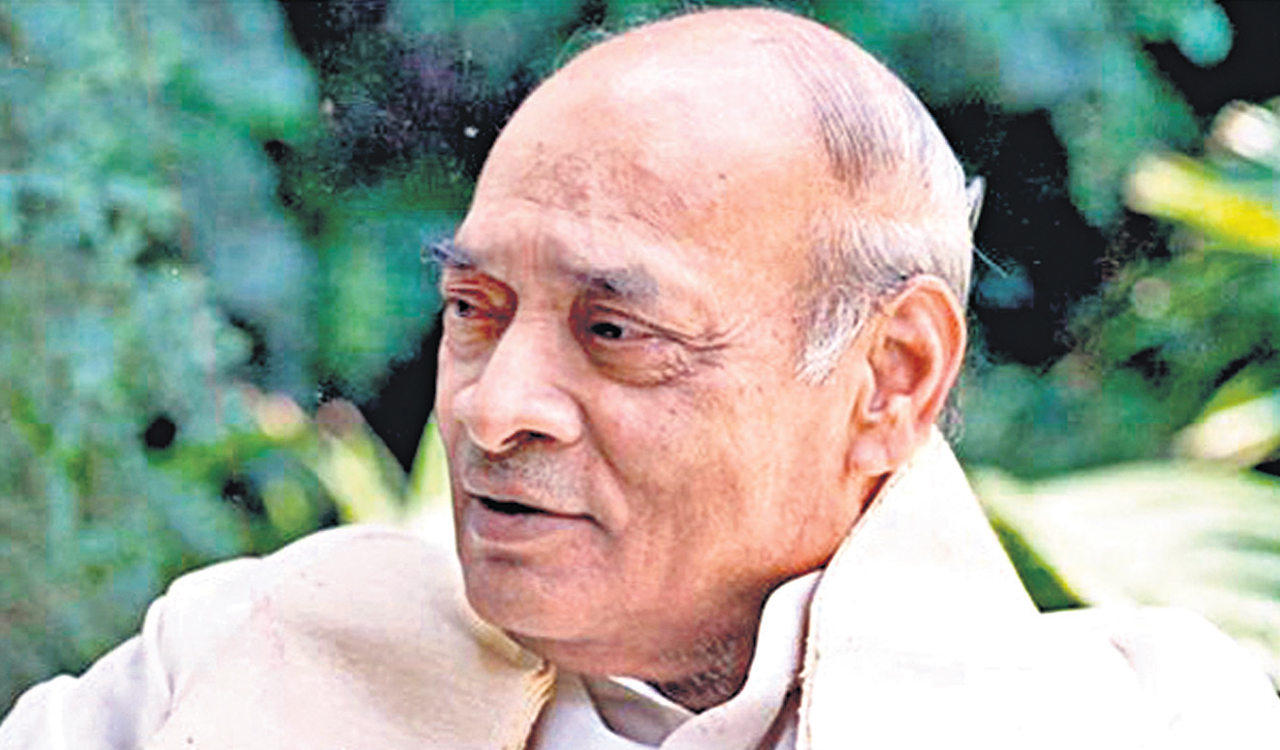
Although PV Narasimha Rao is widely recognised as a major political force behind the introduction of economic reforms in India, his instrumental role in shaping the foreign policy after the end of the Cold War and navigating India on the path of “multi-alignment” is also of paramount significance. When he took over as the Prime Minister in June 1991, global politics was undergoing a major churning. With the dissolution of the Soviet Union, India not only lost a major defence supplier but also a long-standing and time-tested strategic partner. In the aftermath of the Cold War, the United States of America emerged as the sole superpower. Simultaneously, the Indian economy was in shambles due to the balance of payments crisis owing to the failure of its economic model.
These systemic changes also included globalisation, dilution of ideological component and bipolarity, Gulf war, weakening of Non-Aligned Movement (NAM) and domestic compulsions such as crumbling economy. These compelled India to reorient its foreign policy towards major nations by shedding the inhibitions of the past. By adopting a pragmatic approach in his response to the changing international political scenario, PV Narasimha Rao, played a very important role in cosying up to several countries such as the US, Japan and Israel, although some of his decisions were criticised internally by his party members only.
Policy towards West Asia
For instance, his decision to upgrade diplomatic relations with Israel in January 1992 was criticised by Arjun Singh and Mani Shankar Aiyar because until then India was closely inclined towards Palestine and embarked upon a policy towards West Asia largely through its dependence on remittances and oil from Arab states. Although India recognised Israel in September 1950, it did not upgrade diplomatic ties with Israel until 1992. In a departure from the past voting patterns, for the first time, India voted along with the US in the 1991 United Nations resolution to revoke the designation of Zionism as “a form of racism and racial discrimination.”
In the same year, he convinced Yasser Arafat when he visited India over India’s formal upgradation of diplomatic ties with Israel. Simultaneously, Iraq’s invasion of Kuwait also weakened the Palestinian cause in the late 1980s and the early 1990s altered the diplomacy between New Delhi and West Asia. Rao displayed a deft balancing act in dealing with Israel and Palestine in the most challenging times and fostered ties with the Jewish state prior to his US sojourn. Apart from upgrading ties with Israel, he also engaged with Iran in 1993 to counter Pakistan as the Kashmir dispute was simmering between New Delhi and Islamabad.
Look East Policy
Owing to the domestic economic compulsions, and the impressive economic strides by some of the Southeast Asian nations famously called the “Asian Tigers”, which attracted foreign investment by following the export-led growth model, Rao was encouraged to cultivate closer economic relations with the Southeast Asia nations. It is in this context that Rao launched the ‘Look East’ policy in the early 1990s to economically integrate the Southeast Asian region with India.
After opening up the economy, South Asia, the immediate neighbourhood of India, showed little prospects for economic engagement. Whereas Rao believed that cooperation with Southeast Asian countries could help India improve its domestic economic growth by bringing in best practices and technology.
Eventually, in 1992, India became a sectoral dialogue partner and by 1996, it became a full dialogue partner and member of the ASEAN Regional Forum.
Initially, the Look East policy was conceived to integrate and improve the strategic importance of Southeast Asia within the foreign policy calculus of India but finally, it evolved including East Asian countries such as Japan and South Korea.
This policy withstood the politics and got institutionalised to a great extent that it was reformulated into the “Act East” policy under Prime Minister Narendra Modi. The policy expanded beyond its initial emphasis on economic integration to encompass increased security cooperation and political interaction by enlarging its geographical extent from Southeast Asia to include East Asia and the emerging Indo-Pacific.
Nuclear Question
On the nuclear front, as a continuity of India’s nuclear programme started by Indira Gandhi in her tenure as the Prime Minister, Rao played a crucial role in taking it forward. In 1985, Narasimha Rao in his capacity as Defence Minister in Rajiv Gandhi’s cabinet was a major stakeholder in shaping it. In the subsequent years, as Prime Minister, he prioritised it and made the necessary equipment ready to carry it forward. After the demise of Rao in December 2004, Atal Bihari Vajpayee credited Narasimha Rao and called him the ‘true father’ of the nuclear programme. Rao exhibited remarkable non-partisanship and refrained from staking credit for his efforts in India’s nuclear tests in 1998.
The fact that PV Narasimha Rao conducted such a wide-ranging foreign policy by heading a minority government tells us a lot about his political acumen and leadership abilities. Both systemic and domestic factors posed serious challenges to the survival of India but Rao adeptly navigated the complex political landscape he inherited and steered India through it. Bharat Ratna was long overdue for such a leader and the current political dispensation rightly acknowledged the contributions of Narasimha Rao by transcending political considerations.
(Akhil Kumar is a PhD from the Department of Political Science University of Hyderabad. Anudeep Gujjeti is a PhD candidate, Department of Political Science, University of Hyderabad and Research Associate, Council for Social Development)

Related News