Opinion: Social Media, the accidental classroom
Social media is teaching all of us, all the time. The only question is whether we notice the lesson


By Nikhil Reddy
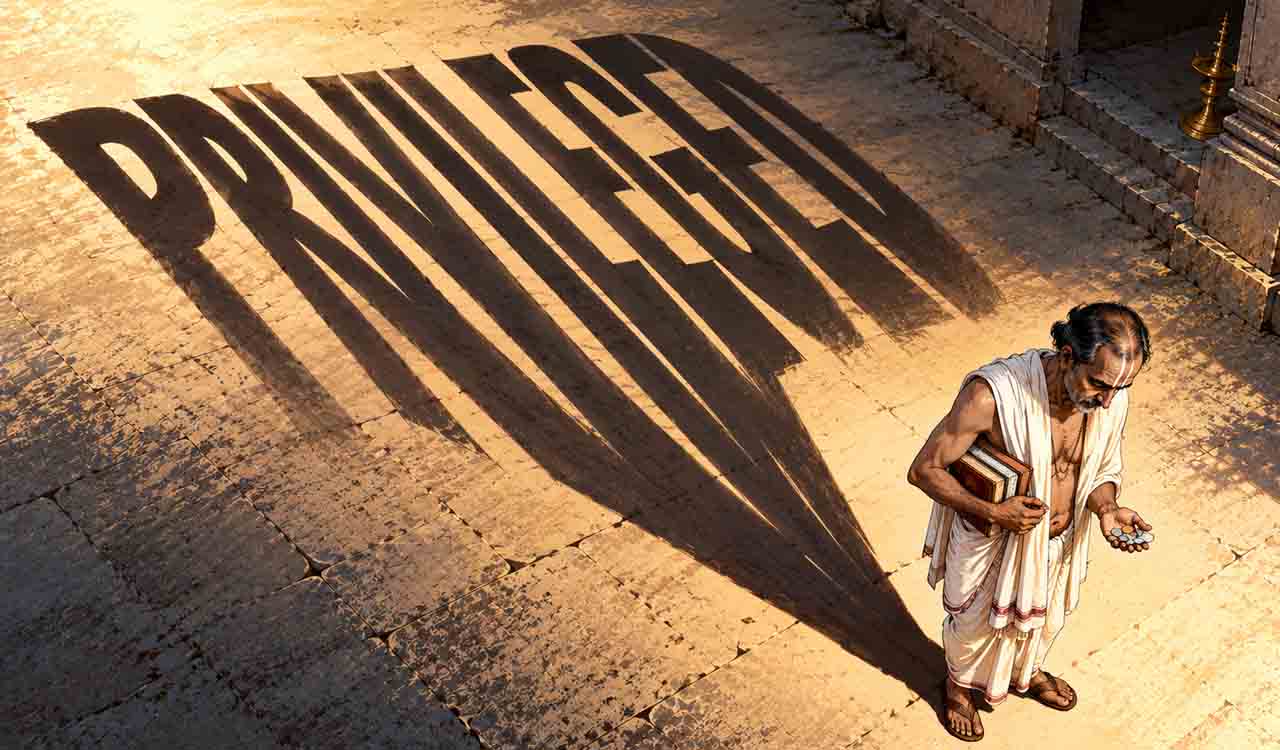
We call social media many things — entertainment, distraction, a way to kill ten minutes in a queue. We rarely call it what it has quietly become: a school. Nobody signs up, yet everybody attends. The moment a feed begins to move, it starts to teach us, not dates and facts, but something deeper. It shapes what we notice, what we want, what we find funny, and what we scroll straight past. And it charges a fee we barely feel ourselves paying: our attention.
Also Read
This kind of teaching has a name. Critics call it “public pedagogy,” a plain idea behind a heavy phrase, meaning simply that we are educated not only in classrooms but by the culture around us: by advertising, by television, and now by the endless scroll. The catch is that this teacher never announces the lesson. There is no syllabus on the wall and no exam we agreed to sit. We are being taught constantly, and largely against our will.
Real Virtues
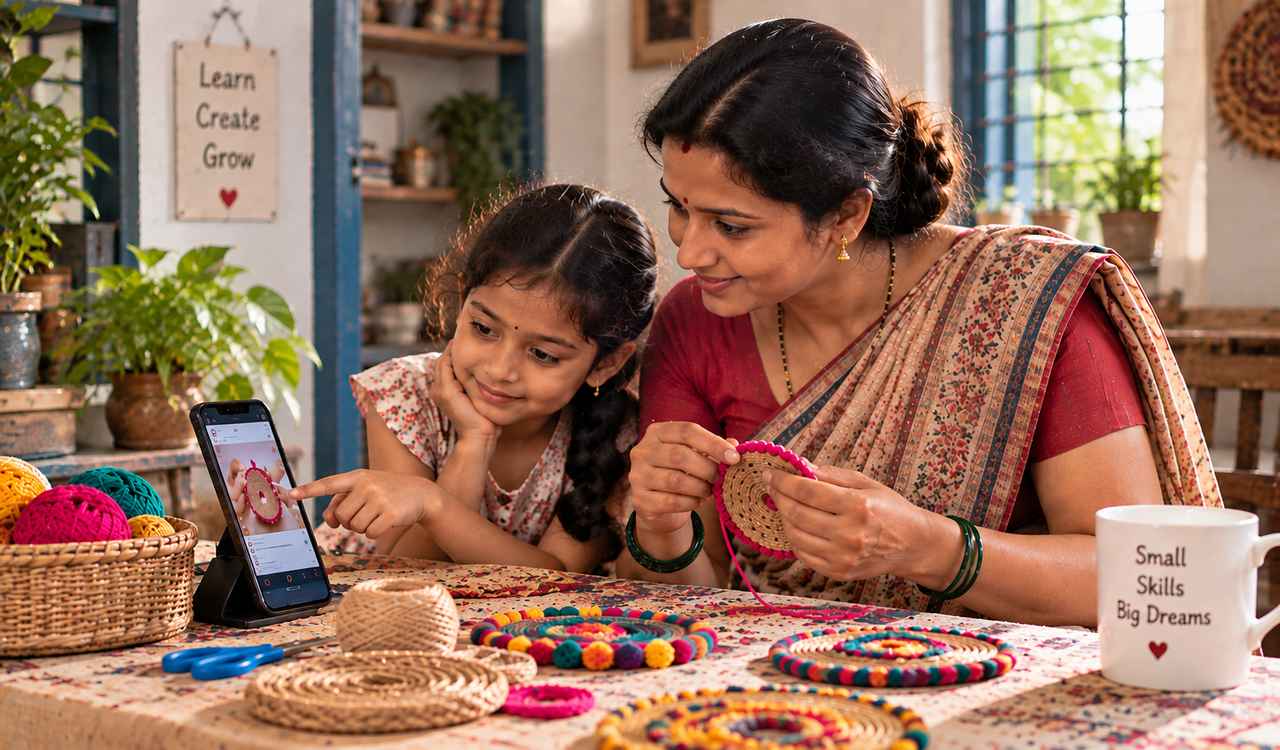
To be fair, this involuntary schooling has real virtues. A curious teenager in a small town can now watch a leading scientist explain her work, follow a master carpenter at his bench, or pick up the basics of a language she was never taught in school. We have always learned best by joining people who are already doing the thing: sitting beside them, copying, asking questions. Social media puts thousands of those workshops a tap away, whether it is a cooking channel, a coding forum, or a group of amateur astronomers comparing notes at midnight.
It has also handed a microphone to people the old gatekeepers ignored. Voices that newspapers and television once overlooked now reach millions, and knowledge that lived only in small communities has found a wider room. Then there is plain serendipity: we open an app to be amused and, now and then, come away having learned something we would never have gone looking for. This is genuine, and it explains why the feed is so hard to put down. To pretend it teaches us nothing worthwhile is to misunderstand its pull.
The obvious answer is to switch it all off. But you cannot resign from a culture, and going quiet is not the same as thinking clearly. The better response is to learn to see the teacher at work
The Hidden Syllabus
But every lesson carries a second, quieter one. The French sociologist Pierre Bourdieu spent his career showing that much of what feels like our own personal taste is actually installed in us by our surroundings, without our noticing. The feed does exactly this, at speed. It teaches us what to admire and what to sneer at long before it teaches us any facts, and because these lessons arrive dressed as our own opinions, we mistake being shaped for choosing freely.
The costlier lesson, though, is about how we think at all. The feed rewards speed over patience and reaction over reflection. The American thinker John Dewey argued that real thinking depends on a pause, a moment of doubt between seeing something and responding to it. That pause is where understanding is born. The feed is engineered to abolish it. We learn through friction, through the effort of working something out, and the feed is built to remove friction entirely. In doing so, it can leave us feeling informed while quietly training us out of the harder work of actually understanding.
There is a final danger, subtler still. The British writer Mark Fisher described the modern sense that “there is no alternative,” the feeling that the world can only ever be the way it already is. A space tuned to reward outrage and applause teaches us this too. Nuance travels slowly; slogans travel fast. Complicated arguments collapse into neat, shareable lines, and disagreement becomes the trading of familiar phrases rather than the testing of ideas. Bit by bit, we are taught not to imagine that things could be otherwise.
From Watching to Thinking
The obvious reply is to switch it all off — delete the apps, log out, walk away. But you cannot resign from a culture, and going quiet is not the same as thinking clearly. The better response is to learn to see the teacher at work.
That begins with a simple question few of us ask: who arranged what I am looking at? The scholar Donna Haraway warned that there is no “view from nowhere”; every picture of the world is taken from some angle, by someone, for some purpose. A feed feels like a plain window onto reality, but it is a curated, commercial, machine-ranked slice of it, built to hold you rather than to inform you. To ask whose interests it serves, and what it is keeping out of the frame, is to turn passive scrolling into active inquiry.
The educational thinker Ronald Barnett drew a useful line between critical thinking and what he called “critical being” — between merely picking an argument apart and living alert to how you yourself are being shaped. That second kind of attention is the skill the feed now demands. It means treating what you find not as an answer to be swallowed but as a prompt to be checked; pausing before you share; and remembering that a claim sounding confident and tidy is not the same as it being true. Used this way, the very same feed that dulls thought can sharpen it — surfacing a book, a dissenting voice, or a question you had never thought to ask.
Social media will keep teaching us whether or not we agree to the lesson. That is simply what a culture does. What we still get to decide is the kind of student we become: the one who absorbs the hidden syllabus without noticing, or the one who reads it, questions it, and now and then closes the book. The danger was never that the feed would make us ignorant. It is that it would make us feel educated while quietly teaching us to stop thinking. We should not fear a classroom we never chose. We should fear forgetting that we are being taught.
(The author is a PhD candidate in Mass Communication at Ohio University)

Related News