Opinion: The new Tollywood-Telangana directors are rewriting Telugu cinema
Long dismissed as comic relief, Telangana’s dialect and identity now take centre stage in mainstream Telugu cinema, exposing Tollywood’s entrenched sexism, caste blindness and cultural imbalance


By Chandri Raghava Reddy
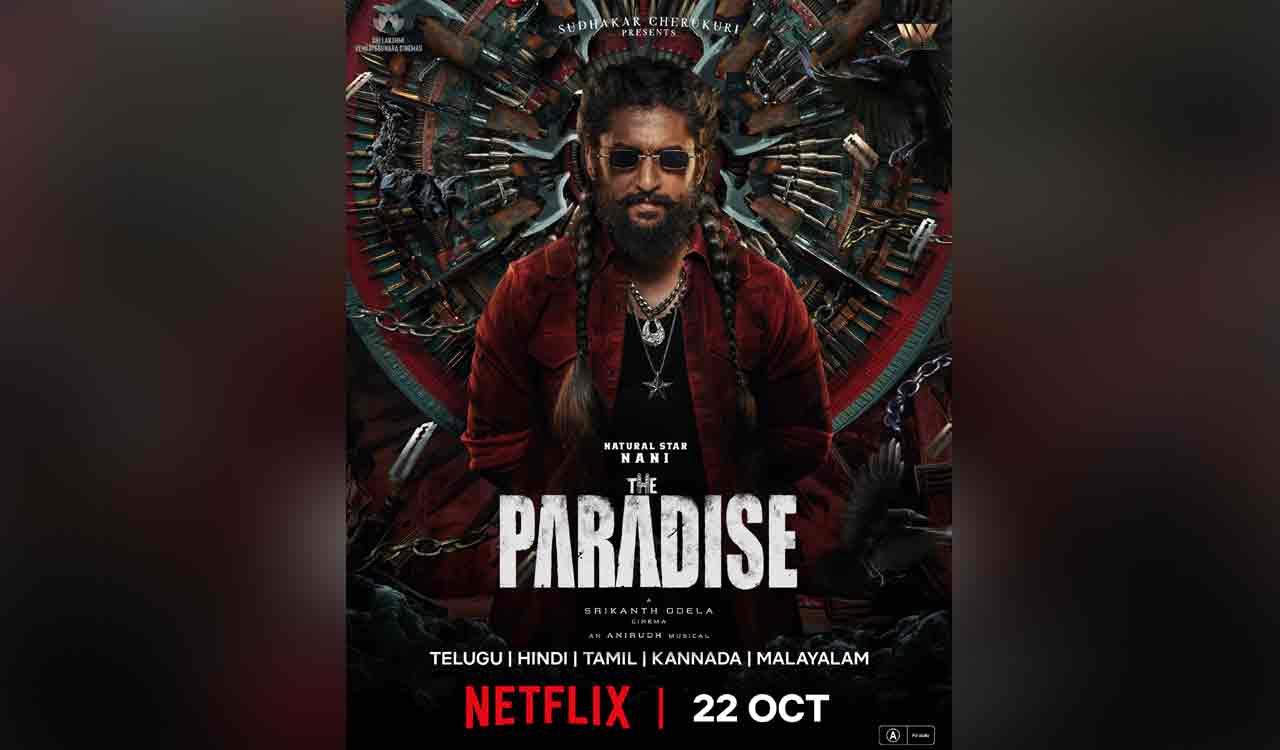
When The Paradise opened in theatres last month, it did more than add to Tollywood’s list of releases. It confirmed something critics and cinephiles have sensed for years: Telugu cinema is moving beyond its old stereotypes. For decades, Tollywood relied on a familiar formula: a hero twice his heroine’s age, an item number, double-meaning dialogue sold as comedy, and two heroines cast purely to fill posters. The formula left the industry in something close to a moral crisis, while issues of struggle, identity, history and culture took a back seat for a long time.
Also Read
Now a new wave, proud of its roots and grounded in real lives, often leavened with wit and humour, is shifting the ground beneath the rhetoric that ruled the industry for half a century. The Paradise belongs to this new camp. That is why it matters, whatever one makes of its screenplay.
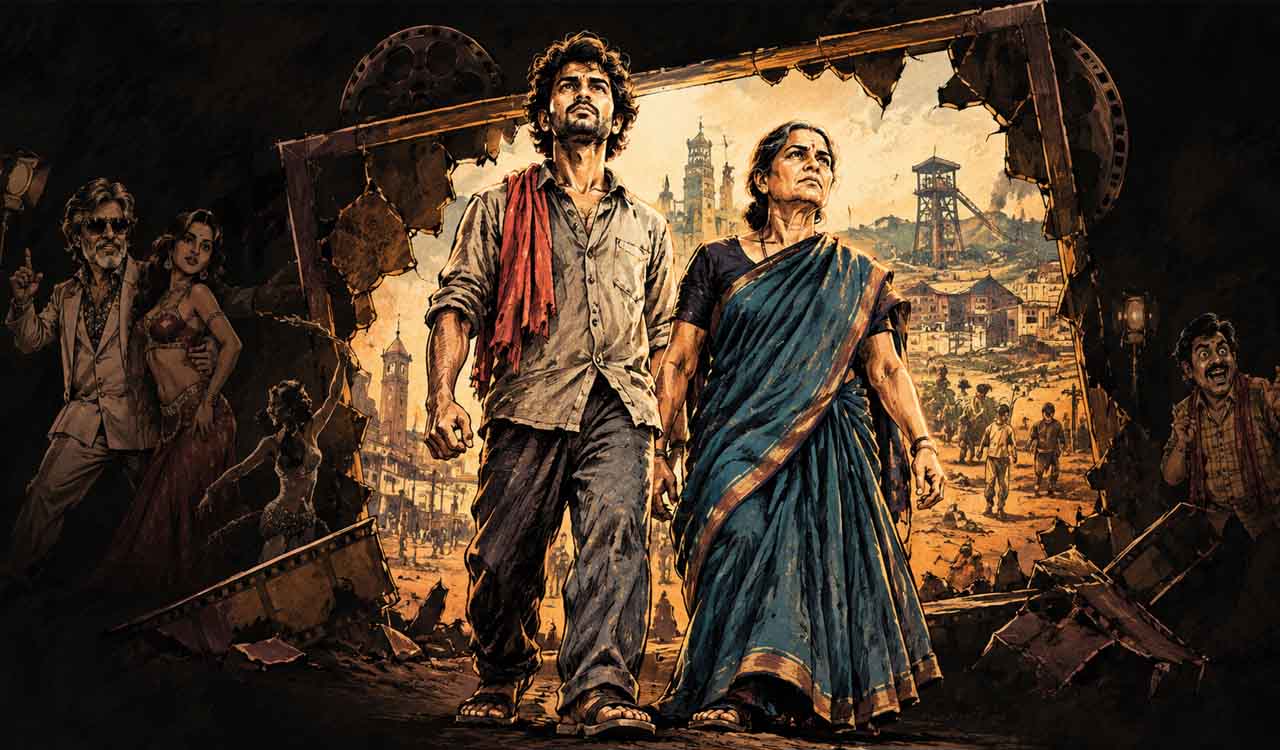
Set in 1980s Secunderabad, the film follows the Savari community, an oppressed group denied recognition and identity in independent India, as they live under a local strongman. The hero, Jadal, returns from prison to lead his mother, Sammakka, in her fight for dignity. This is not a plot built solely for entertainment. It confronts social hierarchy, the state’s selective memory of who belongs, and the specific geography of Hyderabad’s Paradise area, not a generic “village” or a computer-generated imagery metropolis.
The geography of the plot matters. For decades, mainstream Telugu cinema treated Telangana’s landscape and dialect as either invisible or comic relief. Director Srikanth Odela, who also made Dasara, set in the Singareni coalfields of his native Godavarikhani, does something different. He places Telangana’s working-class communities at the centre of the frame, not at the margins. Coming from Godavarikhani in erstwhile Karimnagar district, he is not visiting this world for texture. He is filming his own backyard.
Breaking Stereotype
Compare this to the stereotype that has defined mainstream Telugu cinema for generations. A hero well past 60 romancing a heroine in her 20s. Two heroines cast so posters can carry two “glamorous” faces. Item songs have no narrative purpose. Double-meaning dialogue sold as “mass” humour. The Paradise largely keeps this machinery out of the spotlight. Its story is a fight for identity, and Sammakka is one of the community’s rebellious voices.
From The Paradise to Balagam, a new generation of filmmakers is bringing authentic local histories to mainstream audiences, reshaping Telugu cinema’s cultural identity, storytelling and commercial ambitions
Reviewers have been tough on the film, and not without reason: the second half drifts, the violence is relentless, and the heroine’s track is its weakest thread. But the film’s refusal to lean on the old crutches is itself the point. It trusts a hard, unglamorous story to carry a big star, instead of dressing up a thin story with glamour. This is what “New Tollywood” means: A cinema that rejects the ornamental sexism and caste-blindness normalised by Tollywood for decades, and borrows the moral seriousness of independent cinema without giving up the mainstream’s reach.
Ledger of Neglect
Before bifurcation, Telugu cinema’s centre of gravity, its stars, its screen dialect, its idea of a “mass” hero, was overwhelmingly coastal Andhra. That imbalance hardened into something close to cultural hegemony during the Telangana movement. In 2011, N Shankar’s Jai Bolo Telangana, made in solidarity with the agitation, struggled to find a release across the Seemandhra region. The director says the producers who had agreed to back the film withdrew at the last minute. He consequently sold his properties to finance the film. It went on to win five Nandi Awards and perform well at the box office.
With rare exceptions, Tollywood’s institutions kept their distance from the movement or stood against it. Alongside sections of the Andhra media, they are remembered by many Telanganites as complicit in the loss of lives during the agitation, a history the industry has yet to acknowledge in any visible way, even through a gesture of support for the martyrs’ families.
The ridicule extended to the way Telangana was portrayed on screen. Telangana’s Telugu dialect long served as Tollywood’s shorthand for the corrupt, the criminal and the comic: the rough-edged minister, the coarse rowdy-sheeter, the sidekick good for a laugh. The trope shows up even in films like the late T Krishna’s 1985 Pratighatana, remembered today chiefly for its progressive politics, whose corrupt minister speaks in a Telangana dialect.
The habit has not fully gone. In June 2026, the title Idupu Kayitham, a plain Telangana phrase for divorce papers, drew mockery from Andhra social media handles unfamiliar with the dialect, until the backlash itself became political news. It was a small episode, but a telling one: a phrase native to half of Telugu-speaking India could still be treated as a joke by the other half.
It is hard to name a major commercial Tollywood film that has given a Telangana political leader sustained, dignified screen time. Jai Bolo Telangana, in which Telangana’s leaders appear with dignity, is the exception, and exists only because of its director. Even references in the second half of The Paradise to the statehood movement and its best-known leader demonstrate how unusual it remains for the industry to put that history on screen.
An Evolving Reality
The Paradise deserves to be discussed alongside other landmark films like Pelli Choopulu and Balagam. These films differ in genre, but share a common origin. Tharun Bhascker’s Pelli Choopulu dismantled the arranged-marriage comedy from within, giving its heroine real ambition. Venu Yeldandi’s Balagam built an entire film around a village funeral, its rituals, its Telangana dialect and its caste undertones, proving that audiences would fill theatres for authenticity alone.
What unites these directors, and now Odela, is not just talent but also geography and lived experience. All three are sons of Telangana, telling stories shaped by its dialect and its post-2014 confidence as a State with its own cultural voice. That confidence was hard-won, through a struggle that spanned generations and cost many lives.
When the Telugu film industry moved from Madras to Hyderabad, Telangana gained little from it. The industry drew on the region’s land and labour, while its capital, stars and storytelling sensibility remained rooted in coastal Andhra. The old animosities travelled with it: even after the move, films of the late 1970s and 1980s carried them into their characters and dialogue. The pattern was old.
Back in Madras, the Tamil accent and culture were mocked in Telugu cinema and dismissed with the slur “aravam.” Telangana, with little shared history with Tamil culture, had no reason of its own for that contempt. What surprised many in Telangana was the same contempt, in time, being turned on their own dialect, people and culture.
This is not a review of the movie. It is about what the film represents. The questions it raises—about identity, recognition and belonging, and about whether a big commercial hero can carry that weight without a bikini-clad heroine or a comedian mocking a regional accent—are ones Tollywood was not asking a decade ago. That they are being asked now by a director from Godavarikhani, working with a Hyderabad-raised star, to tell a Secunderabad story about the Savari community’s fight for recognition is the clearest evidence yet.
Since statehood, there has been a quiet but substantial recentering of Telugu cinema. Telangana’s directors have stopped asking Tollywood to represent them. They have started making the films themselves, on Tollywood’s own commercial scale. They are no longer just participating in Tollywood. They are rewriting what Tollywood is expected to be. That is the real story behind The Paradise: not merely a film but a marker of how far and how fast New Tollywood has arrived.
(The author is Professor, Department of Sociology, University of Hyderabad)

Related News
-

Opinion: Singareni at a crossroads—beneath the coal, a crisis of accountability
-
The Paradise OTT release: Where and when to watch Nani’s action drama
-
Opinion: India’s Urban Challenge Fund—bankable isn’t the same as vulnerable
-
Makers reveal Sai Durgha Tej’s role upcoming pan-India film ‘Sambarala Yeti Gattu’