Telangana, Andhra Pradesh head for legal showdown over Polavaram-Nallamala Sagar Link Project
The long-running Godavari water dispute between Telangana and Andhra Pradesh is set to intensify, with Telangana preparing to approach the Supreme Court against the Polavaram-Nallamala Sagar Link Project, alleging legal violations and risks to its water share
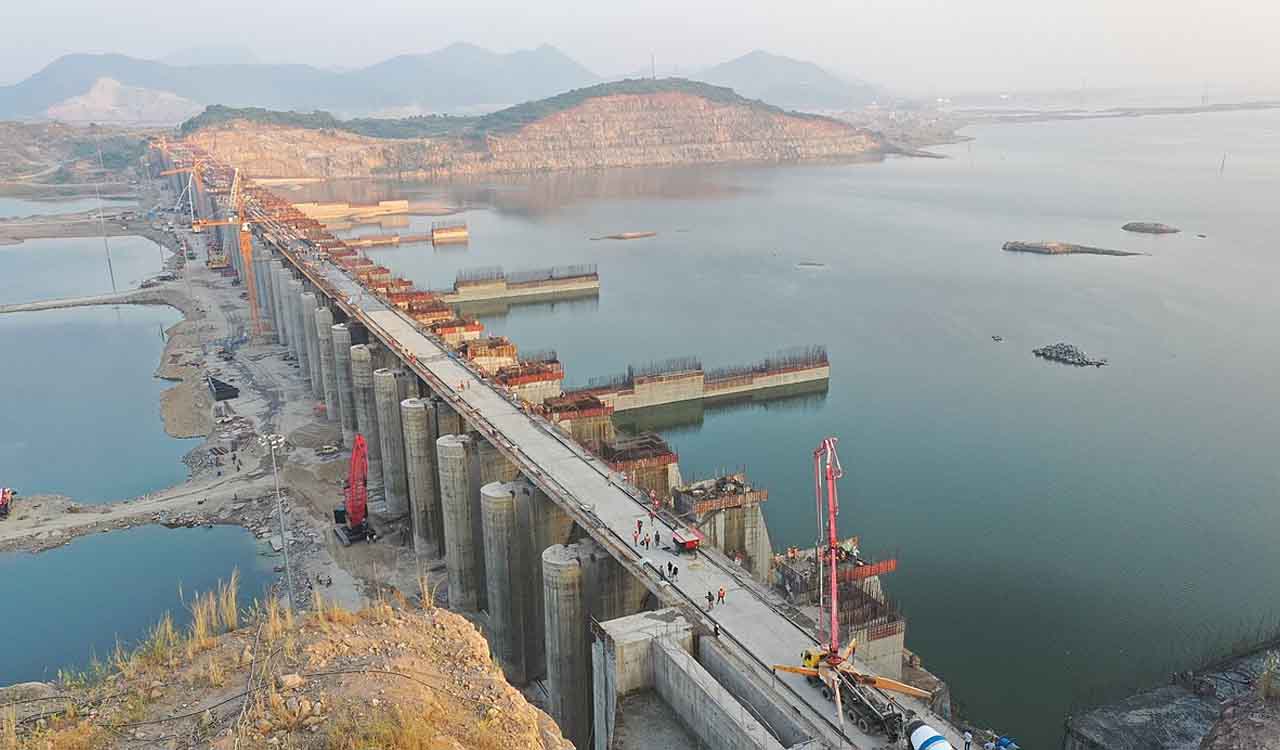


Hyderabad: The longstanding inter-State dispute between Telangana and Andhra Pradesh over Godavari river waters is escalating into a major legal battle, with Telangana gearing up to approach the Supreme Court against Andhra Pradesh’s ambitious Polavaram-Nallamala Sagar Link Project (PNLP).
Andhra Pradesh is aggressively advancing the Rs. 58,000 crore PNLP, a redesigned initiative to divert surplus Godavari floodwaters from the under-construction Polavaram Dam to the Nallamala Sagar reservoir in Prakasam district. This project, part of the Poola Subbaiah Veligonda Project, replaces the Polavaram-Banakacherla Link that was scrapped amid opposition. The plan involves lifting water through multiple segments, including canals and pumps, to transfer inter-basin flows from Godavari to Krishna.
Telangana views the PNLP as a repackaged version of the same controversial diversion scheme, alleging it violates key legal frameworks. The State has announced its intent to file a petition in the Supreme Court, citing risks of submergence in Telangana territory due to Polavaram backwaters, breaches of the Andhra Pradesh Reorganisation Act (2014), the Godavari Water Disputes Tribunal (GWDT) award and inter-State agreements. Telangana argues the project lacks mandatory approvals from the Godavari River Management Board (GRMB), Central Water Commission (CWC) and Apex Council. High-level preparatory meetings were held in New Delhi with legal experts, including senior advocate Abhishek Manu Singhvi. Principal Secretary (Irrigation) Rahul Bojja met Secretary, Ministry of Jal Shakti, Kantha Rao and CWC Chairman Anupam Prasad, and raised objections to the diversion scheme while seeking clearances for multiple pending projects of the State.
Telangana maintains that diverting Godavari waters upstream would infringe on its proportionate share, potentially reducing flows for its own projects and setting a dangerous precedent for upper riparian claims. The State has consistently opposed similar plans even during the BRS regime on the plea that “flood waters” or “surplus” are not defined in the GWDT award and that appraisals should be based on 75 percent dependability. Andhra Pradesh defends the project strongly, emphasising that it harnesses only floodwaters for critical water security in arid zones. It has issued tender notices for the Detailed Project Report (DPR), making it clear that it intends to push ahead with phased implementation.
This conflict traces its roots to the 2014 bifurcation, reviving tensions over Godavari waters utilisation. While no Supreme Court petition has been filed yet, preparations on both sides are at an advanced stage, signalling an imminent courtroom confrontation.
Both States stake claim to the river flows, including the unutilised component, amid growing demand for irrigation and drinking water.

Related News
-

Hyderabad: Woman allegedly sexually assaulted after offer of domestic work
-
KTR congratulates Kaiteki Innovations founder on Vande Bharatam award
-
Hyderabad: 151 officer trainees complete first phase of IPS training
-
A mirror in space to turn night into day? Hyderabad-based Skyroot deal brings sci-fi closer to reality