Telangana Congress govt drops bombshell on students
The Telangana government has decided to transfer tuition fee reimbursement directly to students from the 2026-27 academic year instead of colleges. The move has triggered concerns among students and private colleges over delayed payments, financial burden and possible increase in dropouts



Hyderabad: A cash-strapped Telangana Congress government, which owes private professional and degree colleges Rs 12,000 crore in fee reimbursement dues, has now dropped a bombshell on students, particularly those hailing from economically weaker and marginalised sections.
Commencing from the academic year 2026-27, the tuition fee has to be paid by students to colleges after receiving it from the State government, as against the present practice of direct fee transfer to colleges.
While the colleges have been asked not to insist that students pay the fee during admissions, the government did not give a timeline as to when the tuition fee amount will be transferred to eligible students.
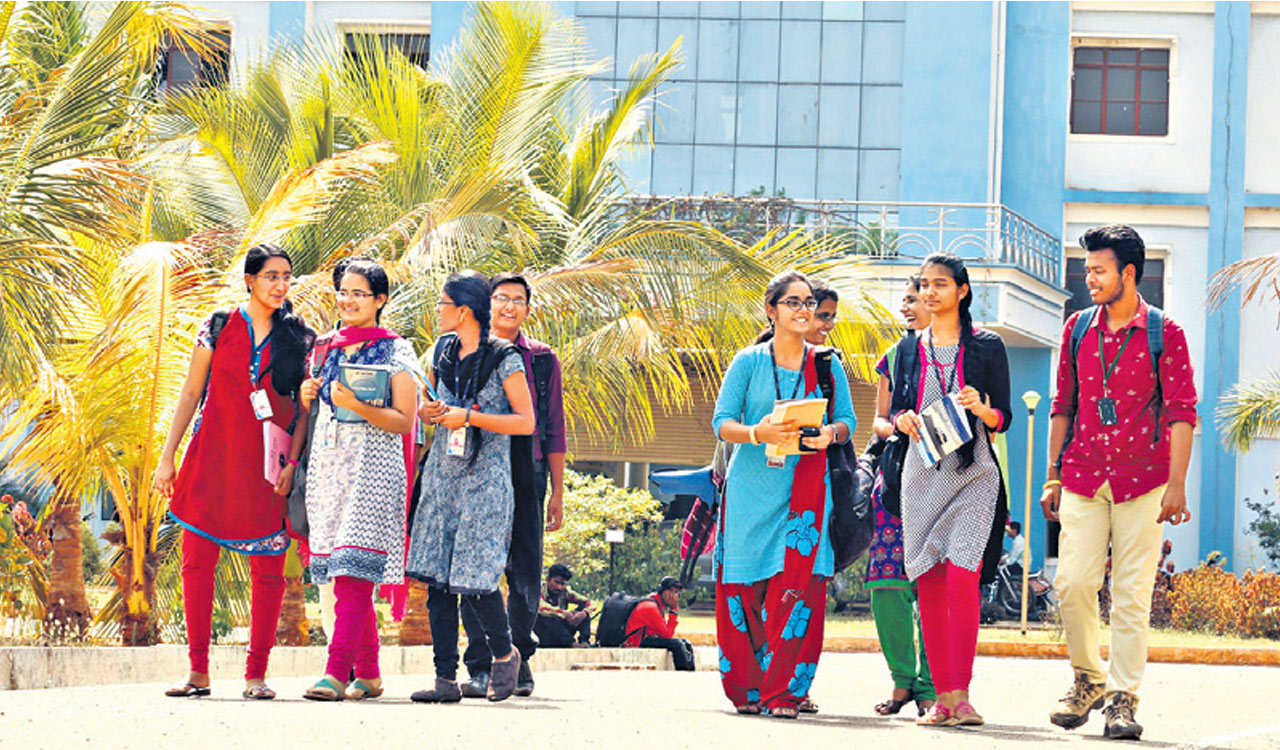
Given the pending dues spanning four academic years from 2021-22, students and parents, particularly those from economically weaker sections, will be forced to shell out tuition fees upfront to continue their studies, as colleges are likely to insist on payment either during admission or after the first year of the course.
The new rules are expected to result in dropouts among students due to financial constraints.
“We strongly oppose the order, which has been issued only to gradually stop the scheme that had aided lakhs of students pursue higher education,” said T Nagaraju, general secretary of the SFI Telangana unit.
As per GO Ms 7 issued by the Scheduled Caste Development Department, the entire scholarship amount, including the tuition fee and maintenance fee components, will be paid into the Aadhaar-seeded bank account of the eligible student through the Aadhaar Payment Bridge System in direct benefit transfer (DBT) mode from the academic year 2026-27.
The State government backed the new rules, citing the High Court’s recent interim order that allowed petitioner institutions, which approached the court over pending fee dues, to collect fees from students upfront from the academic year 2026-27. However, the court directed colleges to refund the collected tuition fees to students in the event of dismissal of the writ petitions.
Further, the State government also cited the Central government’s adoption of DBT mode for releasing post-matric scholarships to SC students from the academic year 2024-25.
Issued by Special Chief Secretary to Government (Welfare) Sabyasachi Ghosh, the order states that colleges should not insist that students pay the tuition fee and other eligible fees at the time of admission. The student should, in turn, pay the fee to the institutions out of the amount credited to his or her account through the DBT mode.
“Why should colleges not insist on payment of the fee upfront when the government has decided to pay students directly? The colleges are already reeling under a severe financial crisis due to pending fee reimbursement dues of the last four academic years, and now there is no other option but to charge fees from students,” said a private professional college owner.
As per the order, the applicant’s Aadhaar number will be demo-authenticated or e-KYC verified at the time of registration as per details in the SSC or equivalent record. Later, the student should complete biometric authentication for registration of the post-matric scholarship on the e-Pass portal. Further, the applicant’s bank account, IFSC code, account holder name and validity will be verified.
The caste, income and domicile certificates will be linked with MeeSeva centres, with Aadhaar as the unique identifier. While the scholarships and fee reimbursement will be auto-renewed for students admitted from the subsequent academic year, colleges must confirm their eligible renewal applications on the basis of the student’s promotion and continuity of the course. In addition to the student’s academic progress, the college’s performance will also be monitored through the ePASS portal.

Related News
-

Students are suffering due to delay in release of fee reimbursement :T Harish Rao
-
Students selected under best available school scheme facing several issues
-
After criticism, Telangana govt issues fresh tuition fee reimbursement guidelines
-
Watch | Telangana fee reimbursement change explained: Why students may have to pay first