Telangana HC orders conditional nod for ‘Dharma Raksha Sabha’ meeting
The Telangana High Court directed Hyderabad Police to grant conditional permission for a proposed public meeting after holding that prolonged inaction on the application violated fundamental rights under Article 19, while balancing public order concerns with strict safeguards
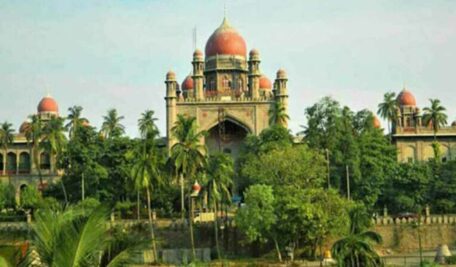


Hyderabad: Justice NV Shravan Kumar of the Telangana High Court on Wednesday directed the Hyderabad Police to grant conditional permission for a proposed public meeting after finding fault with the inaction of the police in deciding the request within time.
The Court was hearing a writ petition filed by Sri Sirigiri Brahma Chary, who sought permission to conduct a peaceful public meeting titled ‘Dharma Raksha Sabha’ on January 24, 2026 at Balapur village in Rangareddy district. The petitioner contended that despite submitting an application on January 9, 2026, received by the Commissioner of Police on January 12, 2026, no order was passed on either granting or refusing permission.
Senior Counsel L Ravichander, appearing for the petitioner, submitted that the petitioner is the Convener of Ganesh Sena, youth wing of Bhagyanagar Ganesh Utsav Samithi, and has a consistent record of organising peaceful public programmes. He stated that the proposed meeting was to be held on private land with the consent of landowners and was intended only to sensitise citizens on national security concerns arising out of illegal immigration.
It was argued that the failure of the police to take any decision on the application amounted to infringement of the petitioner’s fundamental rights under Article 19 of the Constitution. Reliance was placed on judgments including Ramlila Maidan incident and Lakshmi Ganesh Films to contend that peaceful assembly cannot be denied merely on vague apprehensions.
It was also clarified that no politicians would be invited and that there would be no provocative or hate speeches.
Opposing the writ petition, Government Pleader for Home placed instructions from the Inspector of Police, Balapur Police Station. The State contended that the issue raised by the petitioner was already engaging the attention of the government and that allowing the meeting could give rise to serious law and order problems. The police cited multiple reasons for opposing the permission, including the communally sensitive nature of the locality, proximity to vital installations, recent communal incidents, Republic Day security arrangements, municipal election duties, and intelligence inputs suggesting possible misuse of the gathering by antisocial elements.
The State also placed data showing a large presence of Rohingya persons in Balapur police station limits.
After hearing both the sides, Justice Shravan Kumar observed that while the State is duty-bound to maintain public order, the Commissioner of Police was required to consider and decide the petitioner’s application. The Court held that prolonged inaction would directly affect the petitioner’s fundamental rights under Article 19(1). Taking note of the sensitivity of the issue, the Court struck a balance by directing the police to grant permission subject to strict conditions.
The meeting was permitted to be held only between 3 pm and 6 pm on January 24, 2026, with a complete prohibition on political participation, hate speech, provocative displays, rallies, and violations of noise or traffic regulations. Adequate police bandobast was also directed.

Related News