Telangana High Court seeks affidavit on heritage clearances for Metro Phase II
The Telangana High Court has directed the State government and HAML to file a detailed affidavit on permissions and construction activities for Metro Phase-II near heritage structures, following allegations of violations of the Telangana Heritage Act
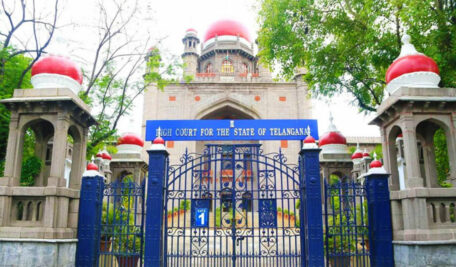


Hyderabad: Chief Justice Aparesh Kumar Singh and Justice GM Mohiuddin of the Telangana High Court on Wednesday directed the State government and the Hyderabad Airport Metro Limited to file a detailed affidavit explaining the status of permissions and construction activities relating to the proposed Phase-II Metro Rail Project, particularly where the alignment passes through or near heritage structures.
The Division Bench was hearing a public interest litigation, which raise concerns about alleged violations of the Telangana Heritage (Protection, Preservation, Conservation and Maintenance) Act, 2017, during the execution of the Metro Rail Phase-II works.
During the hearing, a short PowerPoint presentation was made on behalf of Hyderabad Airport Metro Limited explaining the proposed route of the Phase-II project. It was submitted that the project covers a distance of about seven kilometres and that along the route there are three notified heritage structures, one classified as Grade-I and two as Grade-III.
The State and the project authorities asserted that the proposed works do not affect the protected heritage structures. However, counsel appearing for the petitioners contended that excavation and construction activities were being carried out without obtaining prior approval from the Conservation Committee and without supervision of the Director of the Department of Heritage.
It was further argued that such activities were adversely impacting not only notified heritage structures but also their surrounding precincts, as well as several other structures of heritage value though not officially notified.
Taking note of the submissions, the Bench directed the respondent State and the project authorities to place on record a comprehensive affidavit. The affidavit is required to detail the stage of processing of applications seeking permission for construction activities at locations where heritage structures fall on the proposed route or abut their precincts.
The Court also directed that the affidavit should specify whether any construction activity has already commenced near or touching heritage structures and their precincts, and clarify whether the Conservation Committee has been constituted and is fully functional. The Court ordered that the affidavit be filed in Excel Sheet format, clearly disclosing all relevant particulars.
The matter was posted for further hearing on March 3.

Related News