Telangana’s hidden crisis: Double burden of malnutrition and NCDs
NFHS-6 data reveals Telangana is grappling with a dual public health challenge of persistent child malnutrition and rising obesity-related diseases. While stunting has declined, poor dietary quality, increasing diabetes, hypertension and overweight prevalence are emerging as major health concerns.
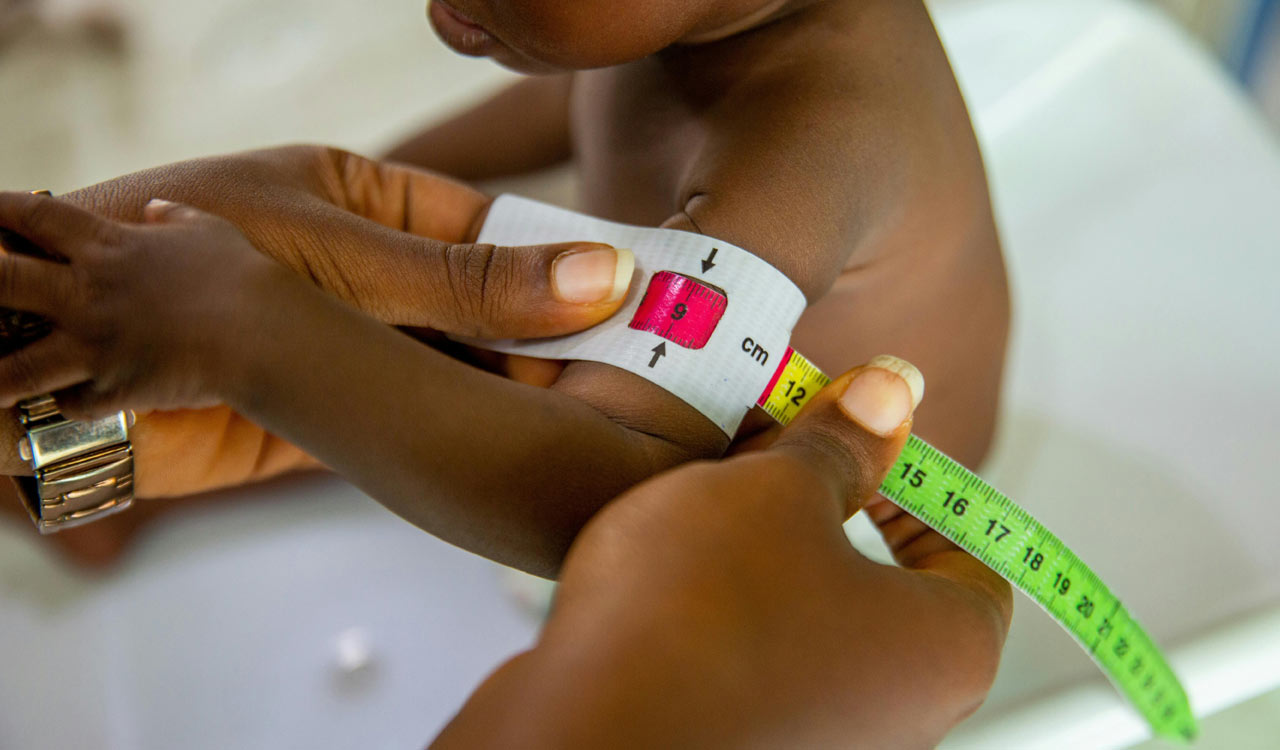


Hyderabad: Telangana is facing a double burden of malnutrition and a rapidly rising tide of non-communicable diseases (NCDs), a major public health challenge that requires long-term policies specifically aimed at addressing metabolic health and adolescent nutrition.
The recently released National Family Health Survey (NFHS-6) 2023-24 data has revealed simultaneous existence of undernutrition i.e. stunting and wasting in children and adolescents alongside a surge in overnutrition, which is leading to obesity and metabolic dysfunction in adults.
According to the latest NFHS-6 findings, while stunting in children under five has declined to 27 percent, the quality of nutrition remains a concern, with only 15.3 percent of children aged 6–23 months receiving an adequate diet.
Public health experts point out that the NFHS data suggests that while Telangana effectively manages acute hunger, it is also struggling to provide nutrient density required for optimal development, leaving children vulnerable to long-term growth deficits.
Simultaneously, Telangana is also witnessing an explosion of Non-Communicable Diseases (NCDs). According to NFHS data, over 36 percent of women and 35 percent of men in Telangana have been classified as overweight or obese. Interestingly, in urban areas (compared to rural areas), the prevalence of obesity among women is 48.7 percent and 45.7 among men.
As a result of the sharp rise in obesity, its impact is directly getting reflected in the health outcomes. The NFHS data is indicating a sharp increase in diabetes. Nearly 1 in 4 men (24.5 percent) and 1 in 5 women (19.6 percent) are now suffering from elevated blood sugar or requiring ongoing medication for diabetes.
Apart from diabetes, the NFHS-6 also reports high rates of hypertension i.e. nearly 28.2 percent of men and 24.2 percent of women in Telangana now live with elevated blood pressure.
Crucially, addressing these numbers requires looking beyond caloric intake. Leading researchers at the ICMR-National Institute of Nutrition (NIN), Hyderabad, have long argued that stunting is not merely a result of inadequate food, but has environmental causes.
The NIN researchers in their studies have pointed towards a chronic state of gut inflammation caused by poor sanitation and exposure to pathogens also plays its part in stunting.
In such environments, a child’s gut is often too compromised to absorb the nutrients they do consume, rendering even the most well-intentioned food-based interventions less effective.
- 15.3 percent of children aged 6–23 months receive an adequate diet
- 27 percent of children are stunted, indicating chronic malnutrition
- 16.9 percent of children are wasted, reflecting acute malnutrition.
- 3.9 percent of children severely wasted, indicating acute malnutrition.
- 27.8 percent of children are underweight due to chronic and acute malnutrition.
- 1.2 percent of children under 5 are overweight due to overnutrition
- Nearly 1 in 4 men (24.5 percent) and 1 in 5 women (19.6 percent ) have elevated blood sugar or are on medication for diabetes.
- 13.3 percent of men and 10 percent of women have very high blood sugar.
- 28.2 percent men and 24.2 percent women have hypertension.
- Over one-third of the population is overweight

Related News