Thousands of devotees congregate at Sammakka-Saralamma mini-altars in Mancherial
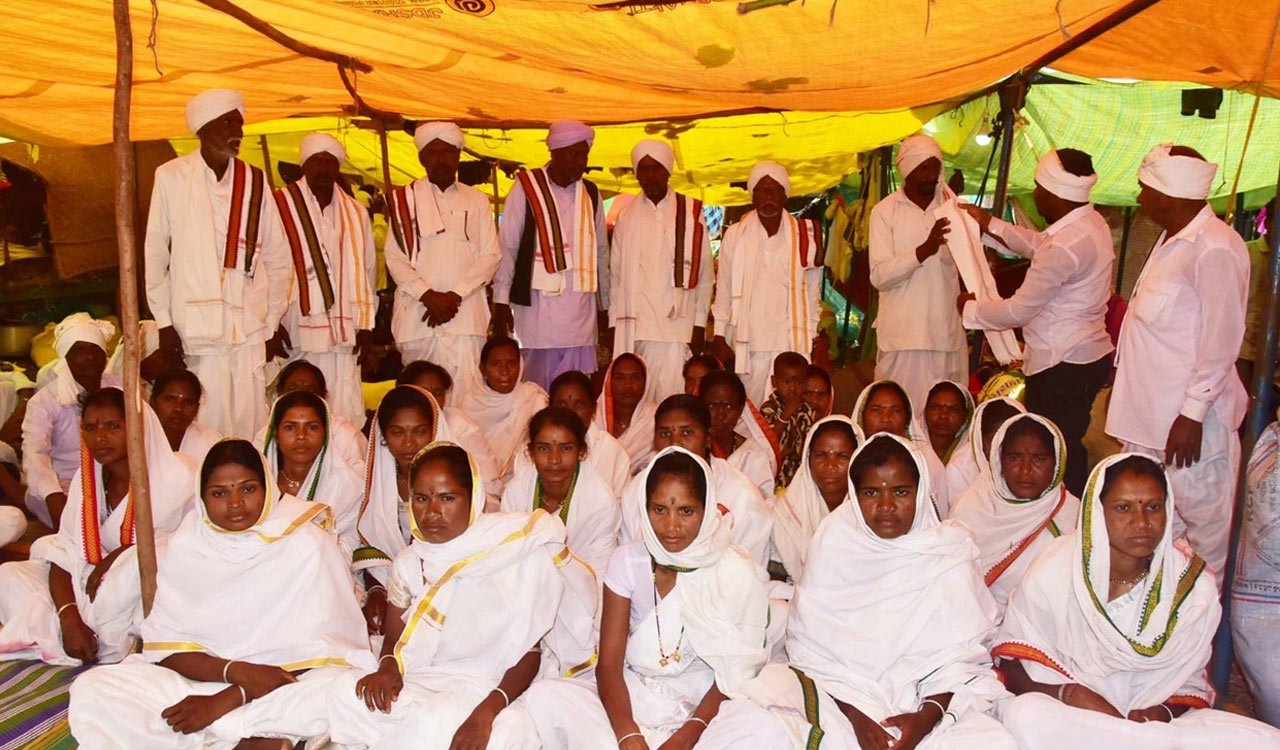
Thousands of devotees thronged mini altars of tribal deities Sammakka and Saralamma on the banks of the Godavari river in Mancherial and nearby areas on Thursday, offering prayers, bonam and sacrifices as part of the annual fair organised with civic support
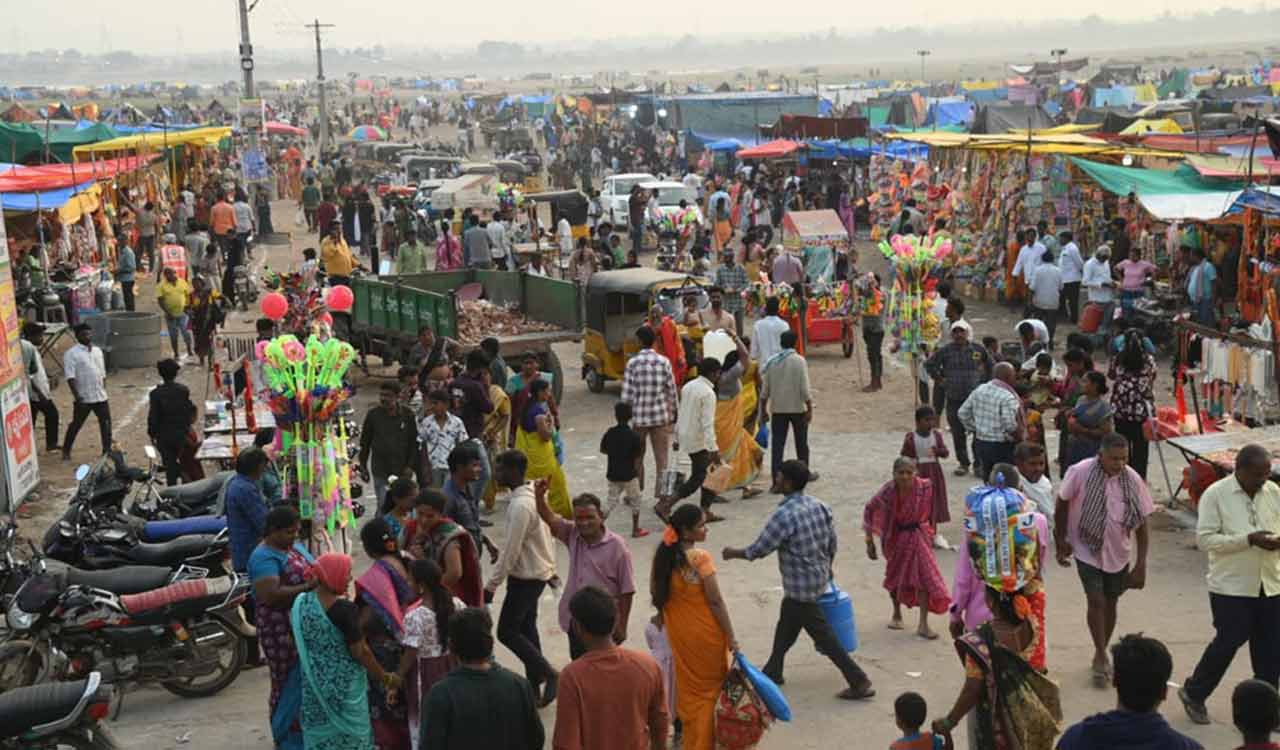


Mancherial: A large number of devotees made a beeline to mini altars of tribal deities Sammakka-Saralamma installed on the banks of the Godavari river in this town and several parts of the district on Thursday.
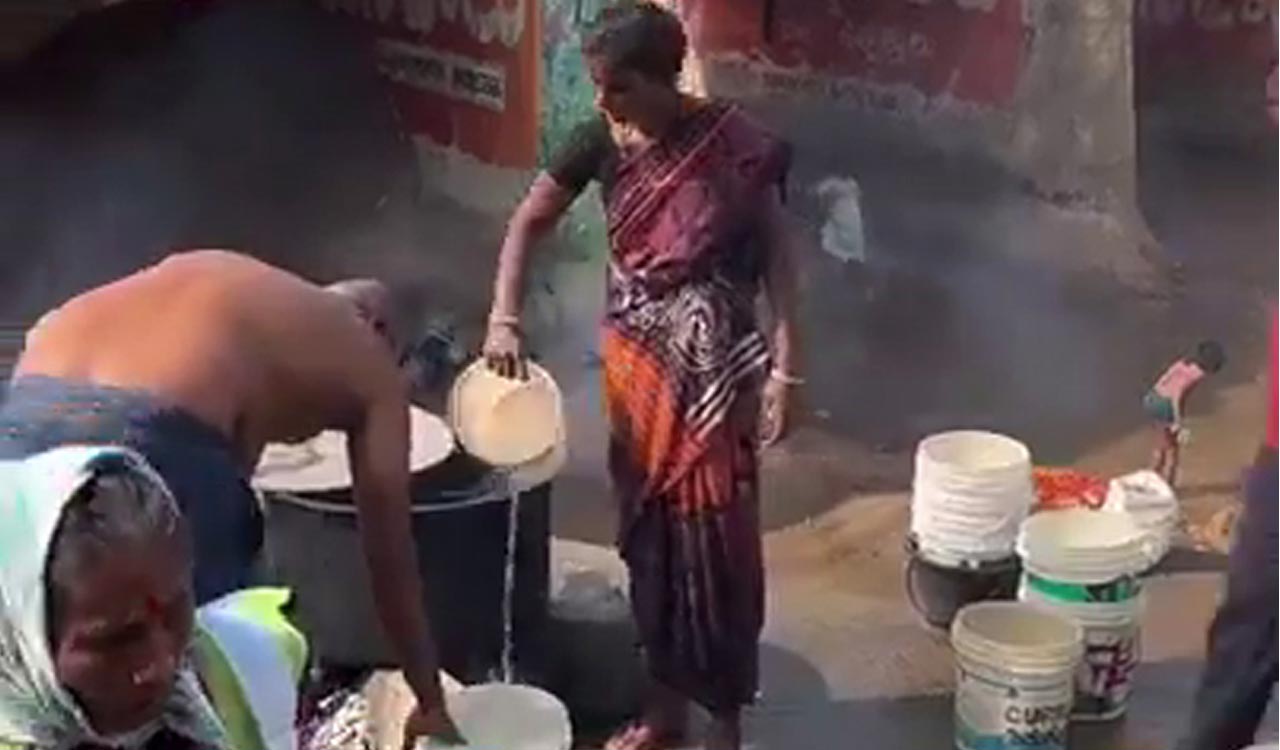
Thousands of devotees from not only the town but also neighbouring villages thronged the altars and performed special prayers, forming serpentine queue lines. A major portion of them presented bonam, bangaram or jaggery, while others sacrificed chickens and sheep to thank the deities for their well-being. They dined along with family members and friends. They took a holy bath in the Godavari river before taking darshan of the deities.
The devotees then shopped for toys for their children at the fair. They camped under makeshift tents at the holy place for at least a day. The sleepy shores of the Godavari came alive following the congregation of devotees, who arrived at the sacred place using different means of transport including trolleys, jeeps, auto-rickshaws, bullock-carts, motorcycles and cars.
Earlier, tribal priests ceremoniously brought the Sammakka deity from the forest to the altars on Thursday afternoon, while the Saralamma deity was installed on Wednesday. Devotees danced to drum beats and trumpet music while the deities were being shifted from the wild to the altars in a lively procession on Wednesday evening. Basic amenities such as temporary toilets, showers, shades, health centre, 108 ambulance queue lines and parking lots were created by the Mancherial Municipal Corporation for the smooth conduct of the fair.
Meanwhile, a large number of coal miners and devotees visited similar mini altars installed at the RK1 mine in Ramakrishnapur, on the premises of the Mukkidi Pochamma temple in Srirampur and some other places on the outskirts of Bellampalli, Thandur and mandal headquarters. The altars were meant for the convenience of coal miners and rural folk.

Related News