Can Indian Ocean Dipole balance El Nino impact in Telangana?
As El Nino develops in the Pacific Ocean, concerns rise over a weak monsoon in India. However, forecasts of a positive Indian Ocean Dipole offer hope, with experts suggesting it could offset rainfall deficits, especially across Telangana and southern regions.
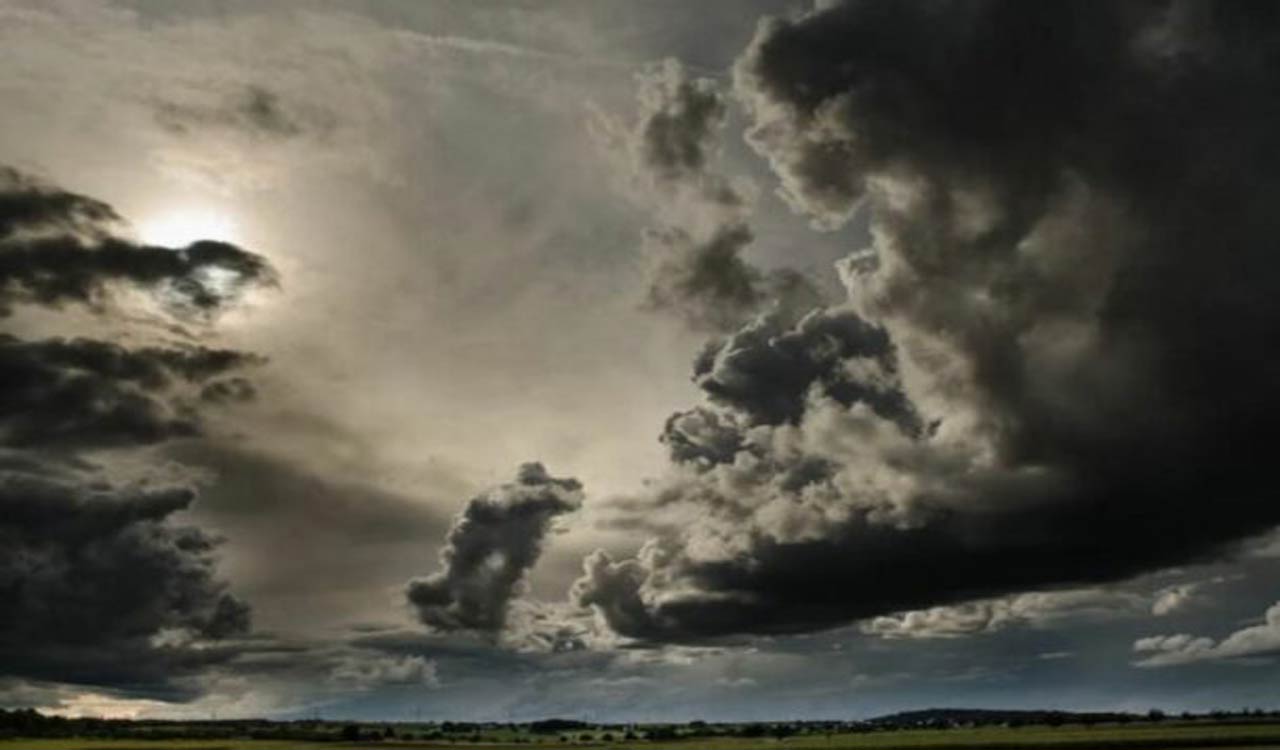


Hyderabad: While the people of Telangana are facing a gruelling summer with temperatures crossing 45 degrees Celsius, a different kind of heat, popularly known as El Nino, is building thousands of kilometres away in the Pacific Ocean.
The El Nino phenomenon is currently the most discussed topic among weather experts, as it holds the key to whether India will see a parched or a plentiful monsoon in 2026.
In the recent annual forecast on Indian monsoons, the India Meteorological Department (IMD), New Delhi, blamed the threat of El Nino for issuing a cautious below normal forecast of the 2026 monsoons. The IMD cited the development of El Nino during the monsoon season as a major driver for deficient monsoons.
To understand why warming of the ocean near South America matters to a farmer in Adilabad or to people in Hyderabad, one must look closely at the El Nino phenomenon itself.
What exactly is El Nino?
In a normal year, strong winds known as ‘Trade Winds’ blow from east to west across the Pacific Ocean, starting from the coasts of South America like Peru and Ecuador and blowing towards Southeast Asia, including India, and Australia.
As a result of this flow of trade winds, a pool of warm water is created in the western Pacific region (near Indonesia and Australia), which helps form the clouds that eventually become our southwest monsoons.
El Nino (Spanish for ‘The Boy Child’) is what happens when these winds weaken or even reverse. When the winds fail, that warm water retreats to the coast of South America. As a result, the massive rain-bearing clouds that should be forming over the Indian Ocean shift far to the east, leaving the Indian subcontinent under high-pressure, dry air.
When one side, i.e. the eastern Pacific, goes up in temperature and rainfall, the temperatures on the other side, which is the Indian Ocean side, go down.
As a result, the India Meteorological Department (IMD), New Delhi, has issued a ‘below normal’ forecast of 92 per cent. It is not because the monsoon is not coming, but because El Nino acts like a brake system, weakening the rain-bearing southwest monsoons.
The Role of the ‘Indian Ocean Dipole (IOD)’
While there is a high probability that El Nino could influence and weaken the southwest monsoons this year, there is a silver lining in the form of the Indian Ocean Dipole (IOD) to these dark clouds.
Often referred to as ‘Indian El Niño’, the IOD is a similar temperature shift that happens right in the Indian Ocean. Because of the IOD, Indian weather experts believe that the central and southern parts of India (including Telangana) might end up receiving good monsoons this year.
Current forecasts suggest a ‘positive IOD’ might develop, which means the western part of the Indian Ocean becomes warmer than the eastern part. A positive IOD can act as a booster, pushing moisture back towards India and potentially neutralising the drying effect of El Nino.
Some of the top Indian weather experts, including former Secretary, Ministry of Earth Sciences, Madhavan Rajeevan, believe that a positive IOD could make up for the deficient monsoon rainfall over India, thus offsetting the influence of El Nino.

Related News
-

Hyderabad: Woman allegedly sexually assaulted after offer of domestic work
-
KTR congratulates Kaiteki Innovations founder on Vande Bharatam award
-
Hyderabad: 151 officer trainees complete first phase of IPS training
-
A mirror in space to turn night into day? Hyderabad-based Skyroot deal brings sci-fi closer to reality