Digital innovations launched to tackle Red Palm Weevil
A global consortium has launched a digital innovation programme at ICRISAT to combat the Red Palm Weevil. Scientists will use sensors, drones and data models to detect infestations early and protect date palms and livelihoods.
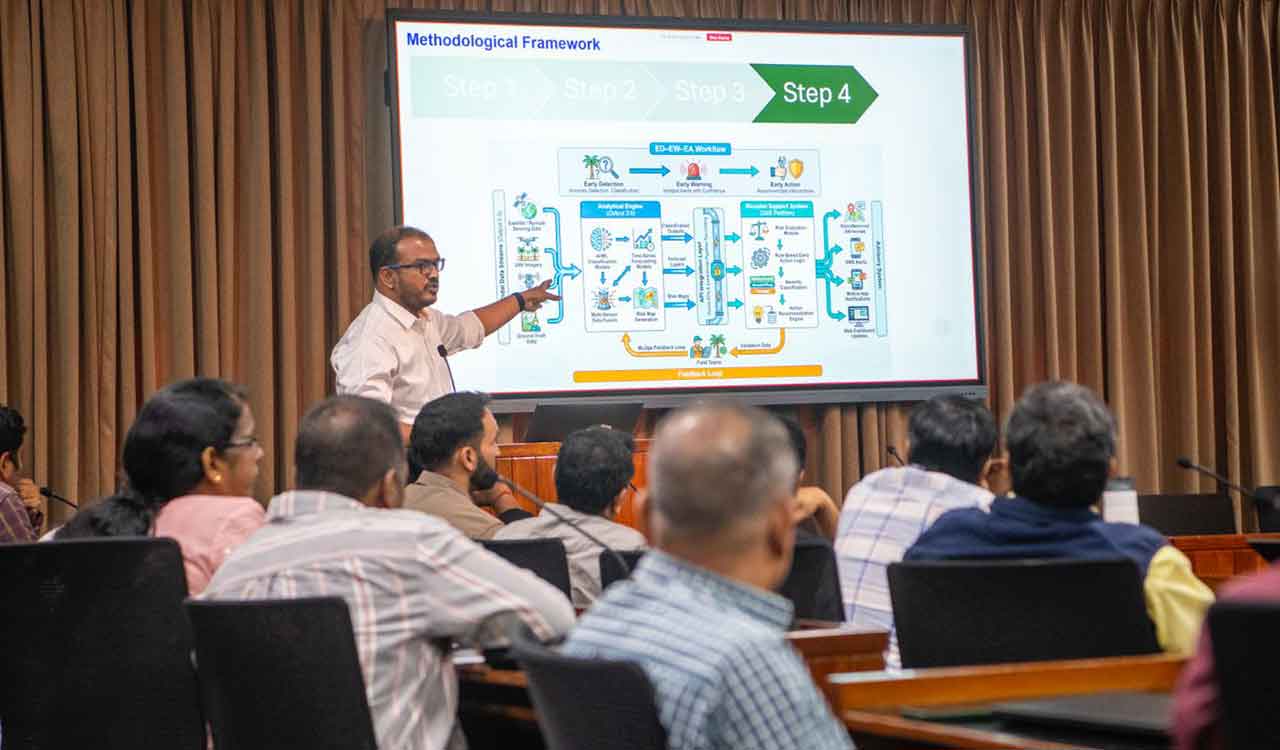


Hyderabad: A global effort to stop the destructive Red Palm Weevil entered a new phase today with the launch of Workstream 3 on Digital Innovations at ICRISAT in Hyderabad. The work is part of the Consortium for Red Palm Weevil Control, supported by the Presidential Court of the UAE and the Bill & Melinda Gates Foundation.
The launch brought together scientists from ICRISAT, ICARDA, CGIAR’s Digital Transformation Accelerator, and the University of California, Davis. The partners aim to build early detection and early warning systems that can identify the pest before visible damage appears.
Dr Stanford Blade, Deputy Director General for Research and Innovation at ICRISAT, said the pest continues to destroy date palms across many regions. He stressed the need for practical solutions that can reach communities that depend on the crop.
ICRISAT leads the digital workstream. According to Dr Srikanth Rupavatharam, Senior Scientist for Digital Agriculture, the team will combine tools from remote sensing, IoT devices, citizen science and climate modelling. The goal is to create a unified system that is affordable and simple enough for field use.
The consortium plans to move step by step from algorithms to field trials. The approach includes in‑situ sensors, drone imaging, satellite data and weather information. These inputs will feed analytical models that can warn farmers of risk before infestation occurs.
Prof Christian Nansen of UC Davis described the ambition as the ability to detect “stage minus two”. He explained that waiting for visible symptoms puts farmers at a disadvantage because the damage is often already severe.
Experts at the event noted that no single solution has yet contained the pest. They agreed that digital tools, paired with local knowledge and good farming practices, can offer a new path.
The three‑year programme will run from 2026 to 2028 and will test and scale the technologies in countries affected by the pest. The aim is to protect palms, rural livelihoods and fragile ecosystems.

Related News