Editorial: 16th Finance Commission’s balancing act
Southern States have raised legitimate concerns about unfair treatment in the sharing of the divisible pool of central taxes
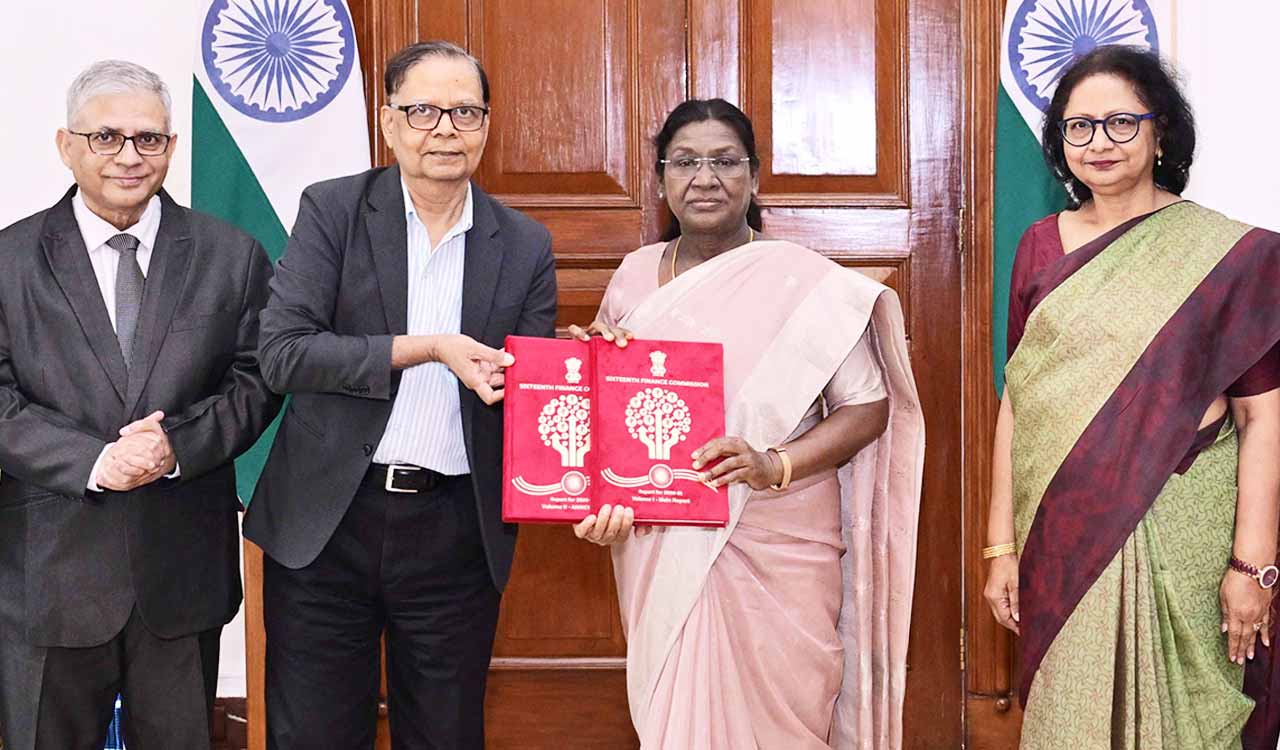


The 16th Finance Commission, whose report was recently accepted by the Union Cabinet, has managed to strike a fine balance between the imperatives of maintaining national equity and rewarding the performing States. Though it has not fully met the fiscal demands of the States, particularly the progressive and industrialised ones, a sincere attempt has been made to redefine the criteria for devolution of central taxes. Some of the changes introduced by the Commission, chaired by Arvind Panagariya, in the criteria for horizontal devolution are a welcome development. Significant among them is the inclusion of a State’s contribution to national GDP as a new factor in the horizontal devolution formula. This parameter has been given a weight of 10%. This should cheer up the prosperous and progressive States in the South and the West. The other modifications are: Removal of the 2.5% weightage given to States’ tax efforts; increasing the weightage given to population by 2.5 percentage points; reduction in the weightage given to area, demographic performance, and per capita GSDP distance. Per capita GSDP distance measures how far a State’s income level falls below a benchmark set by the average of the top three richest States, helping poorer States get more funds. It has been a legitimate concern of the southern States that they were treated unfairly in fixing the share from the divisible pool of central taxes. Despite their credible performance on various parameters, including controlling population, economic progress, and making significant contributions to the country’s growth, they were meted out a raw deal.
The spirit of fiscal federalism, it was argued, was sought to be undermined by punishing the progressive and performing States while rewarding the poorly-governed ones. The declining share of States in real terms in the divisible pool of taxes, faulty implementation of the Goods and Services Tax (GST) regime and restrictions on borrowings by the States are some of the issues that have created tensions in the Centre-State relations. On several occasions, the Finance Ministers from these States had argued that despite the 15th Finance Commission recommending that 41% of central taxes be devolved to States, the actual amount the States were receiving was only about 30% since the Centre was relying more on cesses and surcharges, which are not shared with States. Hopefully, this situation will ease in the future with the tweak, which resulted in increasing the share for the southern states to 17%, compared to 15.8% under the 15th Finance Commission period. Overall, the 16th FC has retained the States’ share in the divisible pool at 41%. This is the same as the share recommended by the previous Commission. Along with the southern States, Gujarat, Maharashtra, Punjab, and Jharkhand will get an increased share. However, States like Uttar Pradesh, Bihar, Madhya Pradesh, and Rajasthan have seen a decline.
Also Read

Related News