Editorial: Acid attacks against women in India — a national shame
The fact that nearly 88 per cent of the acid attack cases are still pending trial is a grim reminder of the serious flaws in India's criminal justice system
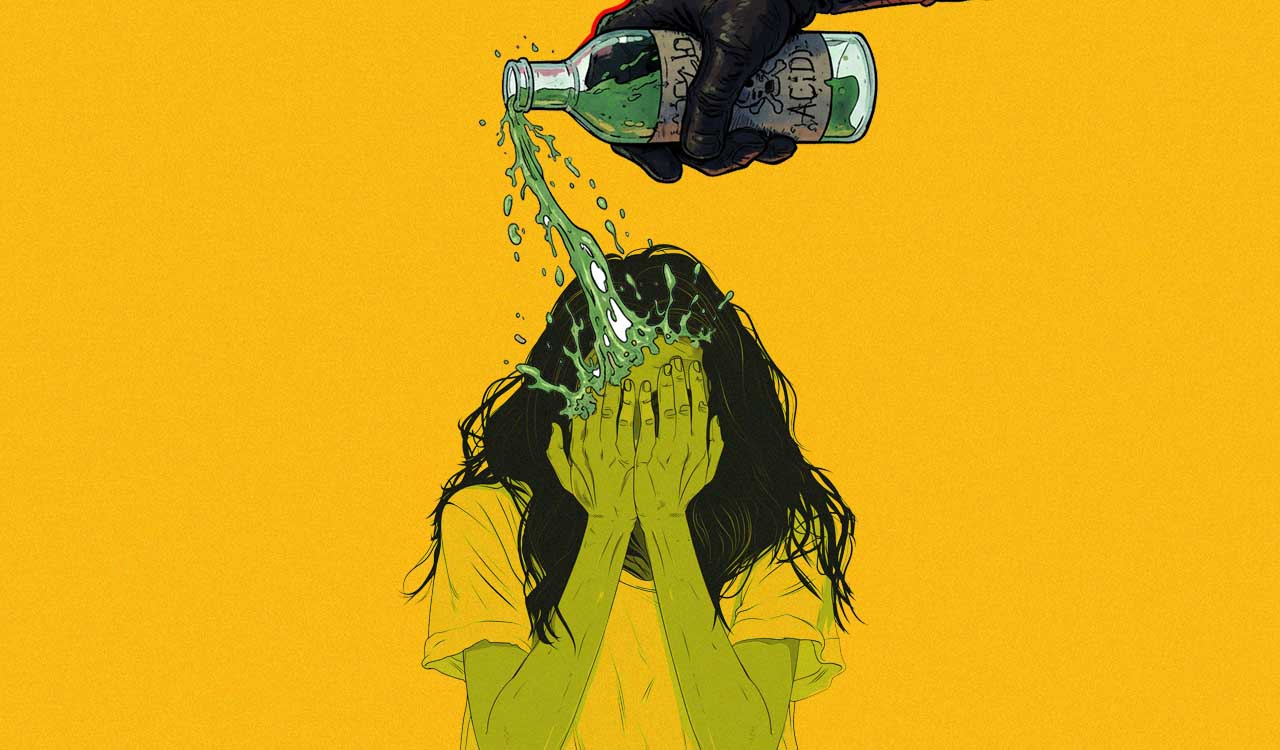


If the continued acid attacks against women in India, despite stringent laws, constitute a collective shame, the excruciatingly slow trials in such heinous cases make a mockery of the system. The fact that nearly 88 per cent of the acid attack cases are still pending trial is a grim reminder of the serious flaws in the criminal justice system. The Supreme Court has rightly described as a national shame the unending ordeal of acid attack survivor Shaheen Malik, whose case has been pending since 2009. The court has directed all high courts to submit details of pending cases within four weeks. The official figures on acid attacks — 207 cases registered in 2023 as per the National Crime Records Bureau (NCRB) data released in 2025 — don’t present a complete picture as many incidents go unreported and, in some cases, the survivors would be forced to withdraw their complaints. According to a study, nearly 78 per cent of the acid attack cases are due to the rejection of a marriage proposal or sexual advances. The victims face life-long medical needs, job loss, social ostracism and mental-health trauma, and many slip into poverty and cannot pursue long legal battles. Of the 735 acid attack cases slated for trial nationwide, around 649 remained pending from prior years, with only 86 new cases entering trial in 2023. Given this sad state of affairs, the apex court has asked the Centre to consider amending the law so that the survivors are covered under the Rights of Persons with Disabilities Act and can access various welfare schemes.
This is a welcome suggestion. If implemented, it can go a long way in helping victims rebuild their lives. An acid attack leaves the survivor scarred for life. In 2013, Parliament made amendments to criminalise acid attacks and to provide compensation to survivors for medical expenses. Until 2013, acid attack was not recognised as a separate offence under the Indian Penal Code (IPC). After the Criminal Law (Amendment Act) 2013, Sections 326A and 326B were inserted in the IPC, providing punishment for acid attacks. The amendment was brought about primarily to control and prevent acid attacks, a type of gender-based crime against women. The minimum punishment under these provisions is imprisonment for 10 years, which may be extended to imprisonment for life and a fine, and should be as per the victim’s medical expenses. Another area of concern is the unchecked over-the-counter sale of dangerous acids in the country. In 2013, the Supreme Court had imposed stringent curbs on acid sales. As per the order, vendors are required to obtain a licence and maintain a detailed record of buyers, specifying the purpose for which the acid is intended to be used. However, this directive is observed more in the breach than in the practice. The lethal liquid is sold without ID checks and, in many cases, even the bottles are not labelled.

Related News