Editorial: Bonhomie with Berlin — Merz’s India visit signals deeper India-Germany ties
German Chancellor Friedrich Merz’s India visit underscored deepening strategic convergence as both nations navigate global geopolitical and economic uncertainties
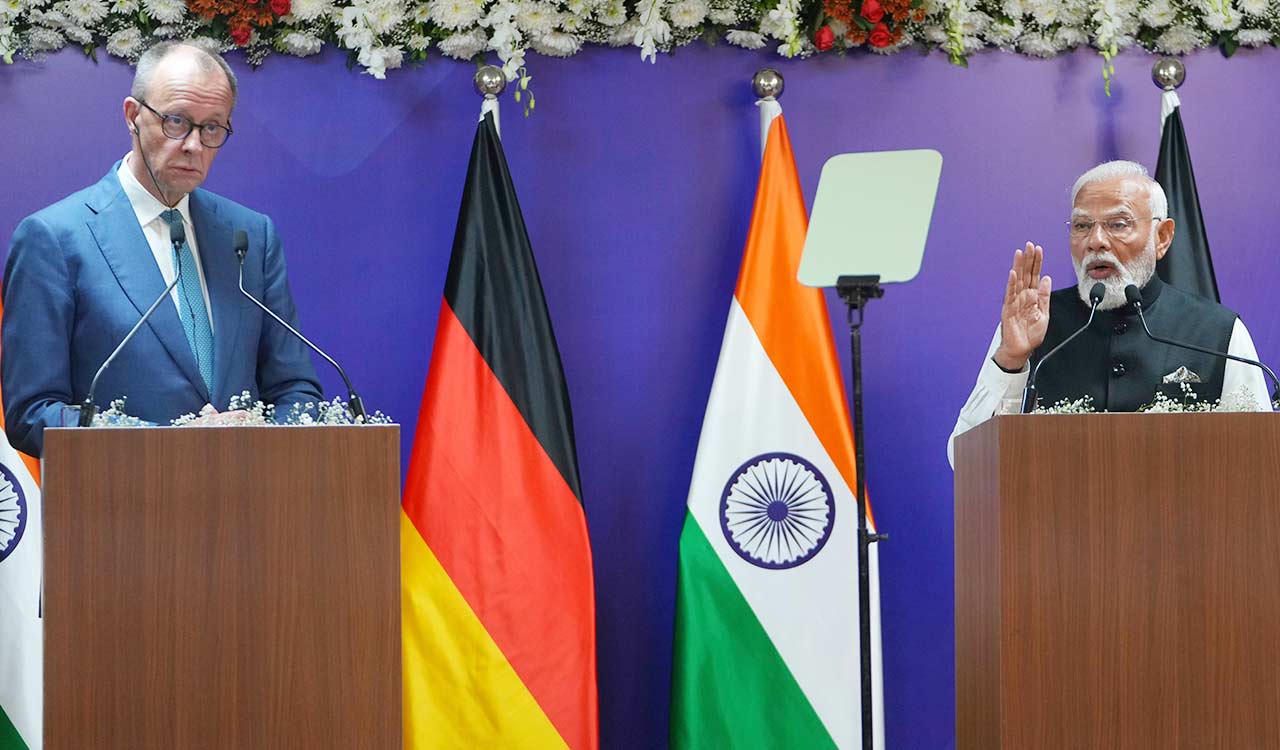


German Chancellor Friedrich Merz’s recent visit to India highlighted the growing convergence of interests between the two countries as they grapple with a volatile and unpredictable global geopolitical environment. The changing realities are impacting both countries in different ways. While India is navigating choppy trade waters following a steep rise in American tariffs and continuing challenges from China and the immediate neighbourhood, Germany too is struggling to keep pace with geopolitical shifts in the wake of the United States distancing itself from Europe on security matters, the growing complexities in Ukraine and tensions with China. One of the most important outcomes of his meeting with Prime Minister Narendra Modi is the announcement of visa-free transit for Indian passport holders passing through Germany. This people-centric decision will resonate far beyond geopolitical and diplomatic domains. For Indian students, professionals and business travellers, this step sends a clear signal that Germany values India as an all-weather friend. Both Merz and Modi have acknowledged that close people-to-people links remain a key pillar of the India-Germany strategic partnership. The focus on higher education and skilling reinforces this message. Germany’s growing demand for skilled workers, particularly in the healthcare sector, dovetails with India’s demographic strengths. Inviting German universities to open campuses in India can help address skill gaps. The Joint Declaration of Intent on the Global Skills Partnership is a welcome development. At a time when the US is increasingly tightening even legal pathways for skilled immigration, Germany — along with other EU countries — offers an attractive alternative.
The Modi-Merz talks yielded tangible outcomes across trade and security. On commerce, both sides reaffirmed their resolve to conclude the long-delayed EU-India free trade agreement by the end of this month, when European leaders will be in Delhi as guests for the Republic Day celebrations. The two countries also agreed to develop a joint roadmap for defence industrial cooperation. Germany has embarked on a massive programme of rearmament in response to Russia’s continuing war in Ukraine and growing doubts about long-term American commitment to European security. Over the last four years, it has emerged as the world’s fourth-largest defence spender, after the US, China, and Russia. With plans to spend up to 3.5% of the GDP on defence, German military expenditure could approach USD 200 billion annually by the end of this decade. For India, partnership with a rearming Germany opens a rare opportunity to modernise its own defence industry through co-development and co-production. Germany’s willingness to simplify processes related to defence trade and commit to co-development and co-production aligns well with the Centre’s Make in India goals. It is clear that India and Germany are determined to deepen their partnership despite lingering differences over Russia. By combining security cooperation with enablers like visa-free transit and a comprehensive roadmap on higher education, both countries have laid stress on mutual respect and trust amid global headwinds.
Also Read

Related News