Editorial: India-EU FTA, a landmark deal
The India-EU Free Trade Agreement underscores stability and rules-based cooperation at a time of global uncertainty
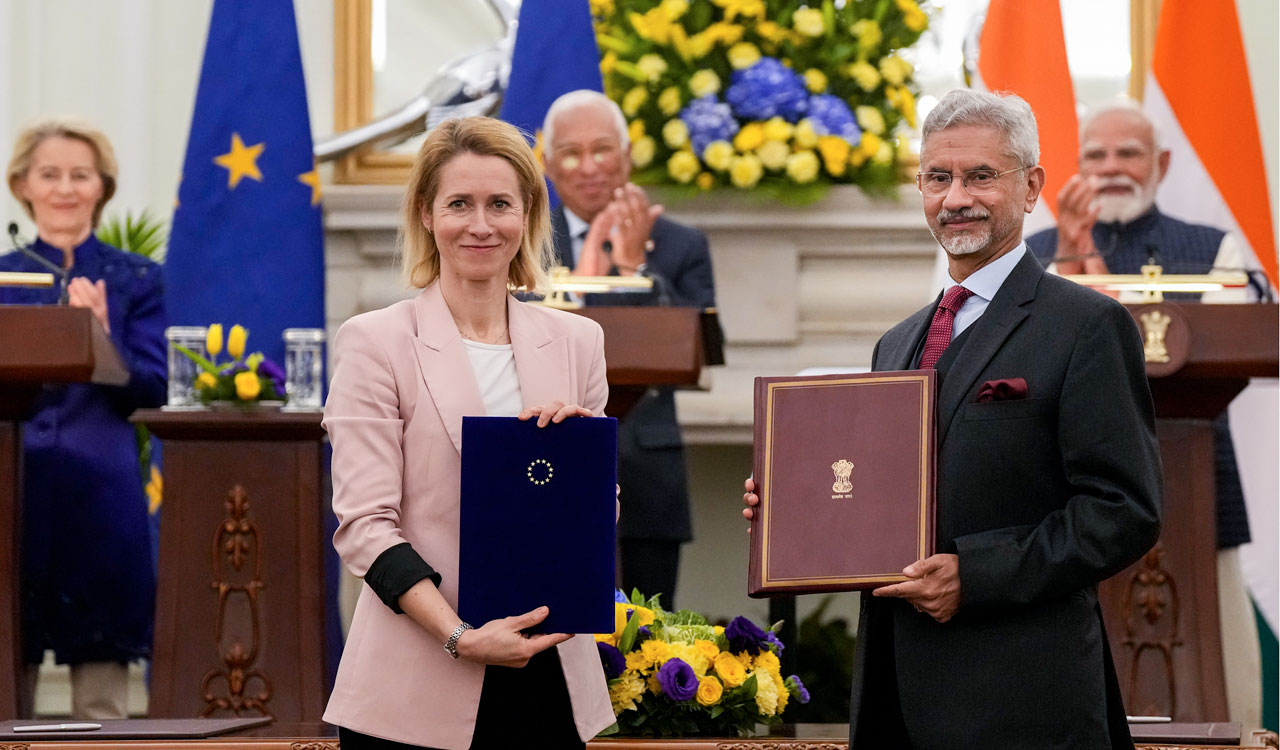


It has been described as “the mother of all trade deals” for a reason. At a time when the global economic environment is increasingly fragmented due to the maverick and unpredictable policies of the United States, the Free Trade Agreement (FTA) between India and the European Union sends a powerful message of stability and rules-based cooperation and opens a new chapter in bilateral relations, linking the two major economies that command a quarter of the world’s GDP. A day after the Republic Day celebrations, the announcement of the much-awaited trade deal, capping nearly two decades of negotiations, marked a perfect blend of symbolism and strategic significance. The pact, unveiled by European Commission president Ursula von der Leyen, European Council president António Costa and Prime Minister Narendra Modi, will allow free trade of goods between the bloc of 27 European States and the world’s most populous country, which together make up nearly 25% of global gross domestic product and a market of two billion people. The agreement will significantly reduce tariffs and expand market access for both sides. This is India’s biggest free trade agreement and makes access to European markets easier for India’s farmers and small businesses. It will boost the manufacturing and services sectors, along with innovative partnerships. This will also lower costs for European products entering the country, such as cars, machinery and agricultural food items, after import duties are reduced. And, all of India’s exports would get “preferential access” into the EU, with textiles, leather, marine products, handicrafts, gems and jewellery set to see a reduction or elimination of tariffs.
Significantly, duties on European vehicles, currently as high as 110%, would be cut to 10% for 250,000 vehicles annually. European carmakers currently hold less than 4% share of India’s 4.4-million units a year car market, which is dominated by Japan’s Suzuki Motor as well as homegrown brands Mahindra and Tata that together hold two-thirds. The agreement would eliminate tariffs on most exports of chemicals, machinery and electrical equipment, as well as aircraft and spacecraft, following phased reductions. The EU is India’s largest trading partner in goods, with bilateral trade touching about $136 billion in 2024-25, and a steadily growing services trade as well. Over the past decade, European companies have expanded their footprint in India’s manufacturing, clean energy and digital sectors, while Indian firms — from IT services to pharmaceuticals — have deepened their presence across Europe. The FTA is also the economic pillar of a much broader strategic convergence. Over the past few years, India and the EU have woven together cooperation across defence and maritime security, clean energy and climate action, digital technologies, space, and connectivity. The establishment of the India-EU Trade and Technology Council in 2022, only the EU’s second such council after the one with the US, was a recognition that trade, technology and security are now inseparable.
Also Read

Related News