Editorial: India-Oman trade deal — expanding India’s footprint in West Asia
A deal with Oman could provide the springboard India needs to find other markets in the region and in Africa
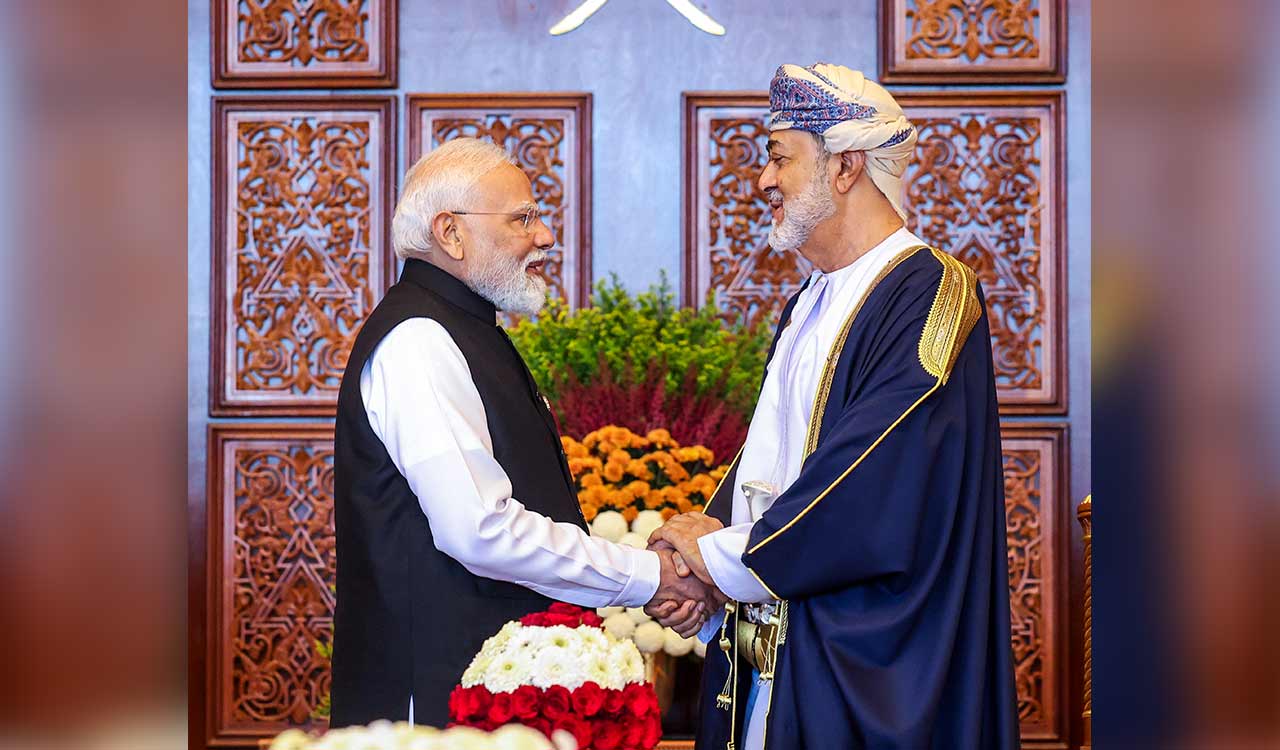


Hit by the maverick trade policies of the United States President Donald Trump, India has been focusing on strategic hedging, expanding markets and accelerating Free Trade Agreements with a number of countries. The recent FTA with Oman, signed during Prime Minister Narendra Modi’s visit to the Gulf country, is part of this broader strategy. This is the second trade deal with a Gulf Cooperation Council (GCC) country after the UAE, and comes as a major boost to the efforts to expand market access in the West Asian market. With Oman providing India duty-free access to 98 per cent of its tariff lines, Indian manufacturers will get breathing space and a chance to reroute goods through a Gulf hub that can serve Africa and parts of Europe. The Comprehensive Economic Partnership Agreement (CEPA) with Muscat and similar agreements with other partners like the European Union or New Zealand provide the much-needed strategic hedging. India already has 15 FTAs covering 26 countries and preferential trade agreements with another 26. It is negotiating with over 50 more partners. Trade between India and Oman exceeded $10 billion in 2024-25, providing a strong foundation for greater economic cooperation. The two countries have also agreed to enhance services exports, allowing a more liberal entry and stay conditions for skilled professionals. A deal with Oman could provide the springboard India needs to find other markets in the region and in Africa. Its strategic location serves as a hub from where Indian products can find other markets.
The zero-duty access could result in $2 billion worth of exports to Oman in the near term, benefitting gems and jewellery, textiles, leather, footwear, sports goods, plastics, furniture, agricultural products and engineering products. Oman largely exports crude oil, liquefied natural gas and fertilizers, methyl alcohol, along with petroleum coke. These items are critical for India’s energy sector. The CEPA provides for 100 per cent FDI by Indian companies in major services sectors in Oman. Indian exports, largely driven by machinery and parts exports, have doubled in the last five years from $2 billion to $6 billion. New Delhi’s top exports include machinery, rice, iron and steel articles, and personal care products and ceramic products. With bilateral trade already exceeding $10 billion, the agreement provides a strong platform for accelerated growth in merchandise trade. The CEPA also delivers ambitious and forward-looking commitments in services, covering 127 sub-sectors including IT and computer-related services, business and professional services, R&D, education, and health, unlocking high-value opportunities for Indian service providers. An undeniable reality of current international politics is that trade policy can no longer be divorced from geopolitical risk. When tariffs are weaponised as instruments of political pressure, nations must diversify markets and deepen trade ties beyond traditional partners. This diversification must be accompanied by domestic reforms in infrastructure, finance, manufacturing policy, and labour markets to make Indian goods truly competitive.
Also Read

Related News