Editorial: India’s first hydrogen-powered train signals journey towards clean energy
The indigenous innovation places India among a select group of nations with hydrogen fuel-cell technology, but its wider rollout will depend on overcoming cost, supply and infrastructure challenges
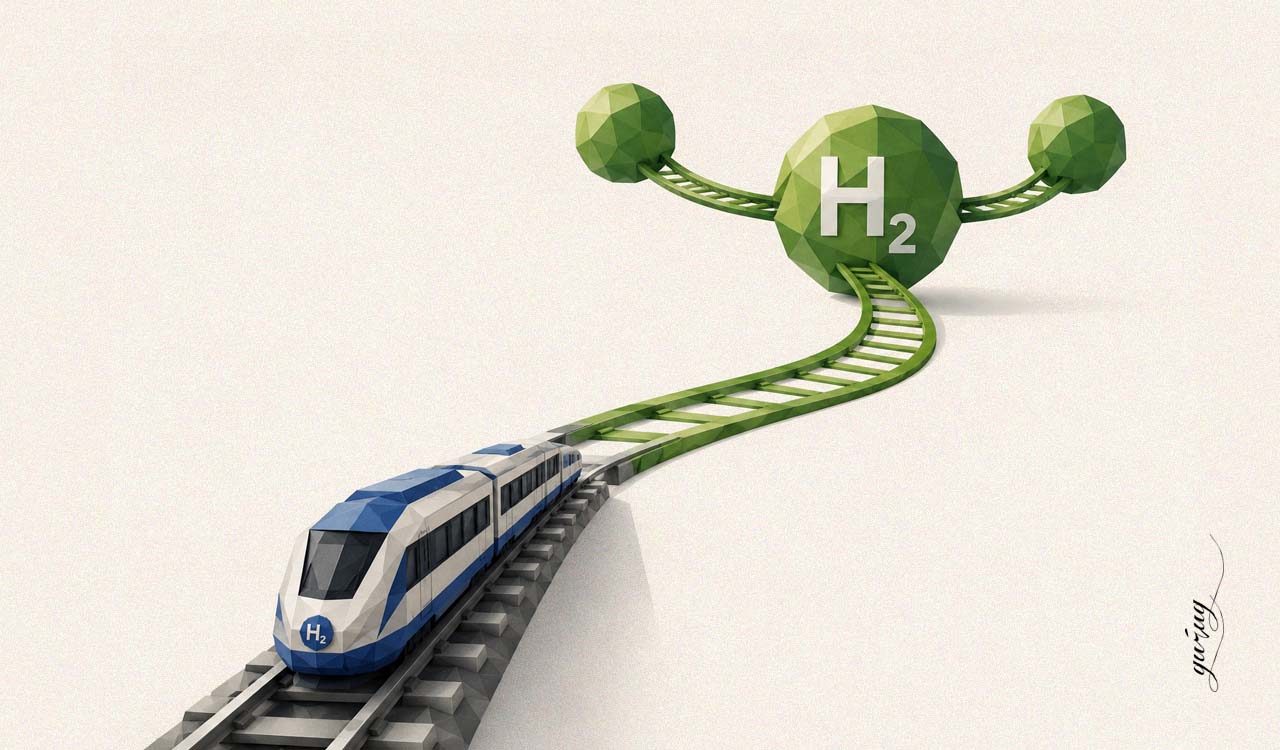


India’s first indigenously built hydrogen-powered train, developed under the ‘Make in India’ initiative, is an important milestone in the country’s ambition to decarbonise transport under the National Green Hydrogen Mission. While it is a laudable innovation that puts India among a select group of nations that have developed the hydrogen fuel-cell technology, a wider rollout will hinge on solving the cost, supply, and infrastructure challenges. The 89-kilometre-long Jind-Sonipat route in Haryana was recently flagged off by Prime Minister Narendra Modi. The 10-coach train comprises two hydrogen-powered driving cars and eight passenger coaches with a total capacity of around 2,600 passengers, and has a design speed of 110 kmph. The Railways has developed the hydrogen fuel-cell train with the aim of deploying it initially on heritage and non-electrified routes before scaling up. Although hydrogen trains are unlikely to replace electric trains on India’s heavily electrified mainlines, they offer a promising solution for routes where electrification is difficult or uneconomical. The launch has set in motion a transition towards cleaner, low-emission transport. It also signals India’s intent to be among the global leaders in sustainable mobility. Powered by hydrogen fuel cells that emit only water vapour, the train offers an environmentally friendly alternative to diesel locomotives. With indigenous technology and a locally developed hydrogen ecosystem at Jind, the project demonstrates growing domestic capabilities in advanced engineering. It also complements the National Green Hydrogen Mission, which seeks to reduce India’s dependence on imported fossil fuels while supporting the country’s long-term net-zero ambitions.
India’s broader green hydrogen production target is 5 million tonnes a year by 2030, backed by over $2 billion in incentives. Therefore, scaling up reliable green hydrogen supply nationwide is still a work in progress. High costs, limited infrastructure, storage challenges, and widespread electrification of the railway network mean that hydrogen trains are likely to complement—rather than replace—electric trains. Their long-term success will depend on affordable green hydrogen, technological maturity, and targeted deployment on routes where they offer clear economic and environmental advantages. India’s heavy reliance on imported crude oil, natural gas, and industrial feedstocks makes energy security a national priority, particularly during periods of geopolitical instability. Producing hydrogen domestically using renewable energy can help reduce exposure to volatile global energy markets and strengthen economic resilience. However, the euphoria surrounding the hydrogen train must be tempered with realism. Green hydrogen costs almost twice as much as the conventional grey variety. With over 95% of India’s broad-gauge railway network already electrified, hydrogen-powered trains are unlikely to replace electric trains across the country. Instead, they may find their greatest value on non-electrified routes where conventional electrification is economically or technically difficult. The hydrogen train should therefore be viewed as a strategic demonstration. Its success will depend on India’s ability to lower production costs, expand renewable energy capacity, and create a commercially viable hydrogen ecosystem.
Also Read

Related News