Editorial: Nemesis catches up with Sheikh Hasina
New Delhi needs to take a balanced approach in view of the prevailing trust deficit between India and Bangladesh
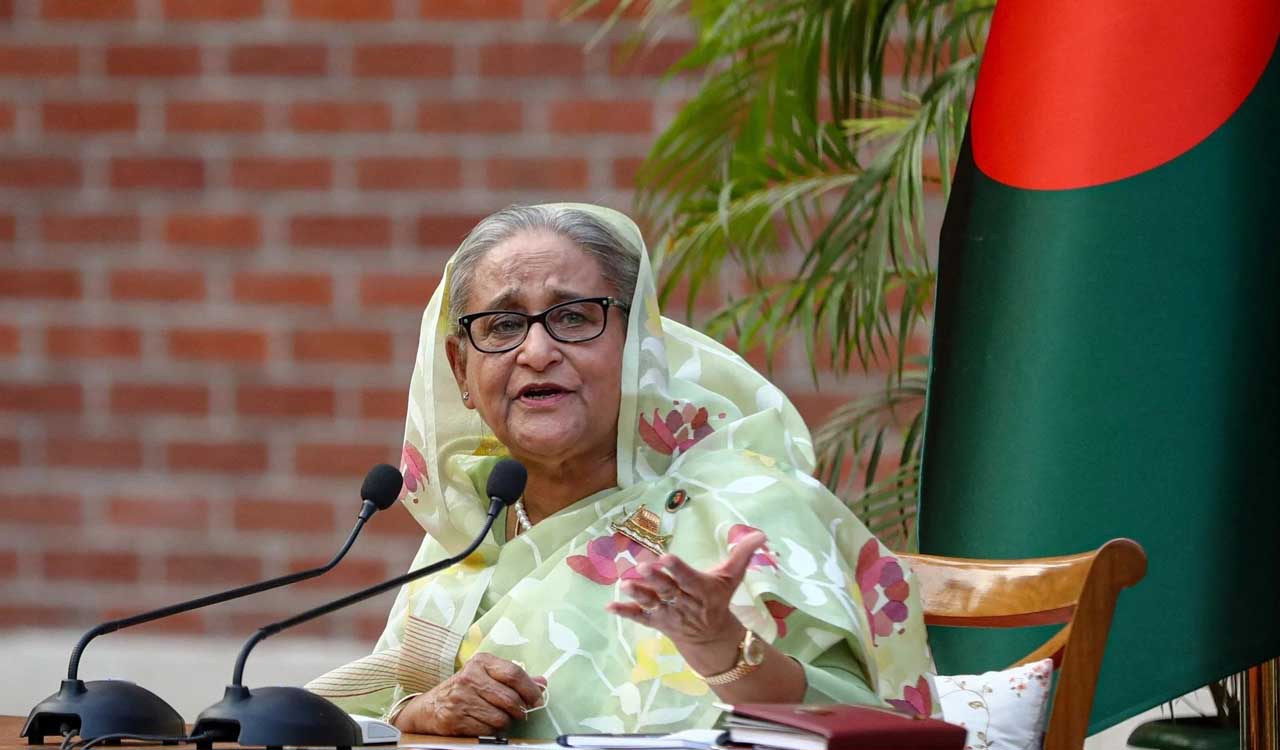


The ghosts of the past have returned to haunt former Bangladesh Prime Minister Sheikh Hasina. Bangladesh’s International Crimes Tribunal (ICT), established during her regime in 2010 to punish the Jamaat leaders, has now turned out to be her nemesis. The irony has not been lost on the observers as the interim regime has used the same institution as a tool to hand out a death sentence to her for crimes against humanity. During her regime, which saw a massive crackdown on Islamist elements, the ICT was activated to handle cases involving extremist organisations, and it sentenced several Jamaat leaders to death. The Tribunal was originally conceived by the country’s founder and Hasina’s father, Sheikh Mujibur Rahman, to deliver justice to the survivors of the genocide during the liberation struggle of 1971. But the Tribunal was never put to use until it became an election promise decades later by Hasina to punish the collaborators with Pakistan during the liberation war. Hasina, dislodged from power last year following a massive upsurge, was tried in absentia for ‘crimes against humanity’ over her government’s violent crackdown on student-led protests. The 78-year-old leader of the now-banned Awami League Party was found guilty of being the mastermind and principal architect behind last year’s suppression of mass demonstrations in which nearly 1,400 people were killed. The development is bound to have diplomatic repercussions in India, which has provided shelter to her. Bangladesh’s foreign ministry has demanded her immediate extradition, adding a new layer of tension to already strained ties.
The conviction of Hasina, who ruled Bangladesh with an iron fist, is likely to set off a wave of political chaos ahead of national elections expected in February next year. Hasina has been in self-exile in India ever since she fled her country in July last year, following violent protests which brought down her government. While there is an extradition treaty between the two countries, India is not obliged to hand over Hasina because it is clear that the trial was politically motivated and did not follow the principles of natural justice. However, New Delhi needs to assess the developments carefully and take a balanced approach in view of the prevailing trust deficit between the two countries. Hasina has been an all-weather ally of India. Be it in the area of deepening economic and trade relations or in tackling the terrorism menace, there was a perfect convergence between India and Bangladesh during the Awami League regime. India cannot afford to abandon her in the hour of crisis. Like her country’s blood-soaked history, Hasina’s life journey too has been turbulent. The 1975 military coup saw her father, Mujibur Rahman, her mother, and three brothers assassinated, forcing her into exile. She returned to Bangladesh in 1981 to lead her father’s Awami League and became the Prime Minister for the first time in 1996.

Related News