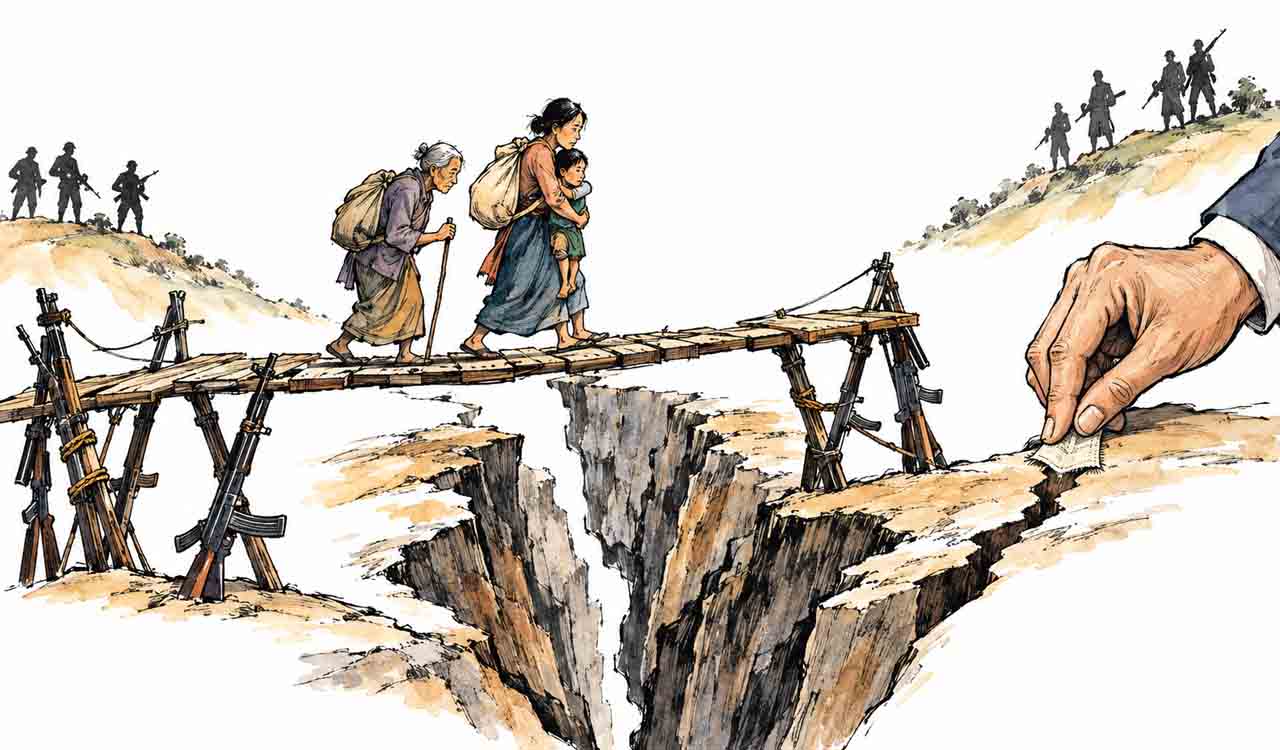
Editorial: Nepal, a victim of fragile ecology
Nepal’s devastating floods underscore the urgent need for India, China, and other countries, along with international institutions, to join hands on data sharing and climate adaptation
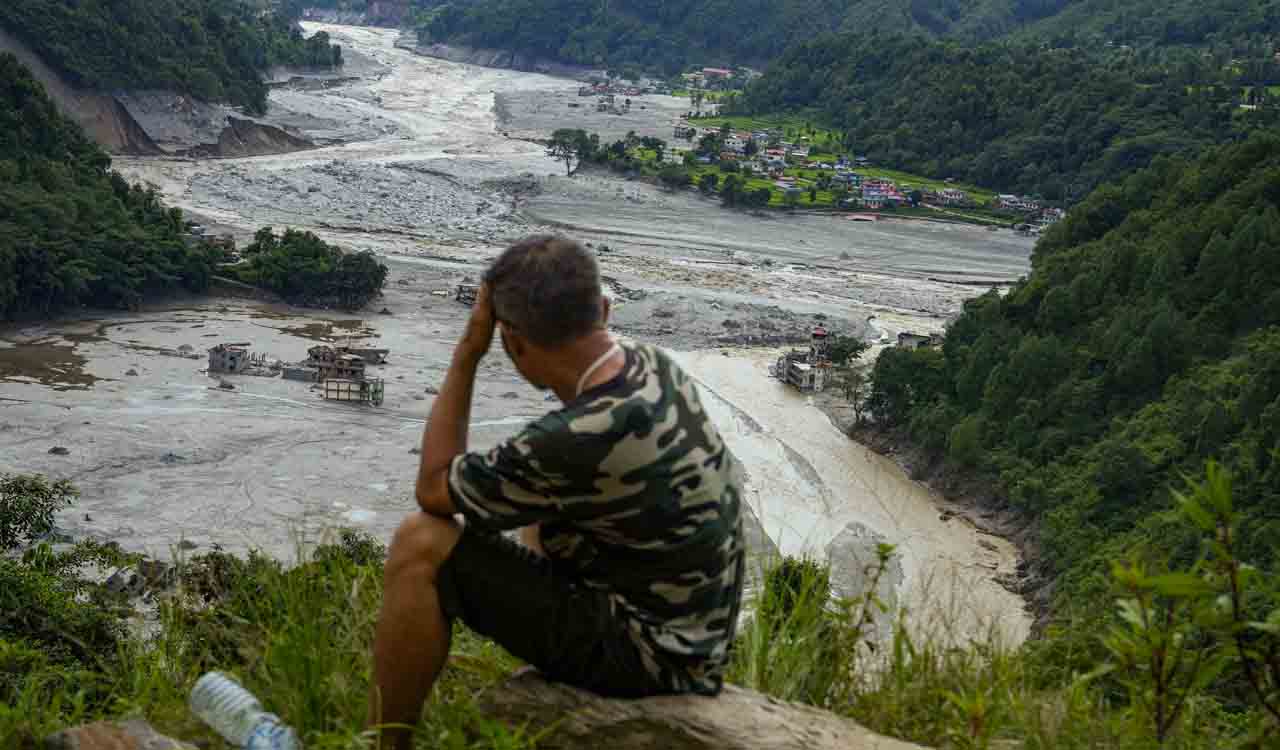


Nepal’s devastating floods, triggered by glacial collapse, present a poignant irony. The tiny Himalayan nation has been paying a disproportionate price for global warming, though it has not contributed significantly to the crisis. It is particularly vulnerable to natural disasters because of its fragile ecology, while the climate change crisis, caused by greenhouse gas emissions and human activities, has further worsened the situation. This is despite the fact that Nepal produces less than 0.1% of global emissions. The August 26 floods have left a trail of death and destruction, with the search still on for missing persons and the death toll rising by the day. It is estimated that the country, already reeling under an economic crisis and political instability, would need $4-5 billion for reconstruction. This is equivalent to one-tenth of a national economy that depends on remittances and tourism. Without help from countries like India and China, it cannot recover from the catastrophe. Climate change is altering the geology of glaciers, permafrost, and glacial lakes across the Himalayas, creating potential ticking time bombs. The latest tragedy has underscored the need for international cooperation to handle crises of such magnitude. India, China and other countries, along with international universities, research institutions and hazard-monitoring agencies, should become permanent partners. In an eloquent write-up, Congress MP Shashi Tharoor explained how the Nepal floods came as a devastating reminder of the fragile, interconnected ecological reality of Himalayan Asia and called for establishing an institutionalised tripartite mechanism among India, Nepal and China dedicated exclusively to ecological protection, real-time hydrological information-sharing, and joint climate adaptation efforts.
Arguing that designing such an institutional framework requires a clear-eyed assessment of the region’s historical track record regarding ecological transparency, he rightly pointed out that cooperation between upper-riparian and lower-riparian states in the Himalaya has historically been uneven, reactive, and constrained by national security secrecy. Both India and Nepal have repeatedly voiced dissatisfaction with the quality, frequency, and timeliness of hydrological and geological data shared by China. The mounting toll of the floods is a grim reminder of the region’s precarity. It underscores how a disturbance in higher altitudes can swiftly become a downstream catastrophe. Landslides, avalanches, and erratic rainfall can trigger cascading events. Several studies, including Intergovernmental Panel on Climate Change (IPCC) reports, have documented the retreat of glaciers in the rapidly warming Himalaya. The meltwater accumulates in glacial lakes, which can suddenly burst, sending enormous volumes of water and debris down narrow valleys. Over the years, Beijing’s approach to sharing hydrological data during the monsoon season has been governed largely by transactional, bilateral MoUs rather than automatic, open-data commitments. Lower-riparian nations have often been left in the dark during critical moments. Even existing bilateral mechanisms between India and Nepal have frequently suffered from inadequate instrumentation in remote high-altitude zones, and a lack of an integrated early-warning architecture.
Also Read

Related News