Editorial: Of surplus food stocks and empty stomachs
Better distribution and targeted interventions are essential to bridge the gap between food availability and nutritional security
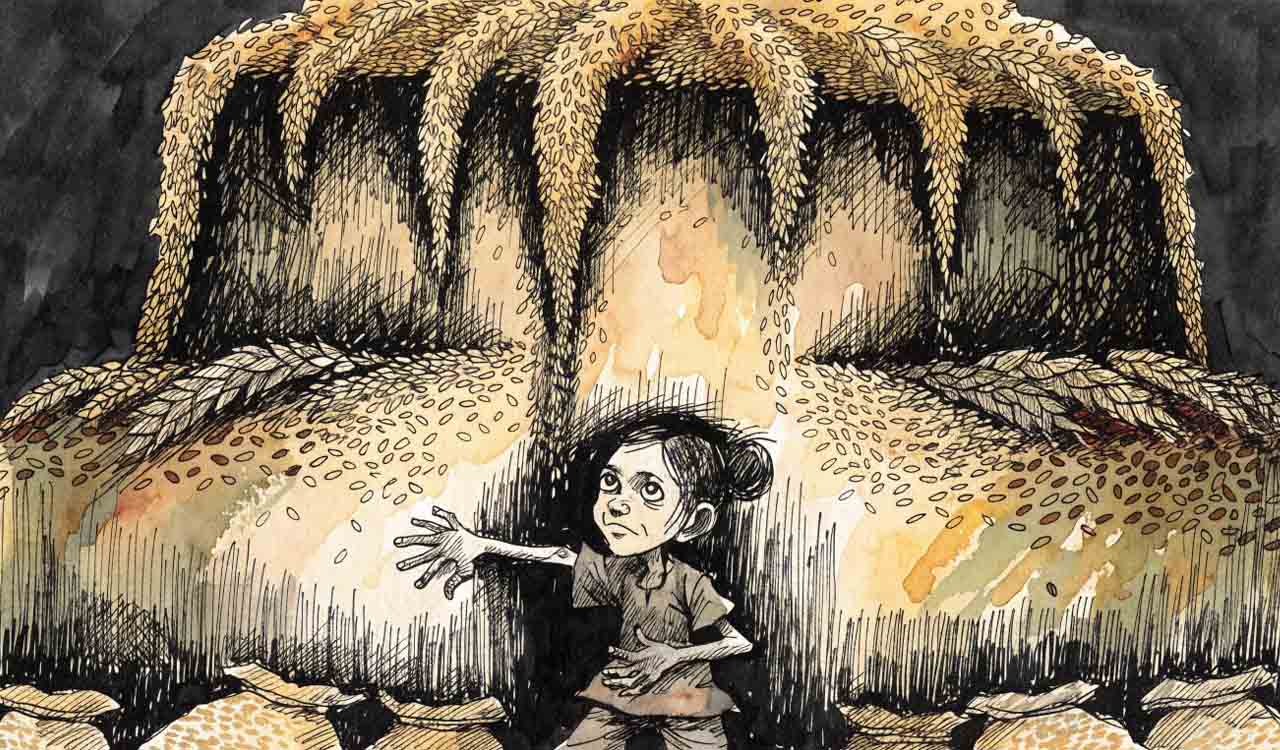


India is a nation of curious paradoxes: surplus food production yet millions go to sleep on empty stomachs; the world’s fastest-growing major economy yet its per capita income is a paltry $2,485; and a rising number of billionaires yet unemployment levels continue to grow. No wonder India’s standing in the world on various development indices has been steadily declining. Those in the government may continue to be in denial mode and question the methodologies used by international agencies to compile global rankings, but one cannot turn a blind eye to the stark ground realities. World Food Day, observed on October 16, has once again brought into focus the country’s inherent contradictions and its continuing struggle with serious hunger and malnutrition, despite improvements in key nutrition indicators over the past two decades. According to the Global Hunger Index (GHI), India ranks 100th among 122 countries, with a score of 24.1, indicating a serious hunger situation. While undernourishment and child stunting have declined, child wasting remains high at 19%, with India lagging behind Bangladesh and Nepal on hunger indicators. The GHI score is based on undernourishment and child mortality indicators. It is a tool used by international humanitarian agencies to estimate and track hunger levels. It is ironic that a country with surplus foodgrain stocks is home to an alarmingly large number of malnourished children. Despite rapid urbanisation and improved access to quality food, many children in India do not get the required nourishment.Though India has successfully narrowed the inequities in severe child food poverty between poorer and wealthier households by at least 5 percentage points over the past decade, malnutrition and stunted growth remain matters of serious concern. While targeted government policies to improve nutritional standards, community-driven initiatives and partnerships aimed at expanding access to nutritious food for the most vulnerable children are yielding credible results, the country cannot afford to become complacent. A lot needs to be done to achieve nutritional equality. UNICEF’s guidelines emphasise the need for children to consume a diverse diet from at least five of the eight food groups daily. The GHI assesses hunger through four indicators: undernourishment, child stunting, child wasting and under-five mortality. These indicators reflect different dimensions of food insecurity and malnutrition. A higher score indicates a more severe hunger situation. India’s GHI score has fallen from 37 in 2006 to 24.1 in 2026, reflecting gradual progress in tackling hunger. The score stood at 28.8 in 2012 before declining to 25.8 in 2018. Although these figures point to sustained improvement, India’s continued classification in the “serious” category highlights the challenges that remain. Despite having enough grain in storage, structural inequities, cold-chain bottlenecks, and regional supply chain failures mean that food often fails to reach vulnerable rural and marginalised communities.
Also Read

Related News