Editorial: Shah does it again—revives UCC rhetoric
In an already polarised political atmosphere, Amit Shah’s promise to implement UCC in Uttar Pradesh is uncalled for and risks deepening social divisions
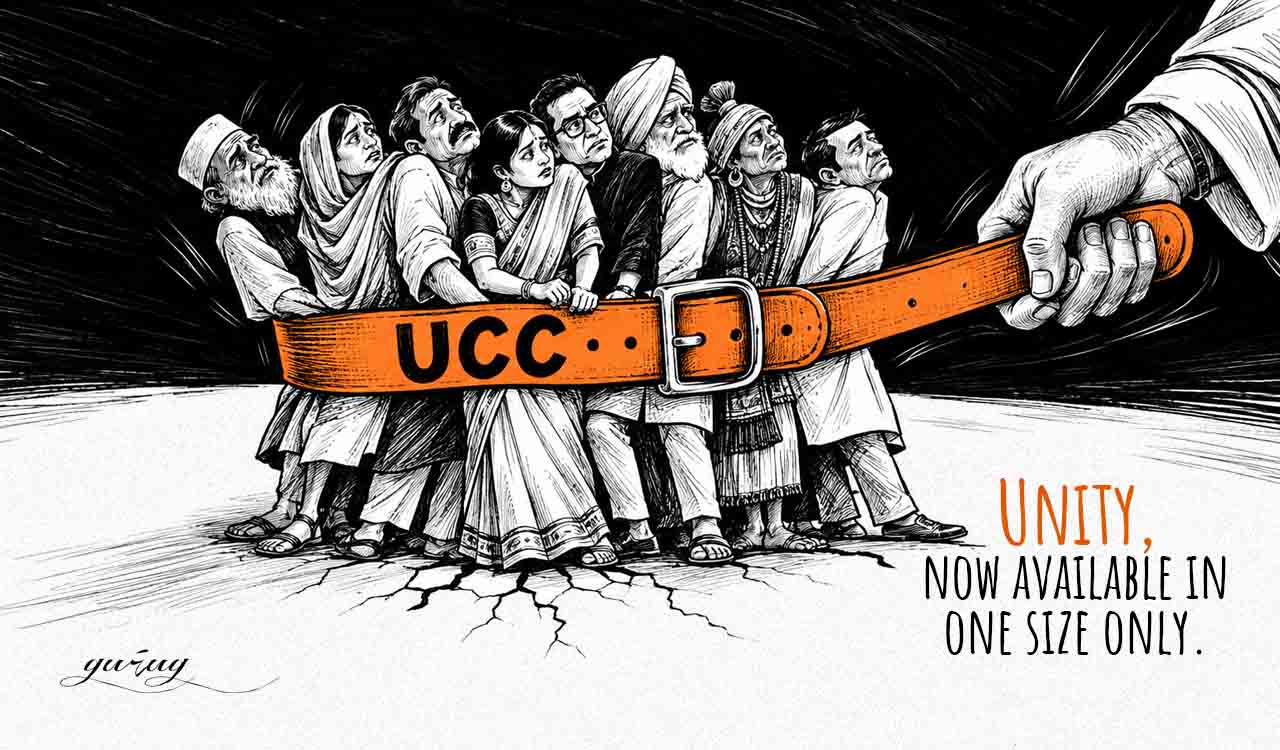


Union Home Minister Amit Shah is at it again. By promising to roll out the Uniform Civil Code (UCC) in Uttar Pradesh if the BJP is returned to power in next year’s Assembly elections, he has reignited a controversy that is bound to foment further divisions in society. In an already polarised political atmosphere, Shah’s move must be seen as mischievous and uncalled for. He chose a meeting of the Uttar Pradesh State BJP executive to make the loaded announcement. In what appears to be a carefully crafted pattern, the senior BJP leader had, in September this year, made an impassioned plea to the NDA-ruled States to implement the UCC before the 2029 Lok Sabha elections. Two years ago, Prime Minister Narendra Modi chose the ramparts of the Red Fort to root for the Uniform Civil Code, calling it a secular civil code and dubbing the existing structure as a “communal civil code”. It is rather intriguing that the senior BJP leadership has chosen to periodically push for the common civil code idea despite being aware of the fact that the NDA 3.0 is dependent on the support of allies such as the Janata Dal (United) and the Telugu Desam Party to provide a stable government. The coalition partners have already voiced reservations over the issue. The BJP leadership has made no attempt to take the allies on board over this far-reaching policy move. The UCC has been one of the three core ideological agendas of the saffron party, along with the Ram temple in Ayodhya and the abrogation of Article 370, which ended Jammu and Kashmir’s special status. And it still remains unfulfilled.
Though four BJP-ruled States—Uttarakhand, Gujarat, Assam and Madhya Pradesh—have already passed UCC legislation, the party’s central leadership has so far refrained from pushing for a national policy and put the issue on the back burner. Being home to different religions, customs and cultures, India has been a role model to the world for its unity in diversity. Any attempt to impose uniformity in the name of unifying communities would go against the spirit of democratic diversity. The time is not ripe for India to experiment with a common code, as it might lead to social friction and an erosion of faith in the constitutional guarantee of freedom of religion. Opposition parties have raised objections over the proposed law, dubbing it an anti-minorities move. NDA allies JD (U) and TDP also have reservations about the UCC, fearing a backlash from the Muslim community. Instead of pushing for a national law on a common civil code, the BJP leadership appears keen on persuading the States to pass such a law. This strategy allows the saffron party to test different models, deal with local customs and demonstrate implementation without first confronting the full political and constitutional complexity of a nationwide law.
Also Read

Related News