Editorial: Union Budget 2026-27 — Stability over spectacle
Amid global uncertainty, Finance Minister Nirmala Sitharaman focuses on targeted measures to sustain growth, favouring steady interventions over headline-grabbing announcements
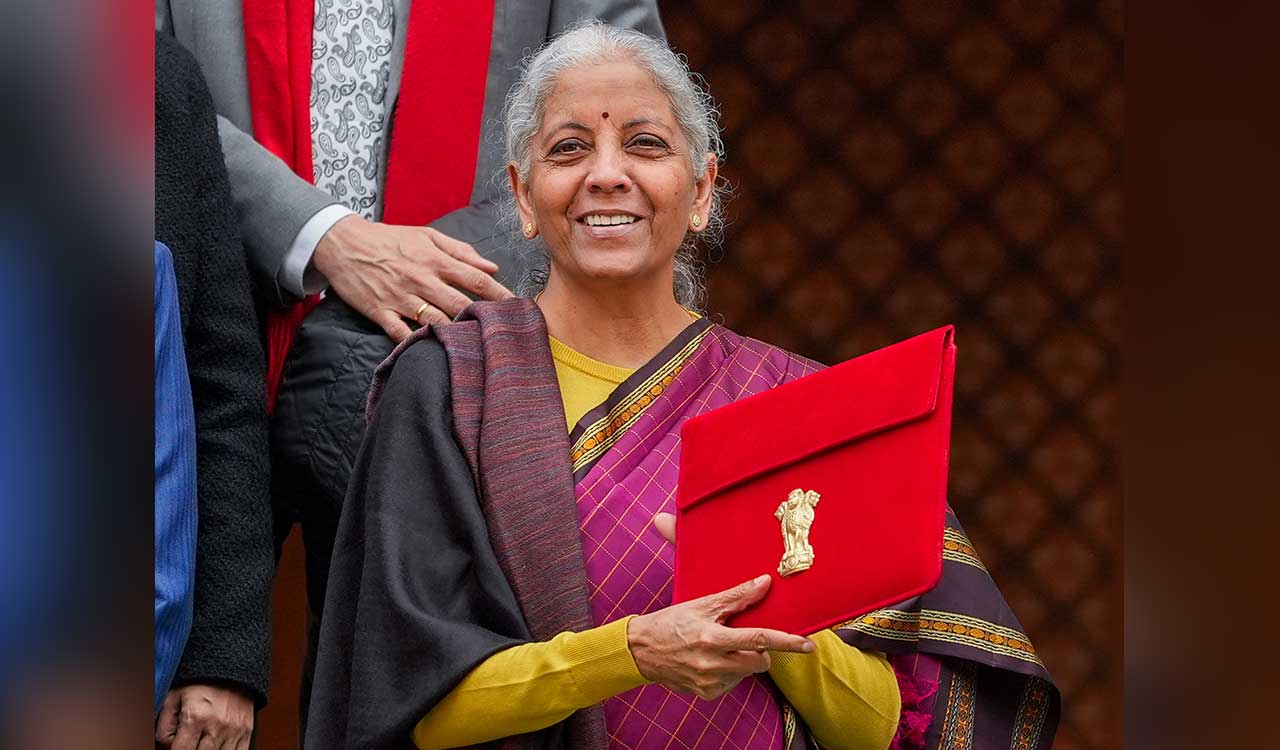


If one expected the Union Budget 2026-27 to unveil an overarching vision for the future and big bang reform initiatives, then it was certainly a disappointing day. Finance Minister Nirmala Sitharaman, presenting the Budget for the ninth consecutive time, chose a restrained, defensive, and incremental approach at a time when the economy is facing external headwinds. The central promise of this Budget appears to be durable growth, which is anchored in manufacturing, infrastructure, and fiscal discipline. There was no relief for the salaried class as the income tax structure was left untouched. Nor were there any major fireworks or headline-grabbing announcements as the government chose to focus on financial stability and restraint. Last year’s substantial personal income tax relief left no elbow room for further giveaways. Given the unpredictable global situation, the government is content with supporting growth through targeted interventions rather than one-off announcements in the Budget. The reform measures were largely microeconomic and administrative. Certainly, there was a case for initiating path-breaking reforms to kickstart the economy, particularly against the backdrop of a comfortable position marked by a steady GDP growth, manageable levels of inflation and fiscal deficit. India needs to grow at a consistent rate of 8% over the next two decades to realise the much-touted goal of ‘Viksit Bharat’. The public capital expenditure continues to be the most important growth instrument as it is pegged at Rs 12.2 lakh crore in FY2026-27, accounting for nearly 3.4% of the GDP and reflecting nearly a 9% increase year-on-year.
The Budget pegs the fiscal deficit at 4.3% of the GDP for the year. This meets the commitment made earlier to bring the deficit below 4.5% by FY2025-26 and signals a steady, rather than accelerated, consolidation path. Fiscal discipline remains the anchor of this Budget. One of the significant features is the major push given to the MSME sector. A Rs 10,000-crore MSME Growth Fund has been announced to provide equity support to scalable firms. Also, professional support structures have been introduced to help MSMEs with compliance, certification, technology adoption, and market access, particularly in small towns. Another important innovation is the creation of an Infrastructure Risk Guarantee Fund to provide partial credit guarantees for infrastructure projects, particularly in early stages where risk perception deters private finance. This mechanism aims to crowd in long-term capital by sharing risk between the state and lenders, rather than replacing private finance with public spending. If implemented well, it could improve bankability for large projects in transport, urban infrastructure, and energy. There is a clear acknowledgement of the need to create jobs for the large number of youths entering the workforce every year. Focus areas include facilitating programmes to train caregivers — a big growth segment going forward — and setting up a committee to identify services sectors that can increase India’s share in global services exports to 10% by 2047.
Also Read

Related News