Educational institutions turn to narcotics detection dogs to keep campuses drug-free
Educational institutions are increasingly hiring trained narcotics detection dogs to conduct surprise inspections and keep campuses drug-free. Service providers report growing demand for canine teams, with most detections involving ganja and cigarettes, while trained dogs are also deployed for explosive detection and security duties.
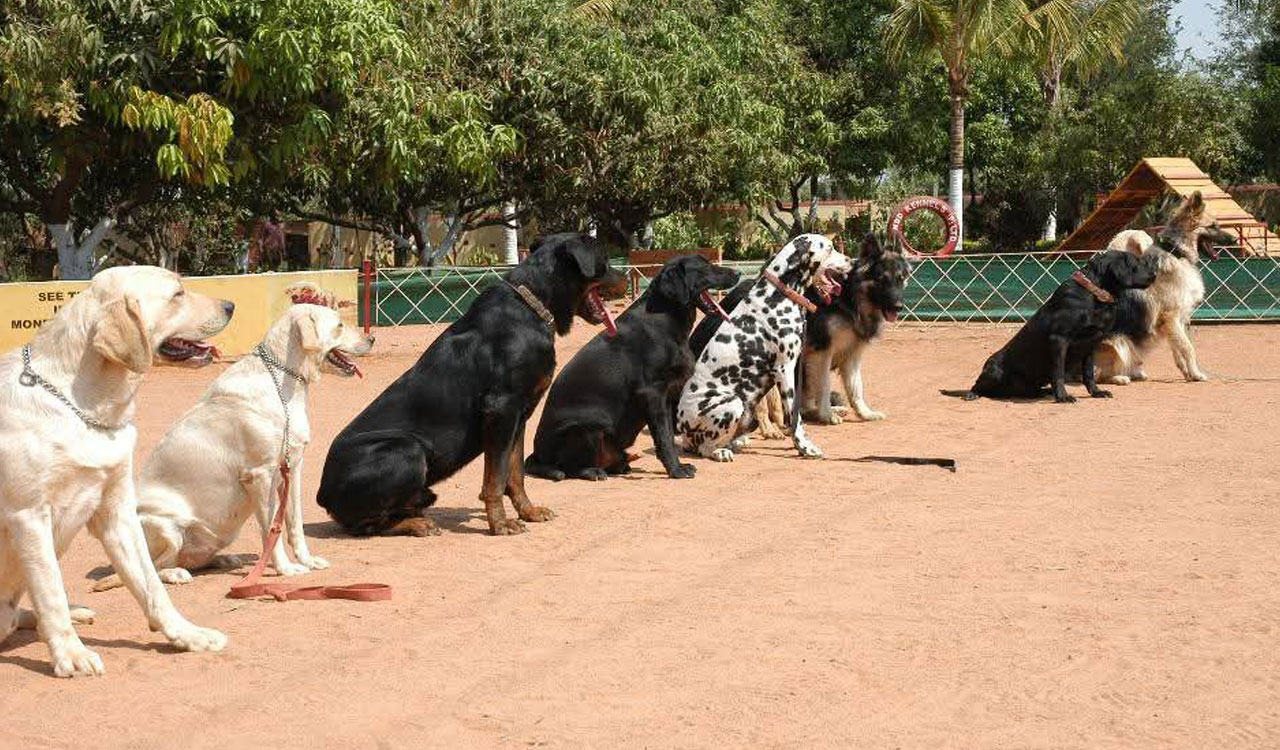


HYDERABAD: With educational institutions stepping up efforts to maintain drug-free campuses, the demand for trained narcotics detection dogs has increased significantly.
Residential colleges, private universities and other educational institutions are increasingly hiring canine detection teams from private kennels and dog security service providers to conduct surprise inspections.
The trained dogs search dormitories, classrooms, laboratories, parking areas and other parts of campuses for concealed narcotic substances. The initiative is aimed at preventing drug abuse among students and protecting institutions from reputational damage if drugs are found on campus.
Most narcotics detection dogs are trained by experts, including retired Army and police personnel, to identify the scent of cannabis (ganja), cocaine and other narcotic substances hidden in bags, lockers, vehicles and rooms. According to service providers, while the dogs can detect several drugs, most detections in educational institutions involve ganja and cigarettes, with expensive synthetic drugs rarely found.
“The demand for narcotics detection dogs has increased considerably. Many residential colleges, private universities and educational institutions hire our services for surprise inspections. Institutions want to ensure their campuses remain drug-free,” said Philip Butt, Detection and Protection Trainer and Managing Director, Commando Kennels, Kompally.
Canine teams are hired on a monthly contract, usually for 8-hour or 12-hour shifts. Depending on the number of dogs deployed, service providers charge between Rs 40,000 and Rs 1 lakh per month for each trained dog along with its handler.
“German Shepherds, Belgian Malinois and Labrador Retrievers are the most commonly used breeds for narcotics detection, explosive detection and patrol duties because of their strong sense of smell, intelligence and trainability,” said Mohd M M Basha, proprietor of Marshalls Petzone Dog Security.
The demand extends beyond educational institutions. “Many universities regularly engage narcotics detection dogs. Apart from these, explosive detection dogs are hired by luxury hotels, high-profile individuals, defence equipment manufacturers and other private companies. Patrol dogs are also deployed at farmhouses, private estates and industrial premises,” said Amit Pandey, Manager, Zanjeer Dog Security Services.
Service providers said canine-assisted inspections have become an effective preventive tool for institutions seeking to maintain safe and drug-free campuses.

Related News