El Nino, Medigadda delay raise Telangana water scarcity concerns
Deficit rainfall linked to El Niño and delays in restoring the Medigadda barrage have heightened water availability concerns in Telangana. More than 10 TMC of Godavari water has flowed downstream since June 1, while experts say timely repairs could have enabled storage for drinking water and irrigation
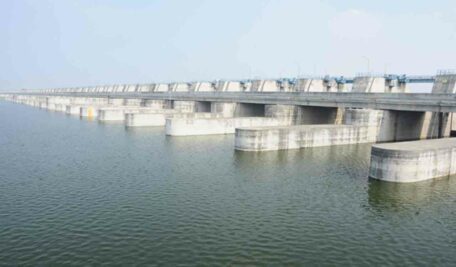


Hyderabad: Deficit rainfall linked to El Nino, coupled with delays in restoring the Medigadda barrage, particularly the two sunken pillars, is raising concerns over water availability in Telangana, with around 12,250 cusecs of River Godavari water flowing downstream every day instead of being stored and utilised.
According to Irrigation Department officials, the inflow into the Medigadda barrage stood at 15,000 cusecs at 6 am on Friday. Since all 85 gates remain open, the incoming water is flowing downstream towards the Dowleswaram Barrage in Andhra Pradesh. Data shows that about 10.13 tmcft of water has passed through the barrage since June 1, with none of it being stored as the structure remains non-operational.
The situation comes at a time when Telangana is witnessing widespread rainfall deficit. Since June 1, 222 mandals across 11 districts have recorded deficient rainfall, while 63 mandals in one district have experienced large rainfall deficit.
Retired senior irrigation engineer Sridhar Rao Deshpande said the water currently available in the Godavari could have been effectively utilised had the Annaram and Sundilla barrages been restored through minor repairs. He said a water level of 95 metres in the Godavari would be sufficient to divert water into the Kannepalli pump house forebay. According to him, constructing a rubber dam or an earthen bund about 100 metres downstream of the pump house intake could have raised the water level to the required mark.
Deshpande said this proposal was submitted by the then Engineer-in-Chief (General) Anil Kumar nearly two years ago, but was not taken up by the government. “Had the Annaram and Sundilla barrages been repaired or the rubber dam constructed, the State would have been in a better position to utilise the available Godavari water during the present drought conditions,” he said.
He also referred to the Central Water Commission’s advisory asking States to use reservoir water judiciously and prioritise drinking water requirements amid the prevailing rainfall deficit. Deshpande described the Pranahita river as a valuable water source for Telangana and said the current flows could have been utilised for both drinking water and irrigation if the required infrastructure had been made operational.
He maintained that nearly 10 TMC of water has flowed downstream to the Dowleswaram Barrage since June 1 and this was also the prime reason for the crest gates being kept open. He added that the situation would continue until adequate storage becomes possible.
With rainfall deficits persisting and Godavari waters continuing to flow downstream, concerns are growing over Telangana’s preparedness to address possible water shortages if dry conditions continue.

Related News