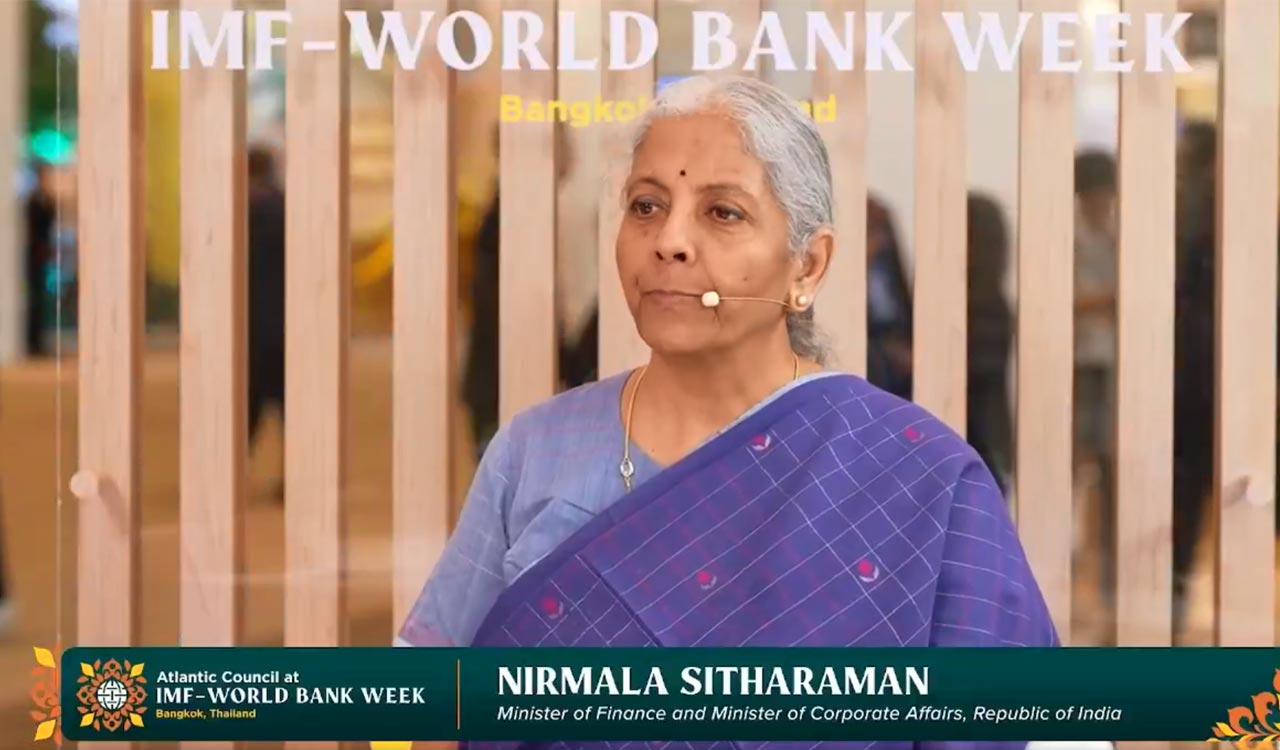
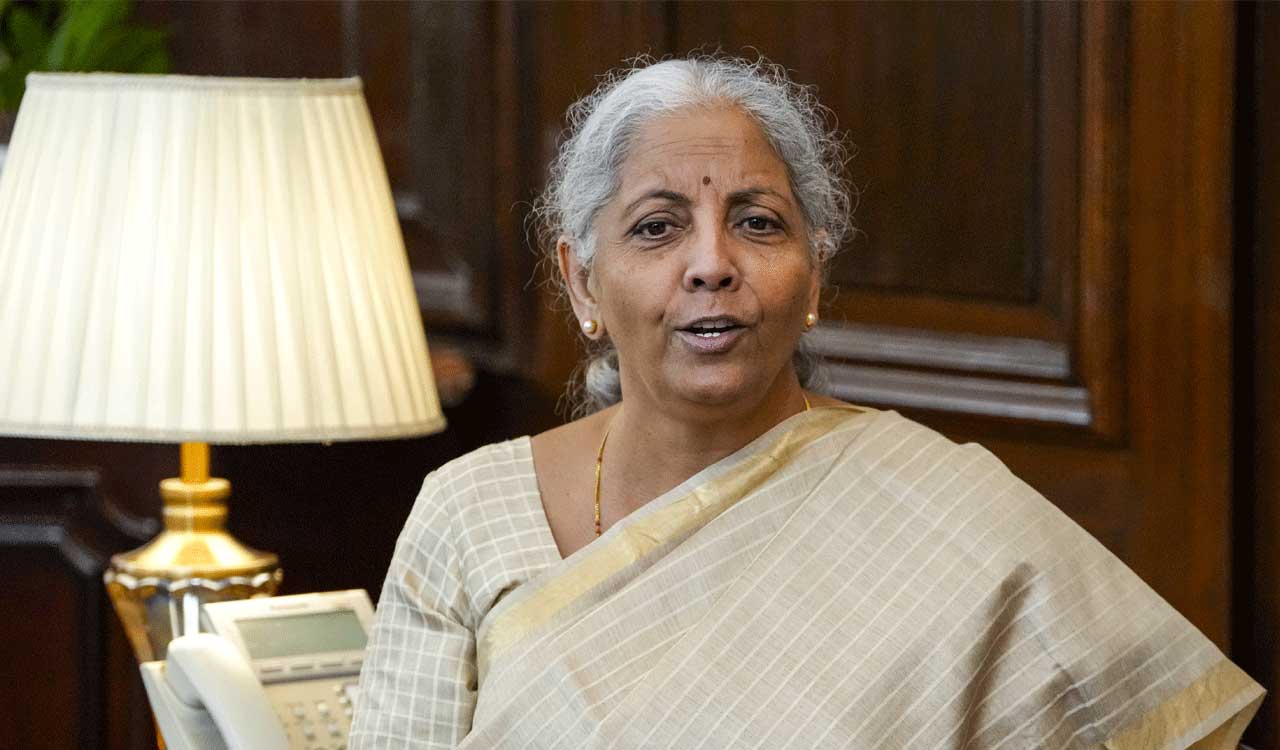
Govt gave up Rs 1 lakh crore in excise revenue to curb fuel inflation: FM
Finance Minister Nirmala Sitharaman said the government sacrificed over Rs 1 lakh crore annually through fuel excise cuts to cushion consumers from inflation, while defending recent petrol and diesel price hikes as market-driven revisions caused by surging global crude oil prices amid the West Asia conflict
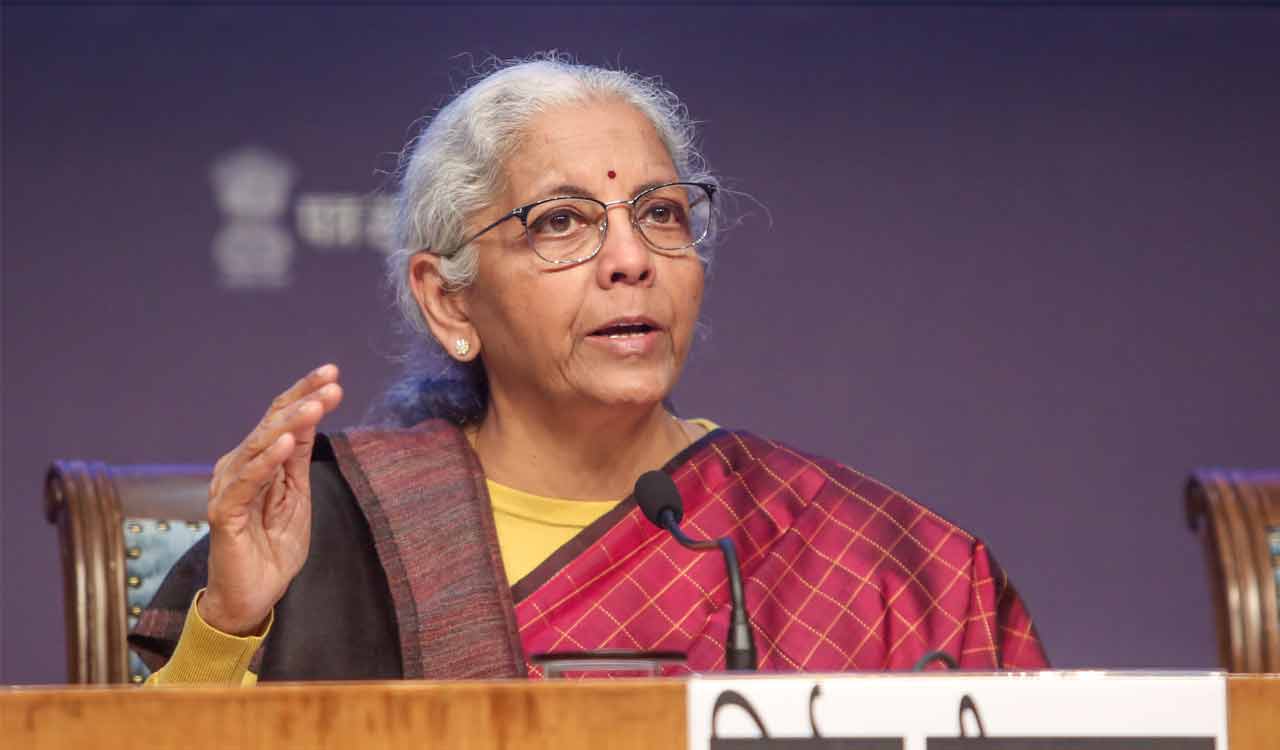


Mumbai: Finance Minister Nirmala Sitharaman on Monday said the government had foregone more than Rs 1 lakh crore annually in tax revenues through excise duty cuts on petrol and diesel to shield consumers from fuel inflation triggered by the West Asia conflict, while defending the latest retail fuel price hikes as market-driven revisions by oil marketing companies responding to soaring global crude oil prices.
Petrol and diesel prices have been hiked by almost Rs 7.5 per litre in four instalments since mid-May as oil companies moved to bridge the gap between cost and retail prices that had widened due to a surge in international oil prices.
“The increases now are coming from oil marketing companies (OMCs) because they are the ones procuring (raw material crude oil) and selling (finished product – fuel),” Sitharaman said on the sidelines of the Cotton Textiles Export Promotion Council export awards event. She said had the excise duty not been slashed earlier, an increase of Rs 10 would have happened.
“Had we not given that reduction at that time, a Rs 10 increase would have happened, which we absorbed, that is almost a Rs 1 lakh crore hit on the functional budget. But the increases now are coming from OMCs, because they are the ones procuring and selling,” the minister added.
When asked if the RBI’s dividend of Rs 2.87 lakh crore aligned with the government’s expectations, especially given the current need for support, the minister stated that the calculations follow a very clear formulation.
“A committee had looked into it, and based on that RBI does its annual calculation and gives the dividend to the government. And it is on that basis it has come. I fully trust the RBI in having made its calculation and given the dividend that it has given,” she added. On managing the oil price rise amid global challenges she said the situation will be closely monitored.
“These increase in prices are not minor, all this will have to be paid through foreign exchange only. So, these are going to be challenges, but I’m confident….we will be able to handle those challenges which are not of our making. If crude oil prices are growing, we will have to constantly monitor this, but make sure that people are not going to suffer,” she added. Meanwhile, addressing textiles and ready-made garment exporters, the finance minister said, geopolitical fragmentation is reshaping global supply chains.
“These are creating uncertainty in trade flows, raw material availability and shipping costs. Our exporters must learn to navigate the world where the rules of trade are being rewritten in real time,” she said. The minister said there is a need to remain alert and create opportunities for the industry and sustainability is no longer optional.
“Global retailers from H&M to Zara to Marks & Spencer are embedding sustainability requirements into their sourcing criteria. Buyers want traceability. They want certified organic or recycled fibres, reduced water consumption, lower carbon footprints and fair labour practices. Our exporters who adapt early to these requirements will thrive,” she added. The minister also said that artificial intelligence and automation are transforming the global textile industry.
“Robotic sewing, AI-driven demand forecasting, digital printing, smart manufacturing, all of these are all reducing the labour cost advantages. We must invest in technology, not just to compete on cost, but to compete on capability and standards,” Sitharaman added.

Related News