IIIT-Hyderabad Prof develops AI mattress for elderly sleep safety
Prof. Aftab Hussain of IIIT-Hyderabad has proposed a contactless sleep monitoring system using flexible pressure sensors embedded in a mattress topper. The innovation, which earned him the Young Faculty Research Fellowship under the Visvesvaraya PhD Scheme, can detect falls and predict risks by analysing sleep patterns and movement.


Hyderabad: An International Institute of Information Technology (IIIT) – Hyderabad faculty has come up with a proposal for a contactless sleep monitoring application for the elderly.
The innovative application, which helped Prof. Aftab Hussain win the Young Faculty Research Fellowship (YFRF), a component of the “Visvesvaraya PhD Scheme for Electronics and IT” implemented under the Ministry of Electronics and Information Technology, can detect not only falls from the bed, but also early warning signs.
Monitoring patients, particularly the elderly, is a delicate balance. Cameras can track movement, but at the cost of dignity and privacy. Wearables can detect falls, but only if they are worn consistently. Early intervention after a fall can make all the difference – but only if the fall is detected.
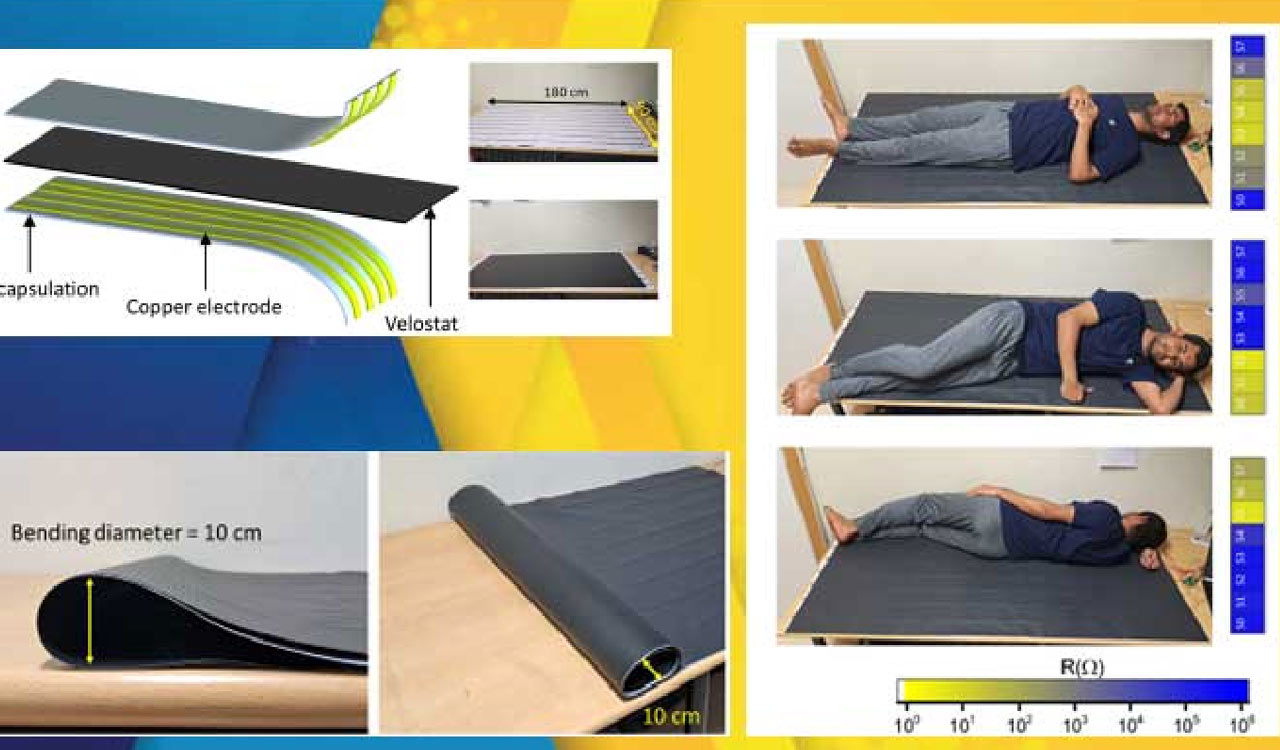
Centre for VLSI and Embedded System Technologies faculty Prof. Hussain proposed an alternative that requires embedding sensor technology directly into a mattress topper.
“The mattress itself will tell you if someone has fallen off the bed,” he said.
Using flexible pressure sensors, the system continuously monitors how a person lies, moves, and shifts during sleep. It can detect not only falls, but also early warning signs.
“For instance, if there is more pressure at the edge of the mattress, that means that they are about to fall.” This predictive capability is powered by AI models currently under development, trained on real-world data to distinguish normal movement from risk patterns, he said.
The mattress provides a comprehensive picture of the patient’s well-being. “It can be used to track a variety of metrics such as sleep patterns, bed entry and exit times, frequency of night-time movement, as well as prolonged immobility which is a risk factor for bed sores,” said Prof. Hussain.
Unlike many healthcare technologies that remain confined to premium settings, this solution is being designed for widespread deployment.
“We are hopefully going for a large amount of volume that can be scalable across entire care facilities and trying to see how we can keep it as low cost as possible,” he added.

Related News
-

Royal Enfield, Wikimedia Foundation and IIIT-H join hands to preserve Himalayan heritage
-
IIIT-Hyderabad study cautions against blindly trusting medical AI models
-
IIIT Hyderabad launches advanced BrainLab for human brain research
-
IIT Hyderabad, AIIMS Bibinagar explore partnership for healthcare technologies