Japan to hold special diet session on February 18 to choose Prime Minister
Japan will convene a special Diet session on February 18 to select a new Prime Minister following the lower house election. With a two-thirds majority, the ruling LDP is expected to retain power under Prime Minister Sanae Takaichi.
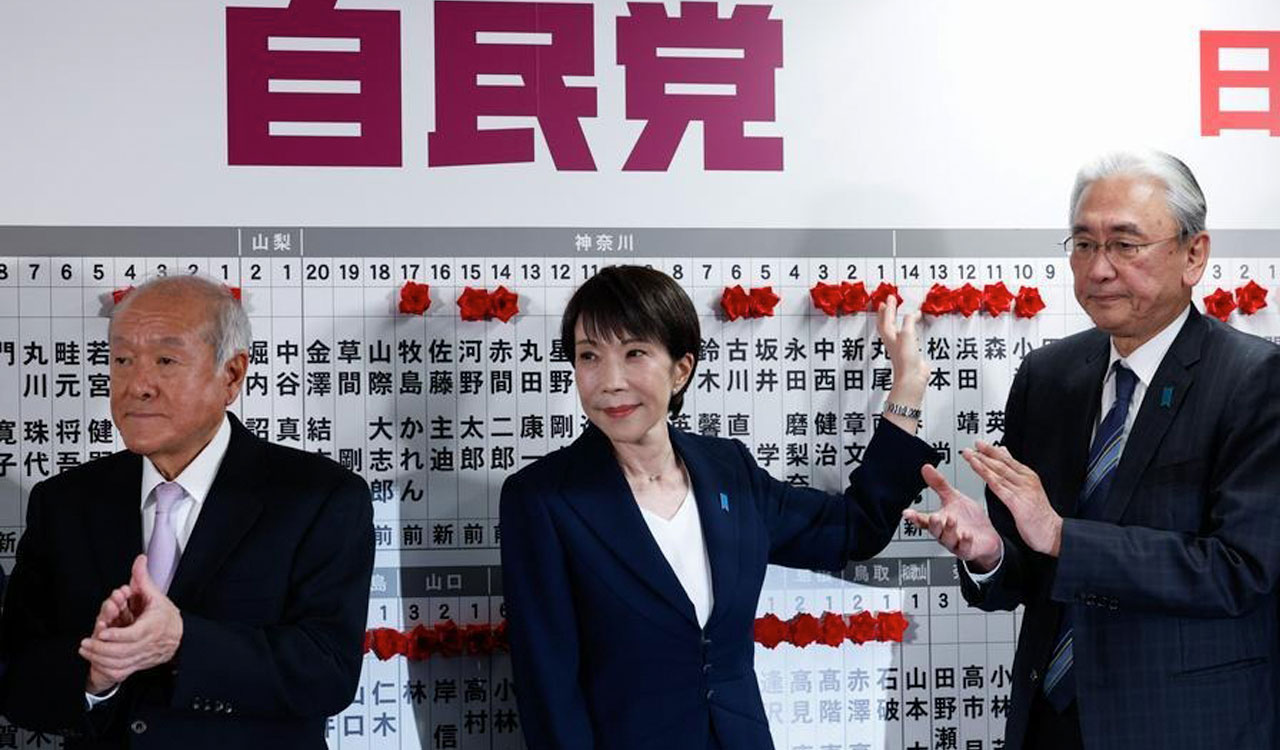


Tokyo: Japan will convene a special parliamentary session on February 18 to choose the Prime Minister following Sunday’s House of Representatives election, local media reported on Tuesday.
According to Jiji Press, the Japanese Constitution stipulates that an extraordinary Diet session must be convened within 30 days after a House of Representatives election to designate a prime minister. On the opening day of the session, the incumbent cabinet will collectively resign. The newly-elected House of Representatives and the current House of Councillors will then vote separately to designate a new Prime Minister, who will subsequently form a new cabinet.
In the Prime Ministerial designation election, a candidate who secures a majority in the first round of voting in each chamber wins outright. If no candidate obtains a majority, the top two vote-getters advance to a runoff, with the winner decided by a simple majority. If the two chambers designate different candidates and fail to agree after consultations, the Constitution stipulates that the decision of the powerful House of Representatives shall prevail.
Given that the Liberal Democratic Party (LDP) currently holds more than two-thirds of the seats in the lower house, Japanese media believe that LDP President and Prime Minister Sanae Takaichi is all but assured of victory in the designation election, Xinhua news agency reported.
Following Sunday’s lower house election, Japan’s ruling Liberal Democratic Party (LDP) gained a significant boost in seats and secured a two-thirds majority alone in the House of Representatives.
Experts observe that LDP President and Prime Minister Sanae Takaichi seized the moment before the harmful consequences of her policies were fully exposed, consolidating her ruling base through a “lightning-fast” and “entertainment-oriented” election.
However, Japan’s deep-seated economic and livelihood challenges remain unresolved amid mounting concerns over Takaichi’s accelerated push for a political rightward drift. For the Takaichi administration, the real test may have only just begun.
The ruling LDP won 316 of the 465 seats in the House of Representatives, exceeding the two-thirds threshold. Its coalition partner, the Japan Innovation Party (JIP), secured 36 seats, taking their combined total to 352 seats.
On the opposition side, the Centrist Reform Alliance (CRA), newly formed before the election by the Constitutional Democratic Party of Japan (CDPJ) and the Komeito party, saw its seat count drastically reduced to 49 from the pre-election tally of 172.

Related News