Melting glaciers changing New Zealand’s landscapes, lives
As warming temperatures melt glaciers, the ice loss has repercussions for climate and water cycles. This in turn has significant impact on landscapes, rivers, ecosystems people and economies
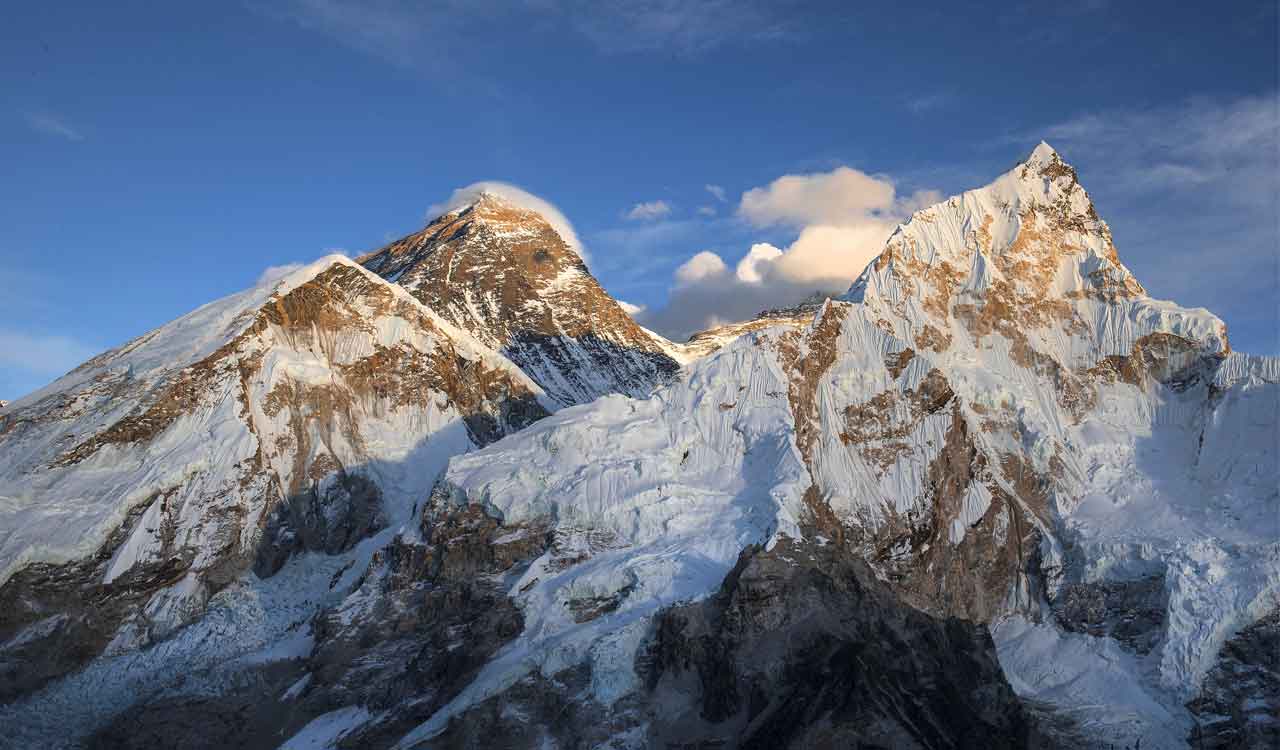


Hyderabad: Globally, New Zealand ranks third in the proportion of ice lost from glaciers. Almost 30 per cent of ice volume has melted during the past 24 years and what remains is disappearing at an accelerating pace.
Almost 300 glaciers have now vanished completely from New Zealand’s mountains. As warming temperatures melt glaciers, the ice loss has repercussions for climate and water cycles. This in turn has significant impact on landscapes, rivers, ecosystems, people and economies.
New Zealand is tracking glacial ice loss closely since 1977. Each year, scientists carry out aerial surveys of the snowline to determine how much of the previous winter snowpack has survived the summer melt season.
Winter snow supplies new mass to glaciers and must balance summer melt if glaciers are to maintain their size.
Recent surveys have shown that summer melt far exceeds winter inputs. During extremely warm years, the winter snow pack is almost entirely removed from some glaciers and the underlying ice has thinned by several metres.
What we lose when glaciers melt?
New Zealand is home to just under 3,000 glaciers, covering about 794 sq km – equivalent to about 75 per cent of Auckland’s urban area.
Many of these ice bodies are small. Most of the ice is contained in just a few larger glaciers situated close to Aoraki Mt Cook. There is no accurate measurement of glacier thickness but they hold as much water as Lake Te Anau. If all of the ice in New Zealand melted – a possibility under some climate scenarios for the coming centuries – the impact on global sea levels would be barely perceptible, but we would be affected in many other ways.
Physically, snow and ice have a cooling effect on their surrounding environment. The highly reflective surface of snow and ice means a high proportion of solar radiation (up to 90 per cent on fresh snow) is reflected back to space.
A reduction in seasonal snow cover and glacial ice due to warming increases the absorption of solar radiation. This further warms the surface and adjacent air and sets off a feedback loop that accelerates further ice loss.
The same effect applies to the loss of sea ice in both the Arctic and Antarctica and is a key reason why alpine and polar regions warm faster than other parts of the globe.
Loss of glacial ice also destabilises the surrounding landscape, with potentially hazardous impacts. Glacial retreat is causing weakening and collapse of steep valley sides that were once supported by ice. The lowering and flattening of ice surfaces means rain and melt water form ponds that can drain without notice.
Biologically, seasonal snow plays an important role in maintaining ecological diversity. Snow insulates and protects alpine insects during winter and regulates flowering times and seed production of alpine flora.
Glacial melt water cools stream water, supporting cold-water fish populations. Furthermore, the fine silt produced by the slow grinding of rock under the weight of flowing glacial ice is redistributed by wind and rivers and can maintain productive arable land and help regulate atmospheric carbon dioxide levels.
Snow and ice are also culturally and economically important in New Zealand.
Winter snow draws skiers and alpinists to the mountains, while the glaciers of the central Southern Alps are internationally recognised icons that provide the economic backbone to entire regional communities.
Science of glacier loss
In a warming world, less snow will be retained and more ice will melt. This is why the United Nations has designated 2025 the International Year of Glaciers’ Preservation and March 21 as the World Day for Glaciers. The only way to sustainably arrest the current global retreat of glacial ice is to tackle the root cause: global heating.
Achieving this requires international coordination to move energy generation away from fossil fuels quickly. Failing this, we may soon only remember our glaciers from stories, paintings and photographs.

Related News