Mini bus plans remain on hold as Hyderabad struggles with urban transport issues
Despite rising commuter demand in Hyderabad, plans to introduce mini buses remain stalled. Nearly 100 Vajra mini buses bought by TGSRTC lie unused and deteriorating, even as ageing buses struggle to meet last-mile connectivity needs across the city.
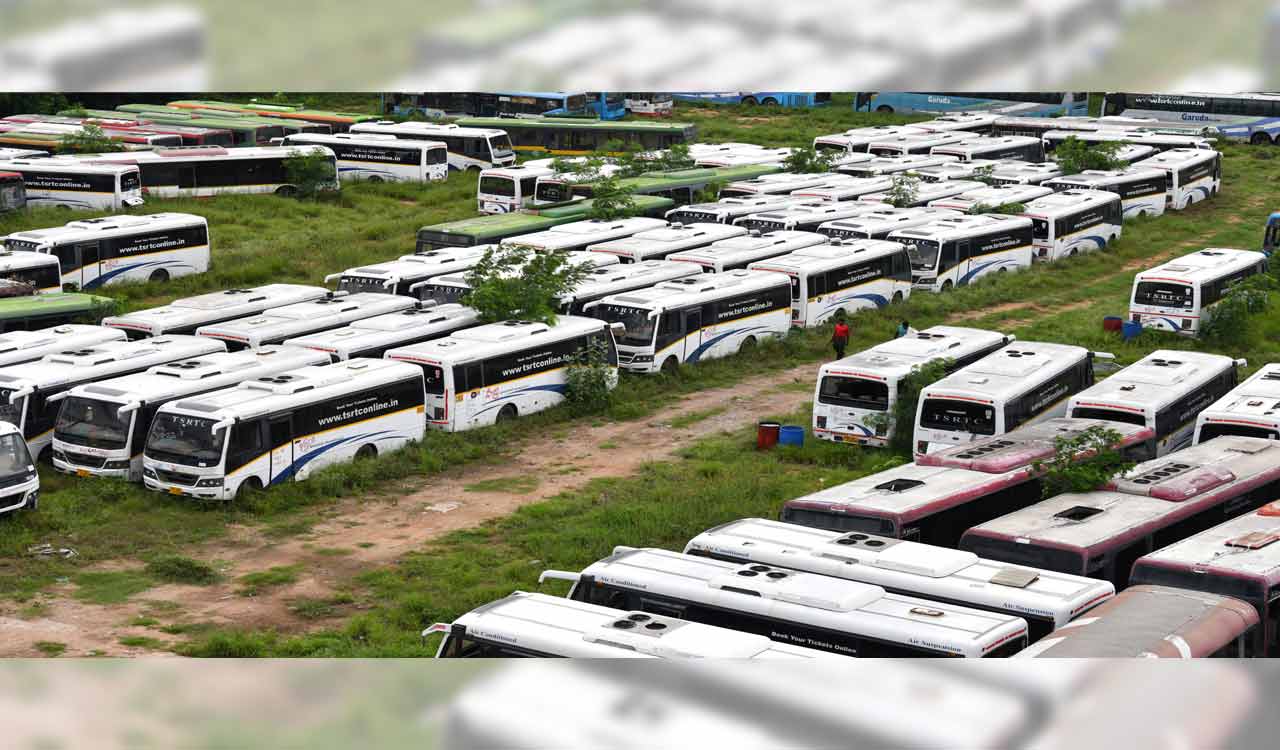


Hyderabad: Proposals to introduce mini buses in the city continue to remain stalled, even as the capital’s public transport system faces increasing pressure from rapid growth and rising commuter demand.
Ironically, a large fleet of mini buses procured earlier by the Telangana State Road Transport Corporation (TGSRTC) lies largely unused. Nearly 100 air-conditioned ‘Vajra’ mini buses were purchased at a cost of around Rs 25 crore during the previous government to provide a premium travel experience.
However, most of these buses have remained idle for years on vacant land near TGSRTC Headquarters, with their condition deteriorating due to a lack of maintenance. Nearly half of them have now reached scrap condition and are ready for disposal.
The Greater Hyderabad RTC is currently operating mostly ageing buses, triggering concerns over passenger comfort, efficiency and the ability to meet last-mile connectivity needs on congested city roads.
The mini bus services were launched in 2017 and initially operated from Mehdipatnam, Kukatpally and Dilsukhnagar to destinations such as Karimnagar, Warangal and Godavarikhani. However, the services were discontinued after facing operational challenges, including high fares, online-only ticket booking and poor occupancy levels, reportedly below 50 per cent.
Recently, RTC introduced ‘Cyber Liners’ to provide last-mile connectivity from Raidurg Metro Station to the US Consulate and major IT hubs such as DLF, WaveRock and GAR in the IT corridor. At present, only about 15 mini buses are being used by the RTC’s logistics wing, while nearly 40 remain parked at district depots.
The corporation also rents out mini buses at rates lower than private operators. Depending on group size, either mini buses or regular buses can be hired. “Citizens can hire a mini Vajra bus for groups of up to 40 people for weddings, picnics or outings. Charges are calculated on an hourly basis instead of for an entire day,” an RTC official said.
Transport experts point out that had the mini buses been sold earlier while in good condition, the RTC could have recovered a fair value. Instead, many are now lying unused and deteriorating as scrap, reflecting poor asset utilisation.
Officials estimate that around 26 lakh people commute daily within Hyderabad. Of them, about 18 lakh passengers travel on RTC buses under the Mahalaxmi free travel scheme, while nearly 5 to 6 lakh commuters depend on cab services. Experts say the absence of smaller, flexible buses has increased reliance on private transport.
Earlier attempts to introduce mini buses in older parts of the city operating from Charminar to nearby localities mainly for tourists, were also discontinued after a brief period. Similarly, plans to deploy 100 mini buses as feeder services when Metro Rail operations began on the Uppal-Ameerpet-Miyapur corridor were halted.
Currently, Greater RTC operates around 3,000 buses across Hyderabad, running nearly 31,815 trips daily and serving close to 26 lakh passengers.

Related News