NFHS-6 finds rise in traditional family planning methods among couples
The NFHS-6 survey shows a decline in the use of modern contraceptive methods among married women in India and a rise in traditional family planning methods. Experts have expressed concern, warning that greater reliance on traditional methods could increase unintended pregnancies



New Delhi: The use of modern contraceptive methods among married women in India has marginally declined over the past few years, while reliance on traditional methods of family planning has increased, according to findings from the National Family Health Survey-6 (NFHS-6).
The survey showed that the proportion of currently married women aged 15-49 years using any modern method of family planning fell to 52.7 per cent in 2023-24 from 56.4 per cent in NFHS-5 (2019-21).
At the same time, the use of traditional methods rose from 10.3 per cent to 16.4 per cent, indicating a shift in contraceptive behaviour among couples.
According to experts, modern contraceptive choices are important not only for population stabilisation but also for maternal health, women’s autonomy and economic empowerment, and the reliance on traditional methods is concerning as it increases the risk of unintended pregnancies.
Overall contraceptive use, including both modern and traditional methods, increased from 66.7 per cent in NFHS-5 to 69.1 per cent in NFHS-6, suggesting that more couples are adopting family planning measures even as a growing number of them are moving away from modern methods such as sterilisation, pills, condoms and intrauterine devices and increasingly relying on rhythm and withdrawal methods, they said.
The survey also recorded a marginal decline in female sterilisation, the most widely used family planning method in the country, from 37.9 per cent to 36.5 per cent. Male sterilisation continued to remain extremely low at 0.5 per cent, compared with 0.3 per cent in the previous survey.
The total unmet need for family planning among currently married women declined from 9.4 per cent to 8.5 per cent.
Public health experts said the findings indicate the need to strengthen awareness, counselling and access to a wider basket of modern contraceptive choices.
Poonam Muttreja, Executive Director of Population Foundation of India, said the shift reflects gaps in counselling, fears around side effects, limited access to spacing methods and social norms that continue to place the burden of contraception on women.
“The NFHS-6 should be read as a warning that access alone is not enough. Modern contraceptive use among currently married women has declined from 56.4 per cent to 52.7 per cent, while traditional method use has risen sharply from 10.3 per cent to 16.4 per cent. This is not just a service-delivery issue; it is about women’s agency,” she said.
“Empowerment may mean services are available, but agency means women can actually choose and use a method that suits them,” she said.
Family planning must become rights-based, women-centred and grounded in informed choice, male engagement and trust, she said.
Dr Yamini Sarwal, Senior Chief Medical Officer and head of the Family Planning Division, Department of Obstetrics and Gynaecology at VMMC and Safdarjung Hospital, said greater dependence on traditional methods could increase the risk of unintended pregnancies if not accompanied by proper counselling and reproductive health services.
“Modern contraceptive choices are important not only for population stabilisation but also for maternal health, women’s autonomy and economic empowerment. Due to their high effectiveness and safety, women should be encouraged to adopt a suitable method of modern contraception from the ‘basket of choices’,” Dr Sarwal said.
Speaking in the same vein, Dr Neelam Suri, Senior Consultant, Obstetrics and Gynaecology, Indraprastha Apollo Hospital, Delhi, said the growing reliance on traditional family planning methods, such as the withdrawal method, is concerning.
Several factors may be contributing to a more relaxed approach towards contraception among some couples, including the easy availability of emergency contraceptive pills, personal preferences or reservations regarding contraceptive use and the fact that intimacy is often unplanned.
The availability of abortifacient pills and legal access to MTP services may also lead some individuals to view pregnancy termination as a fallback option following contraceptive failure or non-use.
“Modern contraceptive choices are important not only for population stabilisation but also for maternal health, women’s autonomy and economic empowerment,” Dr Suri told PTI.
“As healthcare professionals, we strongly recommend the use of reliable and appropriate contraceptive methods rather than relying on termination of unintended pregnancies, as informed contraceptive choices remain the safest and most effective approach to reproductive health.”
India’s total fertility rate remained stable at 2.0 children per woman, the same level recorded in NFHS-5, indicating that the country continues to remain below replacement-level fertility.
The NFHS-6 fact sheets do not specify the reasons behind contraceptive choices, but the trend emerges alongside rising levels of female education, internet use and delayed marriage across much of the country.
Internet use among women nearly doubled nationally from 33.3 per cent in NFHS-5 to 64.3 per cent in NFHS-6.
The use of hygienic methods of menstrual protection among women aged 15-24 years increased from 77.6 per cent to 79.2 per cent, supported by initiatives such as the Menstrual Hygiene Scheme (MHS) under the Rashtriya Kishor Swasthya Karyakram (RKSK) and affordable sanitary products under the Pradhan Mantri Bhartiya Janaushadhi Pariyojana.
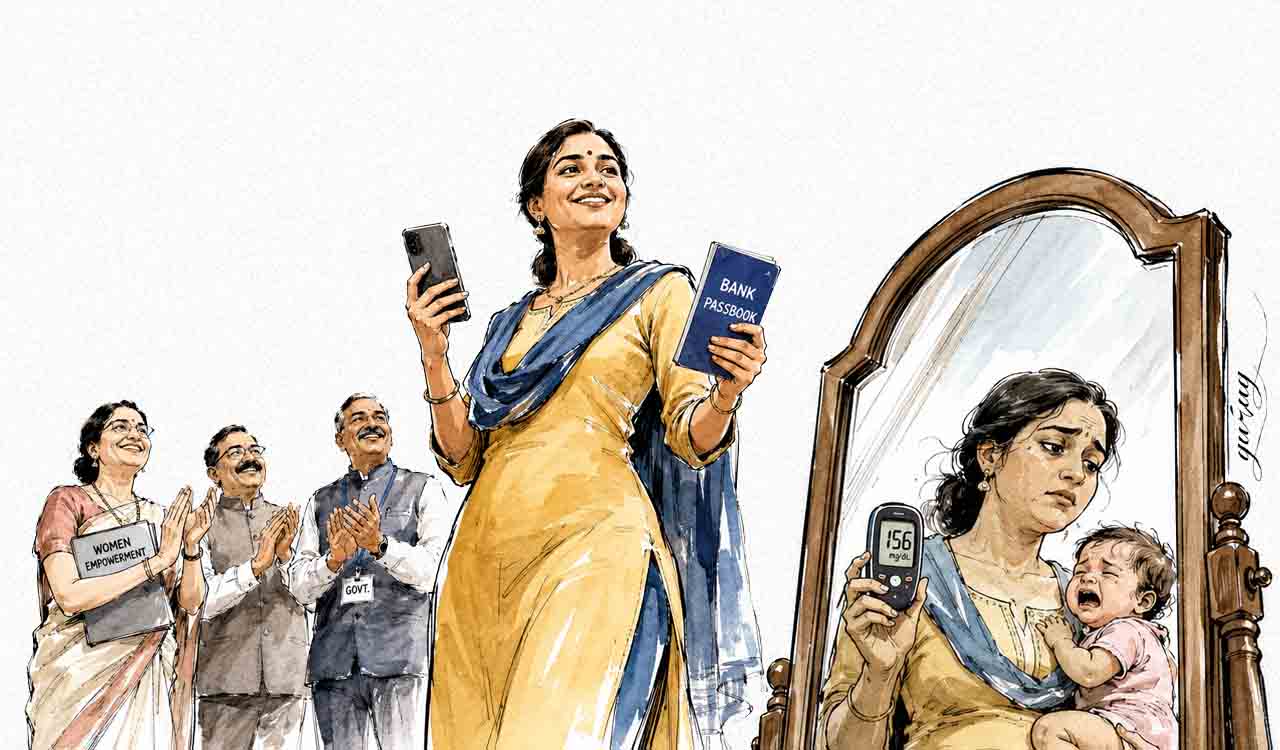
Women having a bank or savings account that they themselves use increased from 78.6 per cent to 89.0 per cent, and women having a mobile phone that they themselves use rose from 53.9 per cent to 63.6 per cent, the data showed.
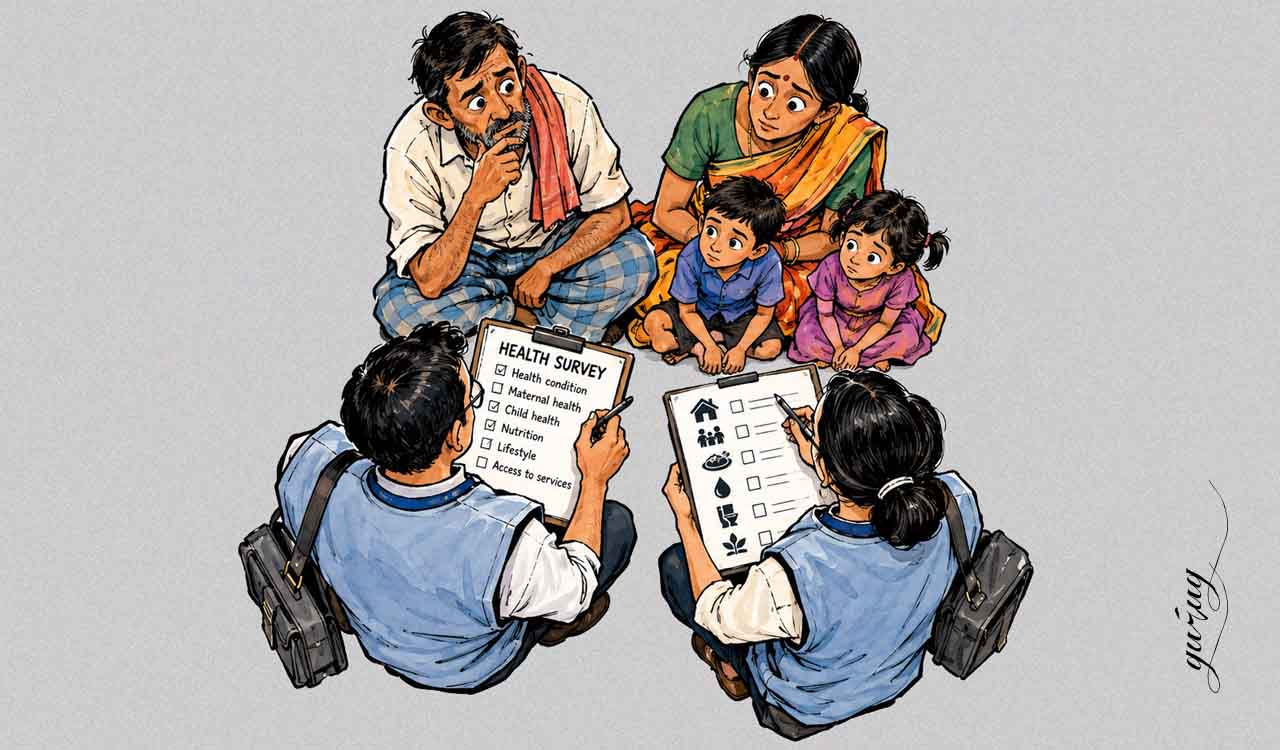
The NFHS-6 was conducted during 2023-24 by the Ministry of Health and Family Welfare, with the International Institute for Population Sciences (IIPS), Mumbai, as the nodal agency.
Covering nearly 6.79 lakh households across 715 districts, the survey provides vital evidence on population, health, nutrition and family welfare indicators and supports evidence-based planning and programme implementation up to the district level.

Related News