Now, drones to sow paddy and ease labour crunch in Telangana
Drone-based paddy plantation is being tested on a pilot basis in select Telangana districts to tackle labour shortage and reduce cultivation time. Scientists say the method can cover large areas quickly without affecting crop yield.
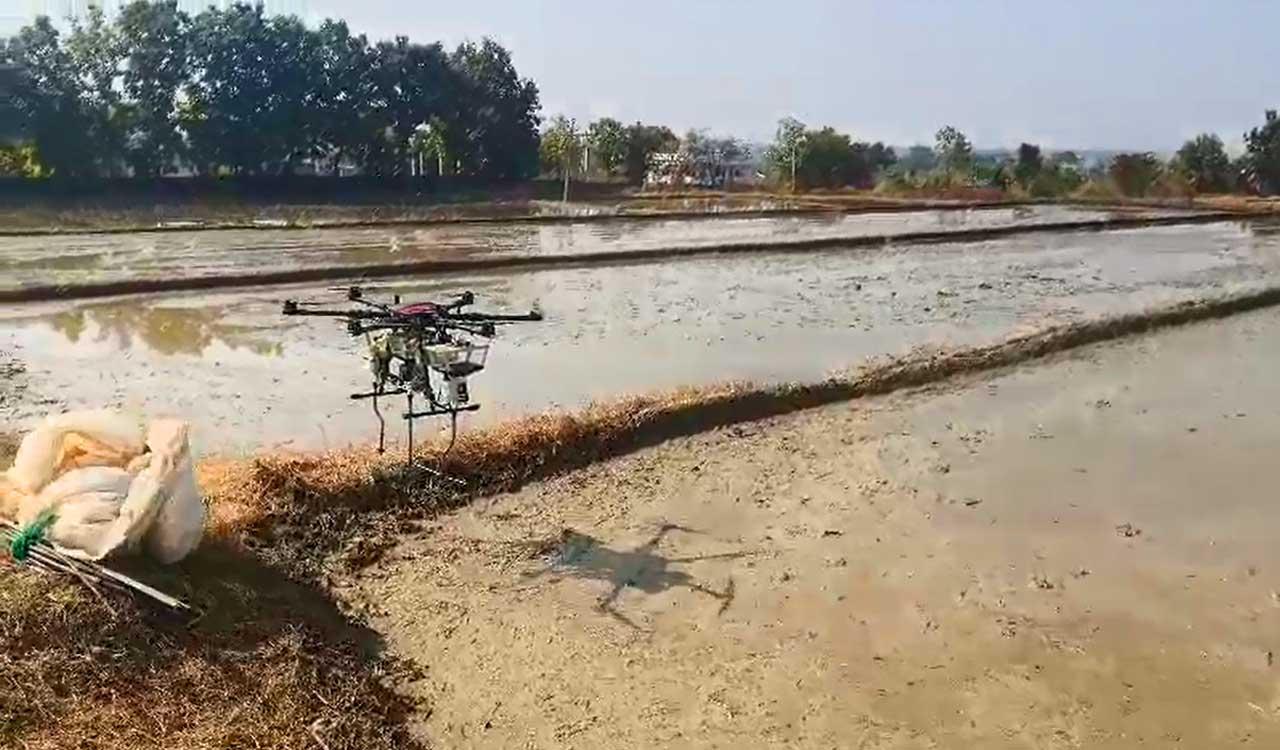


Karimnagar: In a move aimed at tackling labour shortage and cutting down cultivation time, drones are being tested for paddy plantation in parts of the State, marking a significant shift in traditional farming practices.
Drones are already being used in agriculture to spray liquid fertiliser on crops. Going a step further, scientists are now experimenting with drone-based paddy plantation on a pilot basis in select districts of the State through Krishi Vigyan Kendras.
Professor Jayashankar Telangana State Agriculture University, in cooperation with Marut Drones, is implementing the project in Karimnagar, Adilabad, Kothagudem and Nalgonda districts. The Adilabad KVK is acting as the nodal agency for the project.
Scientists of Jammikunta KVK have recently taken up paddy plantation with the help of drones at four locations in Pothireddypet and Sirsapalli villages of Huzurabad mandal.
Saving time and overcoming labour shortage are the main objectives behind developing the drone plantation method. Labour shortage has emerged as a major problem in the agriculture sector, forcing farmers to spend huge amounts on engaging labourers for plantation, weeding and other operations.
Drone plantation is expected to address these issues, as it enables coverage of large extents of land within a short period. Moreover, there is no need to prepare seedlings well in advance, as seeds are directly planted in the fields. A drone can complete plantation over an acre of land within 15 to 20 minutes, whereas 12 to 14 labourers are usually required for the same work.
Apart from a box filled with paddy seeds, three to five pipes are fixed to the drone. When operated over a prepared paddy field, seeds drop in rows through the pipes attached to the drone.
Speaking to Telangana Today, Senior Scientist and Jammikunta KVK Coordinator Dr N Venkateshwar Rao said that drone plantation would help farmers save time and address labour shortage.
Usage of labour would be drastically reduced through this method, he said, adding that the system would be implemented in other areas if the pilot project succeeded. When asked about yield, he made it clear that there would be no difference. Equal yield would be produced through both manual and drone plantation methods, he said.

Related News