Opinion: A new burden-sharing compact for NATO
Credible defence cannot be improvised in times of crisis; it is built through sustained political commitment, strategic investment and long-term foresight


By Brig Advitya Madan
The latest NATO summit underscored a strategic reality that the Alliance can no longer afford to ignore: European security cannot continue to rest disproportionately on American military power. For decades, successive US administrations have argued that many European allies benefited from Washington’s security umbrella while devoting relatively greater resources to domestic welfare than to defence.
Also Read
President Donald Trump’s longstanding insistence that Europe shoulder a larger share of collective defence has accelerated a debate that Russia’s invasion of Ukraine had already made unavoidable. The commitments adopted at the 2025 Hague Summit, including raising core defence spending to 3.5 per cent of GDP along with an additional 1.5 per cent for defence and security-related investments, marked a watershed in NATO’s long-running burden-sharing debate. Together, they signal the Alliance’s gradual shift towards a more balanced distribution of responsibilities, even though translating these commitments into military capability will remain politically and economically demanding.
Defence Expenditure
The decision to raise defence expenditure reflects far more than American pressure. Russia’s war in Ukraine has fundamentally altered threat perceptions across Europe, exposing critical deficiencies in ammunition stocks, missile defence, logistics, industrial capacity and military readiness.
European governments increasingly recognise that credible deterrence cannot be sustained without long-term investment in modern military capabilities, including drones, long-range missiles, cyber defence, intelligence assets and integrated air defence systems. Equally important is the political objective of reassuring Washington that Europe is prepared to assume greater responsibility for its own security, thereby preserving transatlantic cohesion at a time of heightened geopolitical uncertainty.
The evolving debate within NATO reinforces an enduring strategic lesson: lasting security ultimately rests on sustained national investment rather than permanent reliance on external partners
Yet strategic consensus does not automatically translate into political consensus. The greatest obstacle to higher defence spending is likely to be domestic politics rather than strategic necessity. Increasing military expenditure inevitably revives the classic dilemma of “guns versus butter”. Higher defence budgets require difficult fiscal choices, such as increased taxation, additional public borrowing, or reductions in spending on healthcare, pensions, and welfare programmes.
Social Priorities
Public demonstrations in countries such as Italy illustrate the political sensitivity of shifting resources from social priorities to defence. Major economies, including Britain and France, continue to face fiscal constraints, while Spain and Portugal remain cautious about substantially increasing military expenditure. The challenge for European governments will therefore be to convince their electorates that long-term security is itself a prerequisite for sustained prosperity and social stability. Without credible defence, both economic resilience and welfare become increasingly vulnerable.
Threat perceptions, however, remain far from uniform across Europe. Geography continues to shape strategic priorities. Frontline states such as Poland, Finland and the Baltic republics view Russian military power not as a distant geopolitical concern but as an immediate national security challenge. Consequently, they have demonstrated greater willingness to increase taxes, rationalise public expenditure and accelerate military modernisation.
Lithuania has introduced additional security-related taxation, while several northern European countries are expanding investments in air defence, ammunition production and force readiness. In these countries, public opinion broadly accepts that higher defence spending is the price of national survival. By contrast, countries farther from Russia’s borders generally perceive lower levels of immediate risk, making it politically more difficult to prioritise defence over welfare. The divergence illustrates that NATO’s burden-sharing debate is shaped as much by differing threat perceptions as by economic constraints.
US Role
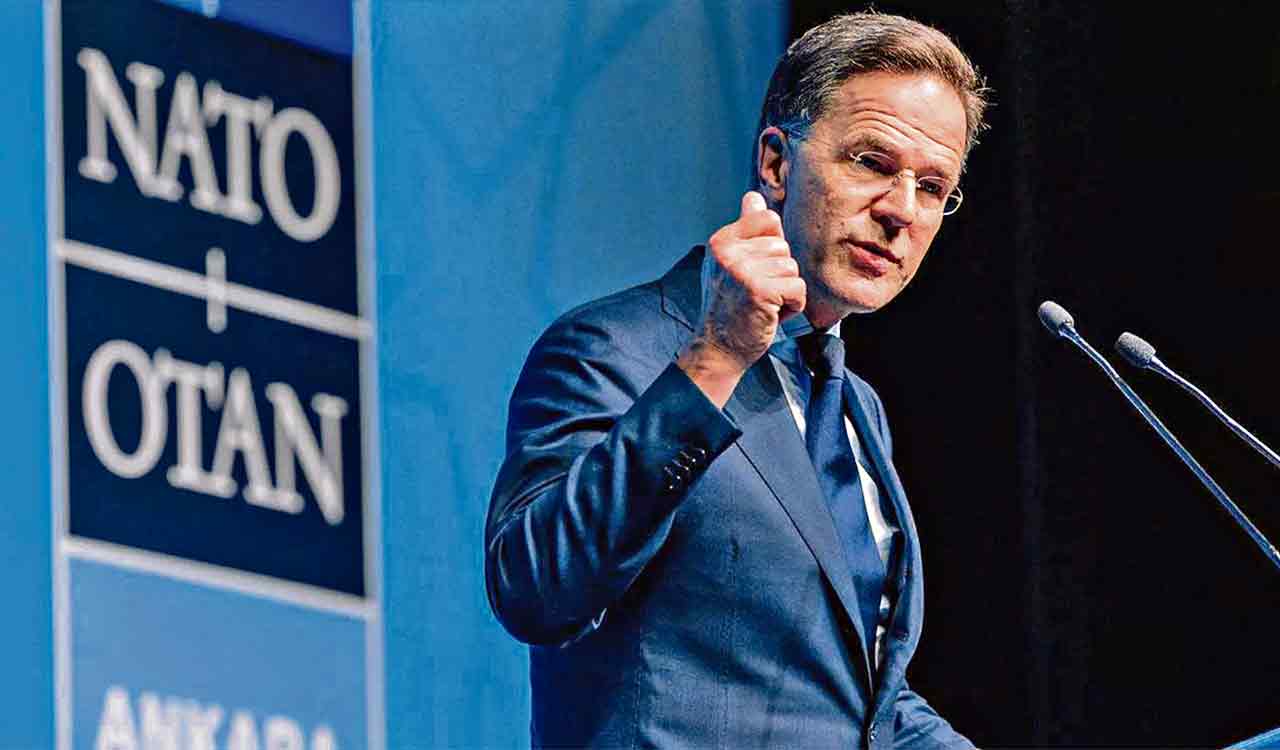
The evolving role of NATO’s leadership has also been significant. Secretary General Mark Rutte’s public engagement with President Trump has attracted criticism in some quarters for appearing unusually accommodating. Yet it can equally be viewed as pragmatic diplomacy aimed at preserving American commitment while Europe rebuilds its military capabilities. At a time when uncertainty surrounds Washington’s long-term security guarantees, maintaining Alliance cohesion has become a strategic imperative rather than a matter of diplomatic convenience.
Equally important has been Ukraine’s continued resistance against Russian forces. By absorbing the principal military pressure from Russia, Ukraine has effectively bought valuable time for European countries to replenish ammunition stocks, expand defence production, procure advanced weapon systems and strengthen military readiness. Kyiv’s battlefield resilience has therefore become an important enabling factor in Europe’s broader rearmament effort, allowing European governments to undertake structural reforms in defence planning that would have been considerably more difficult under conditions of direct military pressure.
Taken together, these developments suggest that NATO is entering a new phase in which European members are expected to assume substantially greater responsibility for their own defence, while the United States increasingly functions as a strategic enabler rather than the Alliance’s unquestioned security provider. Washington will remain indispensable in areas such as intelligence, strategic lift and nuclear deterrence.
Nevertheless, Europe’s growing investments seek to reduce long-term dependence on American military capabilities and foster a more balanced transatlantic partnership. Whether this transition succeeds will depend less on summit declarations than on sustained political commitment, industrial capacity and financial investment over the coming decade.
For India, the significance of these developments extends well beyond Europe. The evolving debate within NATO reinforces an enduring strategic lesson: lasting security ultimately rests on sustained national investment rather than permanent reliance on external partners.
As geopolitical competition intensifies across the Indo-Pacific, India must continue strengthening indigenous defence production, modernising its armed forces and investing in emerging technologies while preserving strategic autonomy in its external partnerships. Diversified defence capabilities, resilient supply chains and sustained military preparedness are not merely instruments of deterrence; they are essential pillars of national resilience.
Europe’s experience also offers a timely reminder that credible defence cannot be improvised during a crisis. It is built patiently through consistent political commitment, economic investment and strategic foresight. For India, seeking to safeguard its interests in an increasingly contested international order, that lesson is particularly relevant.
(The author is a Brigadier and former instructor at the Indian Military Academy)

Related News
-

Opinion: Uncounted and Unprotected — India’s seasonal migrants and Digital Census
-
Iran’s supreme leader meets judiciary chief, urges compensation for US-Israeli ‘crimes’
-
US carrier rearms as Iran trade routes narrow: Report
-
Obama tears into Trump over Iran war, tariffs and ‘grifter’ presidency at Ohio rally