Opinion: Academic confidence in changing times
The question is not only how we build institutions of excellence, but also how they quietly shape our aspirations, identities, and sense of belonging


By Dr Sonal Mobar Roy
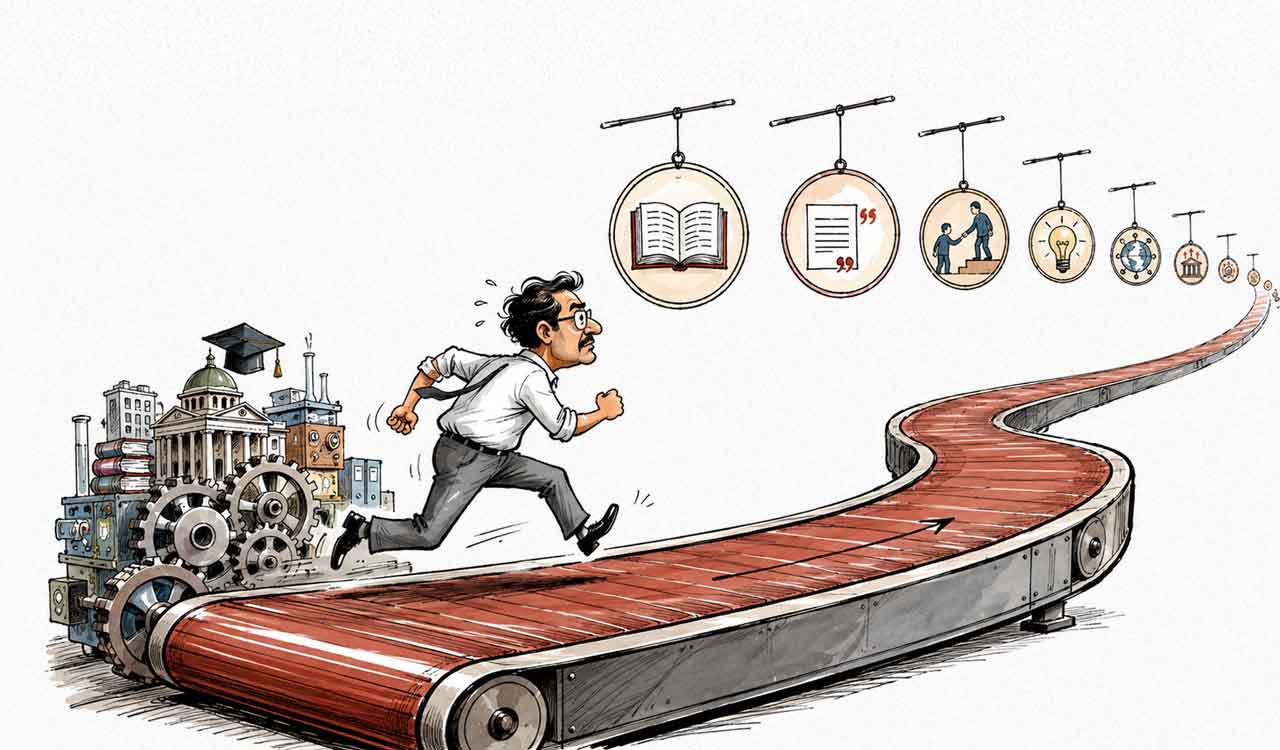
In the academic world, success is supposed to make you feel better. People earn degrees, write papers, teach classes, and join groups, all of which demonstrate their competence and calibre. But even people who meet these standards still have a nagging doubt. A sense of not quite belonging, of not doing enough, of falling short in ways that are difficult to name. They grapple with thoughts of under-performance day and night.
This experience, often described as “imposter syndrome,” is usually framed as an individual psychological condition. The suggested solution is well-known: have faith in yourself, trust your skills, and grow into the role. But this explanation, while comforting, is incomplete. What appears to be self-doubt may, in part, result from the institutional conditions under which academic work is produced and evaluated. In this way, self-doubt is not just an individual experience; it is also shaped by the environments in which academic life takes place.
Changing Institutions, Expanding Expectations
To understand these changes, one needs to know what has been going on in higher education lately. The National Education Policy, 2020, is a major step in this discourse. It emphasises interdisciplinary learning, research, innovation, and global engagement, which create new opportunities for both institutions and faculty.
But these changes also make people expect more. Faculty members are now expected to take on additional roles, including teachers, researchers, trainers, mentors, and contributors to the institution’s growth. These are important and welcome developments. Yet, as the scope of academic work grows, so too do the frameworks through which it is understood and assessed. As higher education reforms expand the scope of academic roles, they also reshape how faculty understand their place within the institution.
The growing use of national academic platforms such as the VIDWAN database and the (IRINS) is another sign of this changing landscape. These initiatives mark an important step towards enhancing the visibility of academic work, encouraging collaboration, and strengthening research ecosystems across institutions. By bringing together information on publications, affiliations, and scholarly contributions, they contribute to a more connected and transparent academic environment.
Under NEP 2020, faculty roles now extend beyond teaching to support institutional growth, broadening academic responsibilities and reshaping how contributions are understood and evaluated
At the same time, they point to a wider shift in how academic work is seen and understood. As these platforms make academic work more visible, they also make it more readily recognised and evaluated. For many people, the feeling of “not doing enough” may not come from a lack of effort, but from the growing number of ways that contributions are recorded and evaluated. What appears as self-doubt at the individual level may, in part, reflect these broader changes in how academic work is organised and evaluated.
Supportive Cultures
Recognising these changes does not mean viewing them as problems. Instead, it makes us think more carefully about how institutions can keep both ambition and support. As institutions continue to adapt to NEP 2020, it is crucial to consider not only the outcomes but also the experiences of these changes. Academic self-perception does not evolve in isolation; it is shaped within cultures of mentorship, collegial exchange, and recognition.
At the same time, academic paths are seldom uncomplicated. They may diverge. Some people get help more easily and have access to resources that others don’t. Some develop through experience and mentorship. Not everyone starts out knowing the same things about academic norms, and that is perfectly normal.
In such settings, moments of uncertainty are not unusual; they are simply part of growing into one’s role. A few reflections follow from this. First, what is often called self-doubt may not be a personal flaw but rather a common experience in academic settings. Second, while broadening evaluation and visibility frameworks is useful, it may also alter perceptions and experiences of contributions. Third, improving academic settings may require a balanced focus on mentorship, dialogue, and collegiality alongside quantifiable results.
Recognising this can provide a fresh perspective on confidence in academia. Rather than viewing it as an inherent characteristic, it may be more beneficial to perceive it as a quality that develops in nurturing environments. When institutions make room for conversation and meaningful dialogue, promote working together rather than comparing, and value different ways of contributing, they help academics feel more connected to their work.
Confidence in academia is not solely an individual characteristic; it is cultivated in settings that encourage dialogue, respect diverse academic trajectories, and acknowledge various forms of contributions. Consequently, the advancement of academic cultures is inherently linked to improvements in academic outcomes. The calibre of teaching, research, and institutional engagement is closely related to individuals’ perceptions of their roles within the system. Focusing on these less apparent aspects can significantly advance the overarching objectives of higher education reform.
Ultimately, the question is not only how we build institutions of excellence, but also how institutions quietly shape the terms by which we measure ourselves, and find our place within them.

(The author works at the National Institute of Rural Development and Panchayati Raj, Hyderabad. Views are personal)
Related News