Opinion: Beyond IFI rankings — India’s investment divide
The Investment Friendliness Index should not push States to replicate the same model, but serve as a roadmap for building stronger, regional investment ecosystems


By Dr Sujit KS, Dr Nandini M
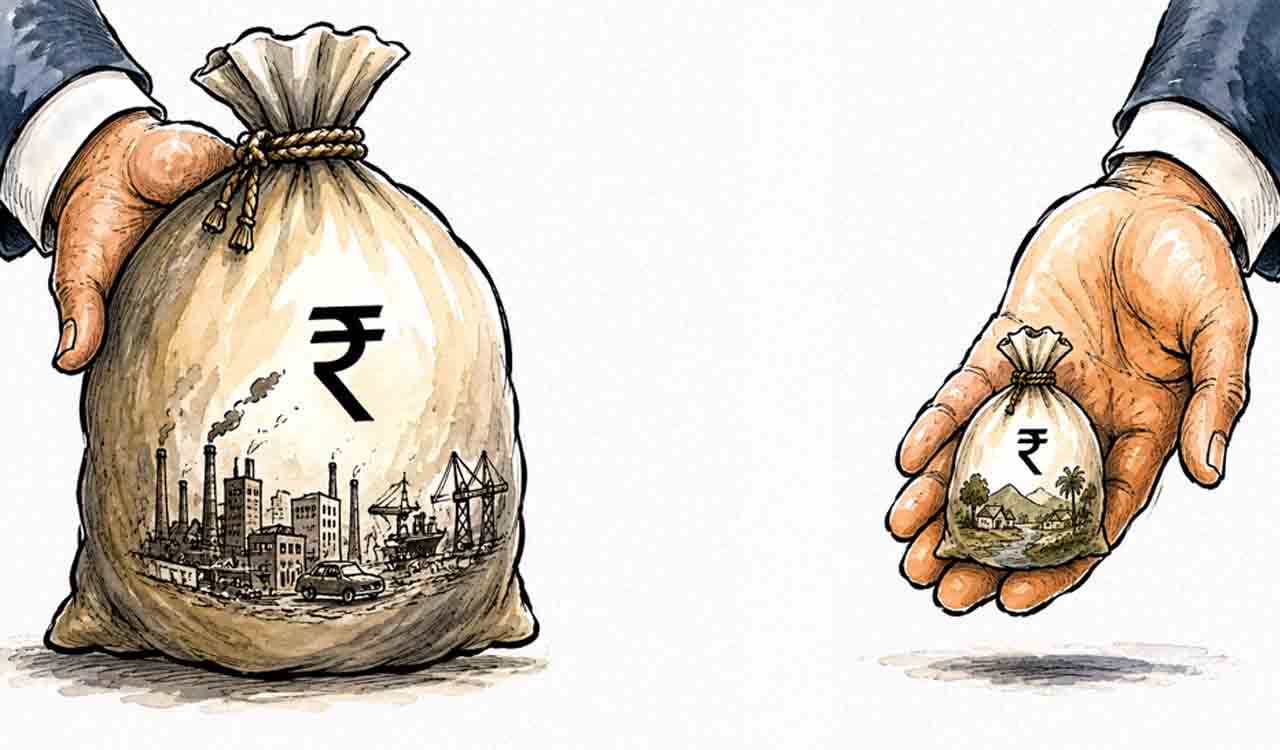
Five States—Maharashtra (31%), Karnataka (21%), Gujarat (15%), Delhi (13%) and Tamil Nadu (6%)—accounted for nearly 85 per cent of India’s cumulative equity inflow from October 2019 to March 2026, while the entire northeastern region attracted less than one per cent. The contrast is striking, especially given the Northeast’s abundant natural resources, rich biodiversity, strategic international borders, and immense tourism potential. The disparity raises an important question: what really attracts investment?
Also Read
The recently released Investment Friendliness Index (IFI) by the NITI Aayog offers some answers. More than a ranking of States, it provides a framework for understanding why some regions consistently attract investment while others struggle despite possessing significant potential. As India pursues the vision of Viksit Bharat by 2047, these insights are particularly relevant.
According to the NITI Aayog, India needs to sustain annual GDP growth of nearly 7.8 per cent to achieve developed economy status. Meeting that ambition will require far more than public expenditure; it will depend on creating business environments where private investment can flourish.
India’s investment rate has recovered to 29.9 per cent of GDP in FY2025, marginally above the average of the previous decade. While public investment has strengthened roads, ports, and digital infrastructure, long-term economic transformation will increasingly depend on private enterprises investing, innovating, and creating productive employment. Investors today evaluate much more than tax incentives. They look for quality infrastructure, policy stability, efficient institutions, skilled human capital, financial soundness, and an ecosystem that reduces business uncertainty.
Recognising this reality, the IFI assesses all 36 States and Union Territories across eight dimensions: infrastructure, business climate, natural resources, government policy, regulatory ease, institutional environment, financial health, and environmental resilience. Together, these indicators reflect the broader conditions that influence investment decisions in an increasingly competitive global economy.
Business Climate
The findings reveal that India’s investment divide is driven less by geography than by differences in economic ecosystems. States that dominate FDI have built diversified industrial clusters in automobiles, electronics, pharmaceuticals, chemicals, and engineering. These industries create supplier networks, specialised skills, research capabilities, and logistics infrastructure that reinforce investor confidence.
By contrast, much of the Northeast remains dependent on relatively small-scale and low-value industries such as wood products, food processing, textiles, and non-metallic minerals. Without stronger industrial ecosystems, attracting large-scale foreign investment becomes considerably more difficult.
Infrastructure presents another challenge. Many northeastern States continue to score below the national average on infrastructure and resource availability, increasing logistics costs and reducing industrial competitiveness. Policy consistency, fiscal capacity, and institutional effectiveness also shape investment decisions.
Tourism presents the Northeast’s greatest opportunity, as the region possesses assets that few parts of India can match. Yet, it accounted for only 0.43% of India’s domestic tourist visits and 1.17% of foreign tourist visits in 2024
Beyond these measurable factors lies a perception gap. Concerns over connectivity, distance from major markets, and historical security issues continue to influence investor sentiment even where conditions have improved significantly.
An analysis of the IFI data reveals one important finding. Among the index’s eight pillars, business climate emerged as the only pillar with a statistically significant association with FDI. This suggests that investors respond less to isolated incentives and more to the overall quality of a state’s business environment.
A strong business climate combines three essential ingredients: sustained economic performance that signals market potential, an innovation ecosystem that supports long-term growth, and business facilitation through transparent regulations, efficient approvals, and predictable governance. Together, these factors transform investor interest into actual investment.
NE’s Untapped Advantage
This finding carries an important lesson for the Northeast. Rather than attempting to replicate the manufacturing-led development model of western and southern India, the region should build on its own comparative advantages while simultaneously strengthening governance and business confidence. Every region does not need to compete on the same strengths to attract investment.
Tourism presents perhaps the Northeast’s greatest opportunity. Blessed with spectacular mountain landscapes, exceptional biodiversity, vibrant indigenous cultures, adventure tourism, wellness destinations, and strategic proximity to Southeast Asia, the region possesses assets that few parts of India can match.
Yet despite this enormous potential, the Northeast accounted for only 0.43 per cent of India’s domestic tourist visits and 1.17 per cent of foreign tourist visits in 2024. The gap reflects deficiencies in connectivity, tourism infrastructure, destination branding, policy implementation, and private sector participation rather than any shortage of attractions.
Unlike heavy manufacturing, tourism generates employment across a wide range of sectors, including hospitality, transport, handicrafts, local food enterprises, and community-based services, while requiring comparatively lower capital investment. India’s policy allowing 100 per cent FDI under the automatic route for tourism-related activities further enhances the region’s ability to attract domestic and international investors.
The timing is particularly favourable because global travel preferences are changing. Gen Z and millennial travellers increasingly seek authentic experiences over conventional sightseeing. Adventure tourism, eco-tourism, wellness retreats, cultural immersion, and unexplored destinations are among the fastest-growing segments of the travel industry. These emerging preferences align remarkably well with what the Northeast already offers.
Instead of competing with established heritage destinations such as Tamil Nadu or Uttar Pradesh, the region can position itself as India’s premier destination for experiential and sustainable tourism. Strategic investments in connectivity, hospitality infrastructure, digital promotion, skill development, and cross-border tourism circuits can unlock this potential while generating employment and raising regional incomes.
Competitive Advantage
The broader lesson from the IFI is that every State does not need to pursue an identical development strategy. Competitive advantage emerges when strong institutions, sound governance, and business confidence are combined with region-specific strengths. Manufacturing may remain the primary growth engine for some States, while tourism, renewable energy, logistics, agriculture, or knowledge-based industries may offer a more sustainable path for others.
The IFI should, therefore, be viewed not merely as another ranking exercise, but as a roadmap for building stronger regional investment ecosystems. If India is to achieve the vision of Viksit Bharat by 2047, investment must become broader, more inclusive, and geographically balanced.
For the Northeast, the path forward lies not in imitating established industrial hubs, but in leveraging its unique natural, cultural, and strategic advantages to create a globally competitive tourism economy. Building a stronger business climate alongside these inherent strengths can transform the region from a peripheral participant in India’s investment story into one of its most promising growth frontiers.
(Dr Sujit KS is Professor and Dr Nandini M is Assistant Professor, School of Business and Management, CHRIST [Deemed to be University], Bengaluru)

Related News