Opinion: Beyond Toughness —time to modernise physical training at NDA
The tragic death of an NDA cadet should prompt reforms that keep military training rigorous while making it more scientific, evidence-based and professionally supervised


By Brig Advitya Madan
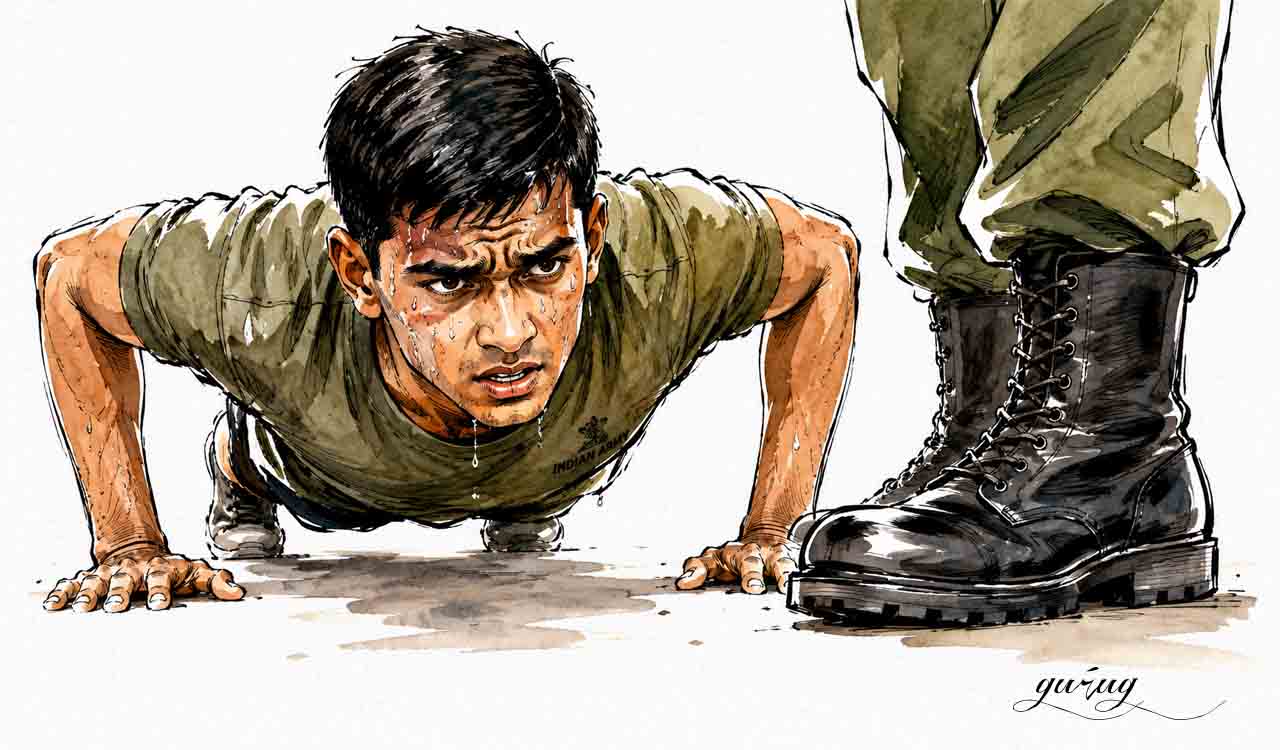
The tragic death of 17-year-old Cadet Abhinav Bajpai during a physical training session at the National Defence Academy (NDA) on July 10 has understandably reignited questions about the rigour and safety of military training. While the circumstances of the incident must be established through due process, it should also prompt a broader debate on whether India’s military training philosophy has kept pace with advances in exercise science.
Also Read
The question is not whether military training should be tough—it must be. The real question is whether it is as scientific, progressive, and professional as it needs to be.
Having served as an instructor at the Indian Military Academy (IMA), and drawing on discussions with Colonel Vinay Dalvi of the Army Physical Training Corps (APTC), who has supervised physical training at the NDA, IMA, and Officers Training Academy (OTA), I believe the time has come to modernise how we prepare future officers.
Pre-commission Training
The purpose of pre-commission training is not merely to produce officers who can endure hardship. It is to develop leaders who remain physically robust throughout long military careers. Yet the current system continues to emphasise physical training while paying insufficient attention to physical education as a professional discipline. Cadets are taught what to do, but rarely why they are doing it. Training, therefore, becomes a test of endurance rather than intelligent conditioning, leading to preventable injuries, burnout, and inconsistent long-term fitness.
Reform should begin even before candidates enter the academy. While the Army subjects soldier recruits to mandatory physical fitness tests, there is no equivalent assessment for officer candidates during the Services Selection Board (SSB) process. Most advanced militaries, including those of the United States, the United Kingdom, and Australia, incorporate objective fitness standards into officer selection.
India should adopt a similar approach. A mandatory fitness assessment comprising a 1.6-km run, chin-ups, and sit-ups should be introduced on the first day of the SSB. Equally important, aspirants should receive a fitness preparation guide well in advance, as practised by the Australian Army, enabling them to prepare scientifically rather than arrive with widely differing levels of physical readiness. Screening candidates before they enter the academy, rather than after they have joined, would establish a common fitness baseline, reduce avoidable injuries, and make training more effective.
Psychological Assessment
The case for such reform is strengthened by the very philosophy underpinning officer selection. The Defence Institute of Psychological Research (DIPR), a DRDO laboratory, has, through decades of scientific research, developed and validated the psychological assessment framework used by the SSB to evaluate officer-like qualities such as leadership, initiative, emotional stability, decision-making, and social adaptability. If scientific evidence guides the psychological assessment of officer candidates, there is no reason why the physical component of selection should not be based on equally rigorous, evidence-based standards.
Modernising physical training is not about making the NDA less demanding. It is about making India’s future military leaders stronger, safer and better prepared for the physical and psychological demands of modern warfare
The second priority is the professionalisation of the Army Physical Training Corps (APTC). At present, APTC officers are selected largely on the basis of performance during military courses but, unlike their counterparts in leading militaries, are generally not required to possess formal qualifications in physical education, exercise physiology or sports science.
This contrasts with institutions such as the Indian Naval Academy, where Physical Training Officers possess postgraduate qualifications in physical education and specialised certifications. At the United States Military Academy at West Point, the Department of Physical Education comprises military officers and civilian faculty, most of whom hold master’s degrees, with several possessing doctorates in exercise science and related disciplines.
If military fitness is to be treated as a professional discipline rather than a routine activity, India must similarly professionalise its instructional cadre. Direct induction of officers with degrees in physical education should be considered, while serving instructors should be encouraged to acquire recognised academic qualifications through university collaborations. Physical conditioning today is as much a science as it is an art.
Review NDA’s Model
The NDA’s training model also deserves review. Cadets destined for the Army, Navy and Air Force undergo almost identical military training for nearly two and a half years before receiving limited service-specific instruction. While jointmanship remains essential, the technological complexity of modern warfare demands earlier specialisation. A common foundational year could be followed by progressively service-oriented training tailored to the operational requirements of each Service.
The present model also attempts to combine a full three-year undergraduate programme with intensive military training. In practice, cadets are often physically exhausted and academically stretched, affecting learning and overall development. Several leading military academies have shown that rigorous military and academic training can be integrated without compromising either. The objective should not be to reduce standards but to balance them more intelligently.
Equally important is the need to distinguish structured training from unofficial practices. A significant part of a cadet’s day falls outside professionally supervised instruction, with physical activities often shaped by senior cadets or officers who may lack expertise in exercise science. However well-intentioned, such practices can result in excessive physical loading, avoidable injuries and premature burnout. The scientifically designed conditioning philosophy prescribed by the APTC and endorsed by Army Training Command (ARTRAC) should form the sole basis of physical training across all pre-commission training academies.
The Academy must also draw an unequivocal line between disciplined military training and practices that amount to ragging under the guise of “toughening up”. Physical hardship is indispensable to military life, but every activity must serve a defined training objective. Unofficial, unsupervised or punitive physical activity has no place in a professional military institution. Firm disciplinary action against violations is essential to reinforce that discipline and professionalism are inseparable.
Modern warfare demands officers who are not merely tough but physically resilient, mentally agile and capable of sustaining high performance throughout their careers. Scientific physical conditioning is therefore no longer simply a matter of tradition; it is a matter of operational readiness.
The recent tragedy at the NDA should not become an exercise in assigning blame. It should become the catalyst for institutional introspection. India’s armed forces have never hesitated to modernise weapons, doctrine, and technology. It is time to bring the same spirit of evidence-based reform to military physical training. Modernising physical training is not about making the NDA easier. It is about making India’s future military leaders stronger, safer, and better prepared for the demands of modern warfare.
(The author is a Brigadier and former instructor at the Indian Military Academy)

Related News