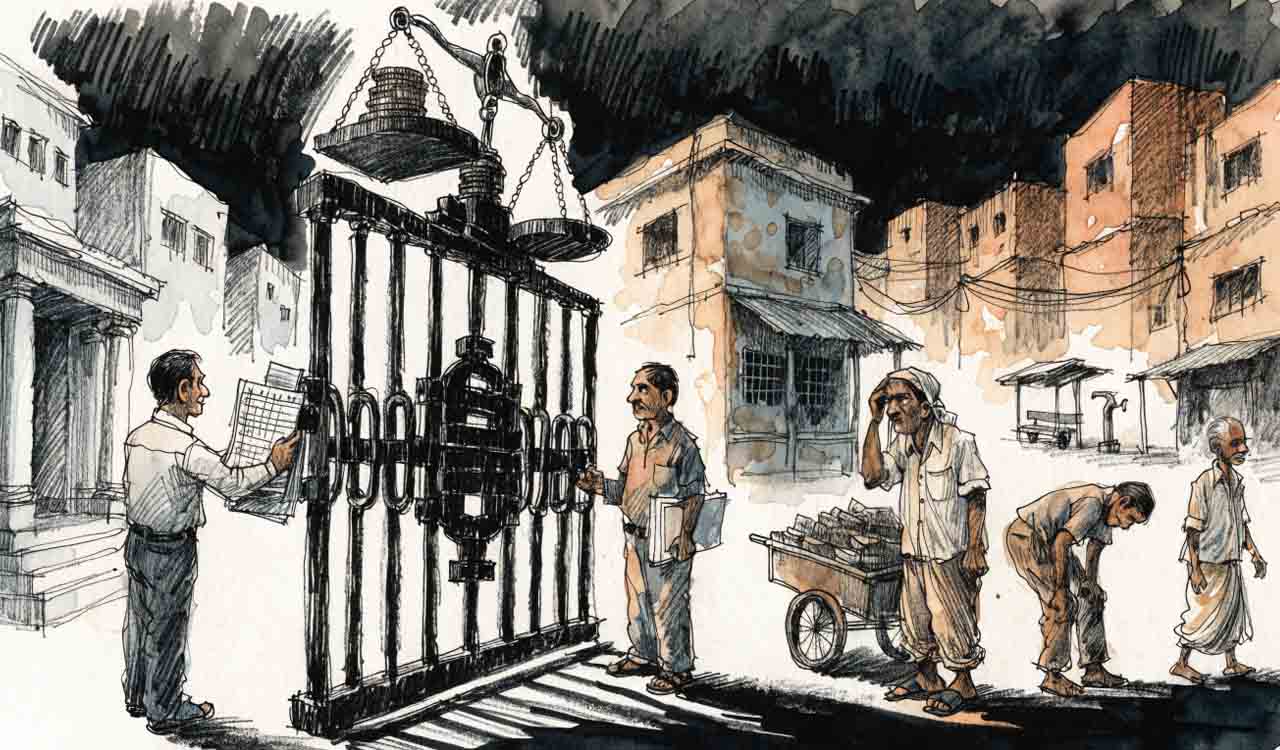
Opinion: Can India win the rare earths race in a China-dominated world?
Deeper partnerships can help India mitigate geopolitical risks in the Indo-Pacific and reduce dependence on China


By Sai Sathwik Sadasivapetkar, Dr Subhashree Banerjee
The escalation of prices for rare earth elements (REEs), influenced by China’s export limits and the US restriction on supplies, highlights the growing need to understand the REE market. The recent one-year agreement between the two countries marks a significant moment in global mineral diplomacy and will have implications for India’s economy.
Also Read
In today’s world, economies cannot function without REEs, as they are indispensable for more than 200 products ranging from high-tech consumer goods to defence applications. Almost every high-demand consumer good — from cell phones and hard drives to electric and hybrid vehicles, flat-screen monitors, and televisions — requires these elements. REEs are a set of 17 metallic elements. At present, the demand is mostly concentrated on permanent magnet motors, an essential component in electric vehicles. The rapid expansion of the electric vehicles market underscores their importance in future industrial development.
Are they Really Rare?
The very nomenclature, ‘rare earth elements,’ is misleading. A closer look reveals that rare earths are neither genuinely rare nor earths in the conventional sense. Its global availability is approximately three times that of copper, twice that of zinc, and nearly 200 times greater than platinum and gold. This raises the question: why, then, are they designated as rare?
These elements are present in the Earth’s crust but are considered rare because they are typically dispersed in low concentrations compared to other metals, making them difficult to extract. Further, separating these elements from one another and from the ores in which they occur is technically complex, rendering the extraction process more challenging. Therefore, beyond the availability of reserves, investment in advanced production and processing technologies plays a crucial role. Countries that have invested and developed such capabilities dominate the global rare earth market.
China’s Strategies
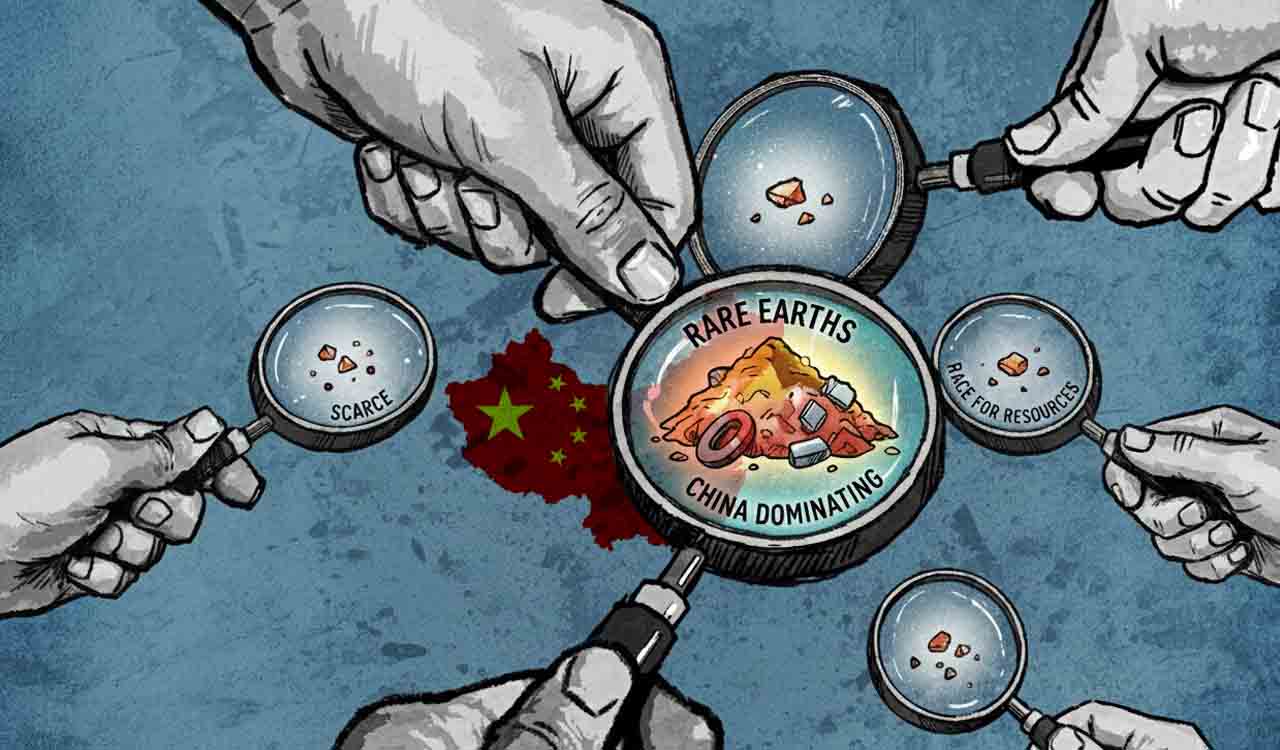
China has the world’s largest reserves, estimated at 44 million tonnes, and currently dominates the global market with 90 per cent of refining and separation capacity. In 2024, it accounted for 69.2 per cent of global production, followed by the US (12 per cent) and Myanmar (8 per cent). This dominance is the result of a sustained, long-term state strategy aimed at controlling the global supply chain.
Despite abundant reserves, India lags in rare earth production due to low concentration, technological gaps and regulatory hurdles
In 1986, China institutionalised rare earth research and development through the 863 Program, funding advances in separation technologies and industrial applications. By the early 1990s, rare earths were classified as strategic minerals, accompanied by state protection and investment incentives. These measures laid the foundation for China’s ascendancy in mining, refining and magnet production. Rather than being a cooperative neighbour, China sought to assert its dominance and effectively emerged as the central authority in the global market.
In this context, the recent Asian visits of US President Donald Trump acquire added significance. His engagements with Vietnam and Japan, both possessing important rare earth deposits, points to a calculated effort to recalibrate US leverage where mineral security meets the geopolitical containment of China. Realistically speaking, such visits are indications of an economic statecraft, where the geography of rare earths is reshaping 21st century politics of power.
India’s Potential
India, by contrast, possesses approximately 35 per cent of the world’s beach and sand mineral deposits, a significant source of REEs. Yet, it contributes less than 1 per cent to global supply. At the same time, India’s imports have increased from 1,849 tonnes in 2019-20 to 2,270 tonnes in 2023-24, largely driven by growing domestic demand for the electric vehicle sector. In 2024, India produced 2,900 tonnes, reflecting a production level far below its potential.
The primary issue with India’s reserves is that the purity and concentration of REE ores are low, resulting in higher recovery costs and technological inefficiencies. Additionally, environmental and regulatory constraints, particularly those associated with the radioactive nature of monazite, further hamper large-scale extraction. In response, the Government of India has launched a series of targeted interventions such as the National Critical Minerals Mission with an allocation of Rs 16,300 crore to enhance exploration, processing and recycling of critical minerals, including REEs.
The strategic importance of these minerals was highlighted recently when a potential disruption threatened India’s automobile industry. Although the crisis was averted through renewed trade deals with China, dependence on external suppliers remains risky given geopolitical tensions.
India must, therefore, diversify its supply chain. Myanmar, as a regional supplier, could serve as a strategic partner helping strengthen regional cooperation and reduce dependence on a single source. Countries such as Uzbekistan, Kazakhstan, Kyrgyzstan, and Turkmenistan possess significant reserves and are emerging as important players in global markets. Building long-term economic and diplomatic partnerships with these nations can reduce India’s vulnerabilities.
In addition, deeper collaboration with countries such as Australia and Japan on rare earth development can mitigate geopolitical risks and create new linkages in the Indo-Pacific. Strengthening domestic refining capacity and expanding global partnerships are essential if India is to reduce dependence on China and compete effectively in the rare earth race.

(Sai Sathwik Sadasivapetkar is student, and Dr Subhashree Banerjee is Assistant Professor, Christ University, Bengaluru)

Related News