Opinion: UGC Equity Regulations, 2026 — Contrary to the equity principle
While the inclusion of OBCs is welcome, key questions remain over equality, representation, and safeguards in higher education institutions


By Nayakara Veeresha
On 13 January 2026, the University Grants Commission (UGC) introduced the Promotion of Equity in Higher Education Institutions Regulations, 2026 (hereafter referred to as the Equity Regulations, 2026), repealing its 2012 regulations. The aim of these regulations is “to eradicate discrimination only on the basis of religion, race, gender, place of birth, caste, or disability, particularly against the members of scheduled castes and scheduled tribes, socially and educationally backward classes, economically weaker sections, persons with disabilities, or any of them, and to promote full equity and inclusion amongst the stakeholders in higher education institutions”.
Also Read
These regulations are in response to the Supreme Court of India’s directive in 2019 to establish robust mechanisms to check caste-based discrimination in higher education institutions (HEIs). The Equity Regulations, 2026, were long overdue, and it is a matter of concern that they were introduced only after the Supreme Court intervention, reflecting legislative inertia.
Contentious Issues
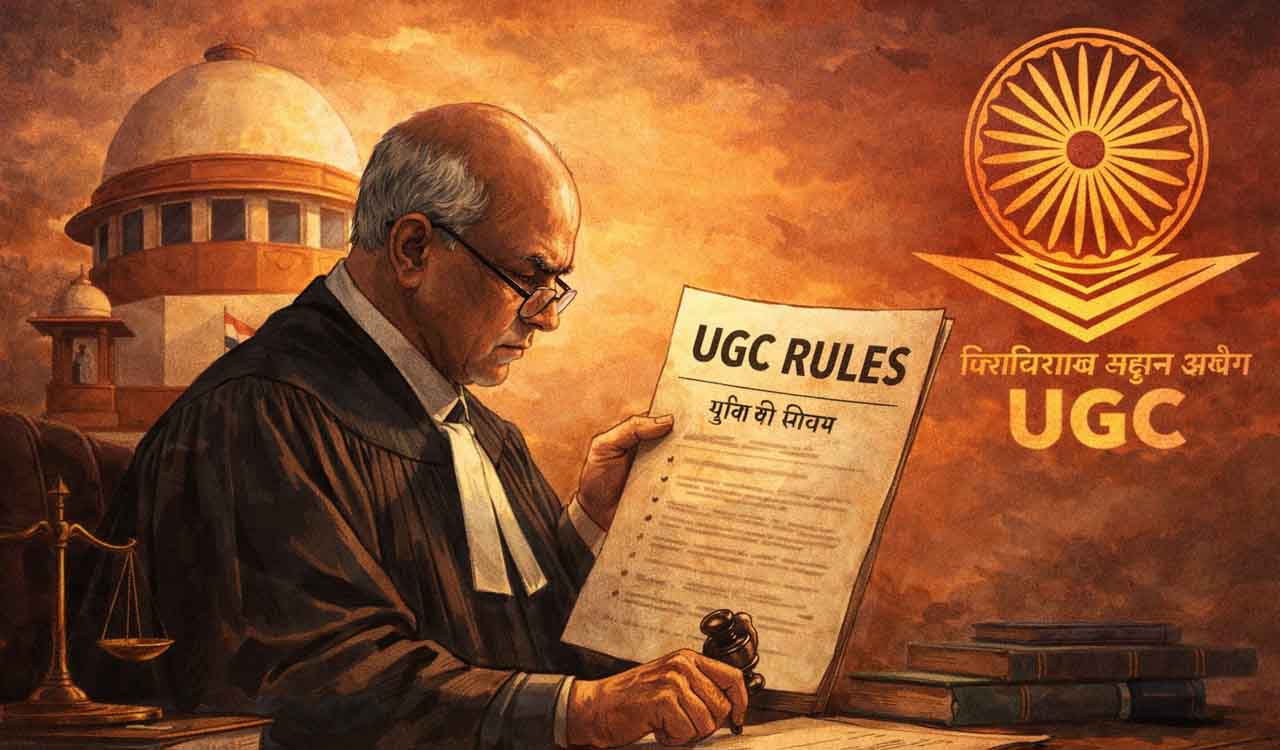
Widespread protests have erupted against the regulations over the exclusion of general category students, inadequate representation in equity committees, and the absence of safeguards to distinguish genuine complaints from false cases. The Supreme Court heard three Public Interest Litigations (PILs) on January 29 and stayed the implementation of the Equity Regulations, 2026. The PILs argued that the regulations violate Articles 14, 15, and 21 of the Constitution and should be repealed.
The top court opined that “upon a prima facie consideration, it appears to us that some of the provisions of the impugned regulations suffer from certain ambiguities, and the possibility of their misuse cannot be ruled out”. Using Article 142 of the Constitution, the court reinforced the UGC 2012 regulations in place until further orders.
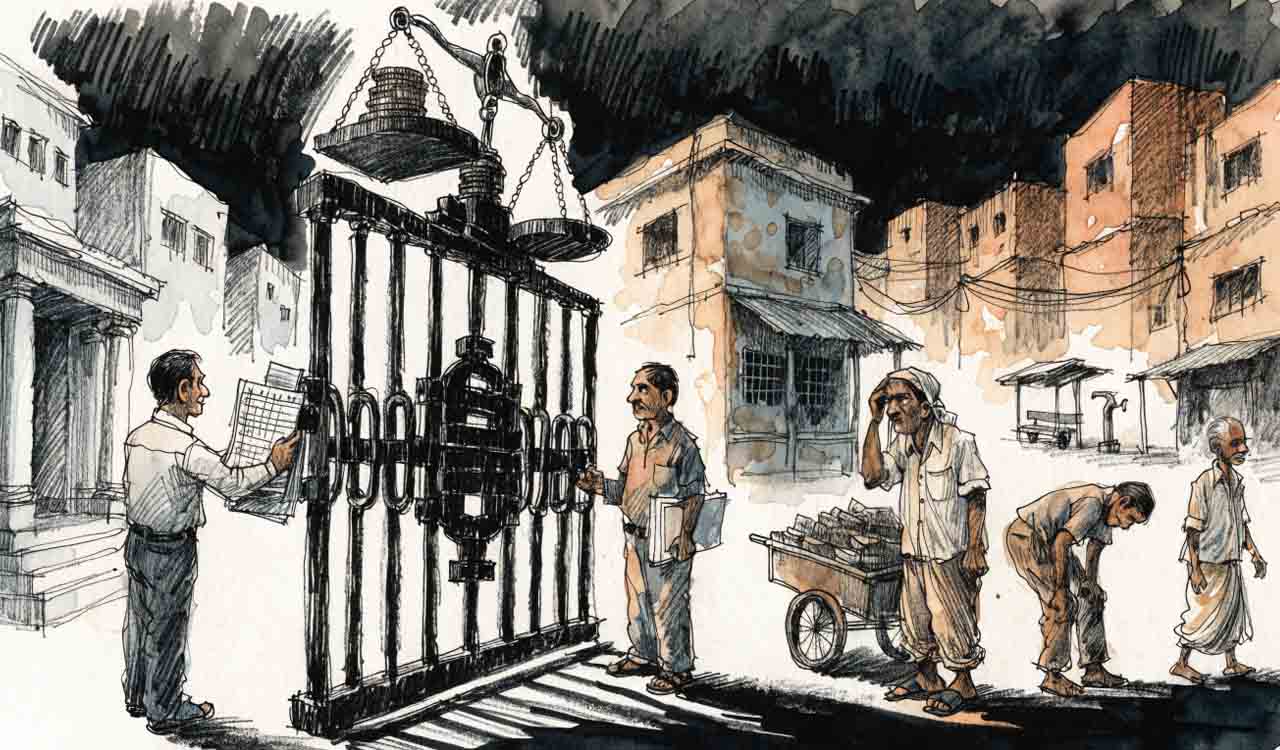
The most contentious clause is 3(c), which defines “caste-based discrimination as discrimination only on the basis of caste or tribe against the members of the scheduled castes (SCs), scheduled tribes (STs), and other backward classes (OBCs)”. This is exclusionary and arbitrary, as it creates further divisions among the student community rather than uniting them.
A law must be comprehensive and should not assume/presume that discrimination happens only to certain communities, even if historical discrimination is a fact. In EP Royappa v State of Tamil Nadu (1974) 4 SCC 3, the Supreme Court held that: “When an Act is arbitrary, it is implicit in it that it is unequal both according to political logic and constitutional law and is therefore violative of Article 14…”
Many Left Out
While the inclusion of OBCs is welcome, the explicit focus on only SCs/STs/OBCs sets a dangerous precedent by leaving out other groups such as religious minorities, women, the general category, third gender and persons with disabilities. Unlike the 2012 regulations, the 2026 regulations adopt a regressive approach to caste-based discrimination. The intent to eradicate discrimination is commendable; however, it must align with the spirit of equality enshrined in Article 14. The omission of the general category has raised eyebrows and needs to be fixed to make it implementable.
The exclusion of offences such as ragging and victimisation—explicitly covered under the 2012 regulations—raises doubts about the intent and effectiveness of the UGC Equity Regulations, 2026
Similarly, the non-inclusion of offences such as ragging and victimisation, which were part of the 2012 regulations, casts doubts on the true intent of the 2026 regulations. Ragging and its associated offences remain a significant problem in HEIs, and their omission is a major lacuna. Last December, the Parliamentary Standing Committee on Education, Women, Children, Youth and Sports, chaired by Digvijay Singh, recommended that “The draft Regulations, unlike the 2012 Regulations, must positively identify instances of discrimination. Without such detail, it will be left to the discretion of the institute to decide whether a complaint is genuine or false. Accordingly, the Regulations must explicitly include a comprehensive list of discriminatory practices.” This recommendation was neglected, thereby making the Equity Regulations silent on probable discrimination practices in HEIs.
Another issue is the use of the word ‘segregation’ in clause 7(d) of the Equity Regulations, 2026. It should be removed, as it has no relevance to promoting equity. In fact, it runs contrary to the equity principle.
Principle of Exclusion
The Equity Regulations, 2026, envisages the creation of ‘Equal Opportunity Centre’, ‘Equity Committee’, ‘Equity Squads’, ‘Equity Ambassador’ and ‘Equity Helpline’. These mechanisms are necessary; however, the regulations lack clarity on ‘who’ will manage them and ‘how’ they will function. Sections 5 (1) and (7) of the regulations fail to explicitly include general category representation in the Equity Committee.
Clause 12 of paragraph 5 states that “stakeholders designated as ‘Equity Ambassadors’ shall act as torchbearers of equity on the campus”. While instituting the idea of Equity Ambassadors is welcome, the regulations are silent on ensuring a conducive environment for them to function effectively.
Paragraph 8, titled ‘the procedure in case of an incident of discrimination’, outlines the implementation mechanism and the timeframe to be followed by the HEIs: the equity committee must meet within 24 hours after receiving a complaint, submit a report in 15 days, and the head of the institution must act within 7 working days. These timelines are far removed from social, educational, and legal realities.
The regulations are silent on the consequences if the equity committee fails to meet the prescribed deadlines. On the whole, the UGC Equity Regulations, 2026, appears impressive on paper as an inclusive policy; however, in reality, it provides a wider scope for exclusion.
(The author is Assistant Professor, Symbiosis Law School, Pune, Symbiosis International [Deemed University], Pune. Views are personal)

Related News