Opinion: Democratic politics needs a reset in Jammu and Kashmir
A return to statehood in J&K can restore the balance between elected government and LG, strengthening governance


By Nayakara Veeresha
For Jammu & Kashmir, 5 August, 2019, marked a significant moment in the political economy of India’s development story. The decisive shift from statehood to Union Territory governance indicated a disturbing yet deeply political setup that orchestrated a systematic centralisation of powers.
Also Read
The abrogation of Article 370 and the developments that followed in the Valley provide ample evidence of a Niccolo Machiavelli or Thomas Hobbesian Absolute State with centralised governance. Interestingly, the Jammu & Kashmir Assembly Election 2024 Post-poll Study 2024, conducted by CSDS-Lok Niti, finds that 63.6 per cent of voters expressed support for the restoration of Article 370.
Politics of Development
Centralised governance is another added layer to the politics of development in the State, making it dependent on the Union government despite recording economic growth better than the national average. The fiscal dependence of J&K is an outcome of centralised governance and the hollowing out of democracy from the State. To illustrate, the total outstanding liabilities of J&K increased to Rs 97,262.1 crore (BE) in 2026 from Rs 67,887.3 crore in 2019, according to data published in the Reserve Bank of India’s State Finances study (2026).
Constitutionalism and constitutional morality were the first casualties, as the Supreme Court, in its December 11, 2023, judgement, approached the abrogation of Article 370 from the perspective of national sovereignty rather than as an issue of ‘shared autonomy’, the existence of diverse identities, and other elements that are central to constitutional morality. The government of India’s assurance of restoring statehood both in Parliament (2025) and the Supreme Court (2023) is yet to fructify.
With unemployment, poverty and governance concerns persisting, restoring statehood could help rebuild trust and improve developmental outcomes across the region
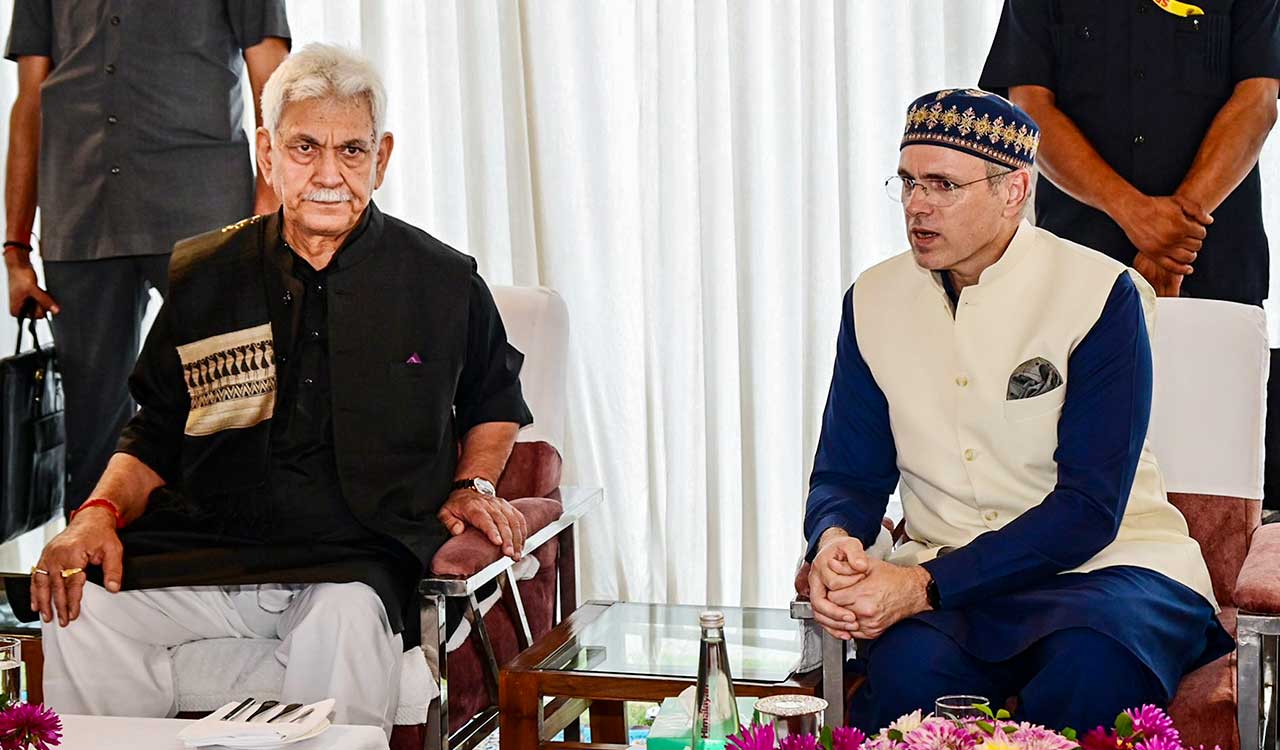
The helplessness expressed by Chief Minister Omar Abdullah reflects the prevailing state of governance and the locus of control, despite the presence of an elected government. Almost all powers (police, public order, financial management, prosecution, transfers and performance appraisal of all India officers) are now exercised by the Lieutenant Governor, thereby reducing the democratically elected government to a mere spectator rather than an active participant in governance.
Even when the Chief Minister takes decisions on matters of the State List, they now need the final approval of the LG. The question of statehood has thus become a political instrument rather than a democratic exercise.
Trust Deficit
The delay in restoring statehood augmented the trust deficit between the Union and State government and, most importantly, between the Union government and the people of J&K. Recently, demonstrations were held in the Valley both in favour of and against statehood. This is where the Union government and the Bharatiya Janata Party (BJP) leadership need to fulfil their promise of restoring statehood and ushering in faster development in the region.
The demand for Sixth Schedule status in Ladakh is yet another contentious area of concern. Statehood for J&K since 1947 has been a subject of trust deficit between the Union of India and successive governments in the State. The underdevelopment of the region, issues of cross-border terrorism, internal insurgencies, questions of federalism, relative autonomy and the people’s fundamental rights are all intertwined in a complex web of statehood and its implications for good governance and developmental outcomes.
The improved security situation, as claimed by the Union government in the Valley, cannot be denied. However, what is crucial is whether it has led to an improved law and order situation in the region. The continued terrorist attacks warrant a relook at and rethink of the imported US-based COIN (counter-insurgency) strategy for dealing with identity-based home-grown insurgencies.
Numerically, the number of terrorist attacks and related incidents has certainly declined. This, however, is no way to conclude that the situation is normal and peaceful. The decline in tourist inflows is directly related to the fragile law and order situation in the region, with deeper ramifications for the economic growth of the State.
The Economic Survey of Jammu and Kashmir 2025-26 has observed that “the downturn in tourism activity had spillover effects on allied services such as hospitality, transport, particularly air transport and other service-related activities, thereby exerting downward pressure on overall economic growth during the year.”
Unemployment (42.2 per cent), inflation (11.6 per cent) and poverty (10.2 per cent) are the significant concerns expressed by voters of J&K; these findings are part of the post-poll survey conducted by CSDS-Lok Niti.
A total of 81.2 per cent of voters expressed the view that attaining statehood is necessary for a better future of J&K, whereas only 10.7 per cent supported the continuation of the region as a Union Territory. The binary power system that exists now in the Union Territories of J&K and Ladakh has intensified the crisis of governance in the region. Governance is effectively carried out by the Lieutenant Governor in consultation with the Union government, rather than by the democratically elected government of the UT.
People’s Priority
The functioning of the Indian State in the Valley region since 1947 has certainly involved fragmented and fractured democratic activity. Yet, the restoration of statehood seems imperative, given the serious issues of unemployment and poverty. Statehood may not be the panacea for all the problems of the Valley region; however, it does have grave implications for good governance and developmental indicators. Prolonged unemployment among the youth poses a serious threat to socio-economic and political stability.
The politics of control and coercion needs to undergo a significant transformation so that governance can operate on the basis of consensus and persuasion. An integrated approach is imperative to deepen trust among the people of the Valley, the elected government and the Union of India. Democratic politics has to be prioritised over hegemonic and ideological politics to strengthen social order in the region.
(The author is Assistant Professor, Symbiosis Law School, Pune, Symbiosis International (Deemed) University, Pune. Views are personal)

Related News