Opinion: Interest groups and Democracy
Politicians and interest groups are interdependent in many ways and their quid pro quo is an inseparable part of democracy



By GANESH MANJHI
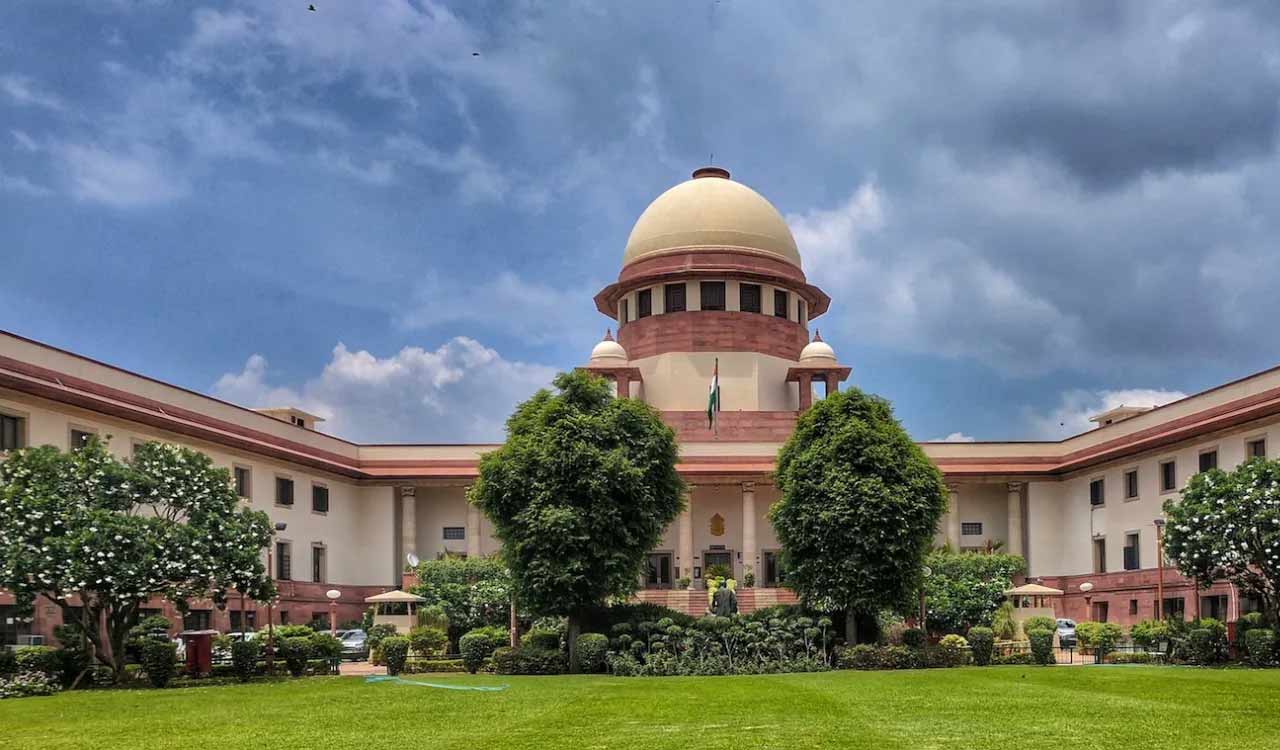
Quid pro quo (QPQ) is not something that is being discussed now in the wake of the judgment of the Supreme Court of India on electoral bonds. It is almost as old as democracy. There is a large body of literature which has historically highlighted the theory of QPQ. That is, interest groups or lobbies can finance an electoral campaign of a politician or a political party before the election and receive regulatory benefits of some kind after the latter wins.
Also Read
In extreme cases, this QPQ can result in the concentration of wealth among a few hands and the masses can be at a loss, hence the high inequality in the country. For example, Bouton et al (2013, 2014) and Goss (2010) explained the powerful gun lobbies in the US which financially help politicians/political parties during elections, a reason why the open purchase of guns could not be stopped in that country even after so much of agitation for long. Huber and Kirchler (2013) reports the higher returns on the stocks of the companies which contributed the most to the election expenditure during 1992 to 2004.
Ancient Bait
The QPQ relationship between the interest groups and the political parties/ politicians can be traced way back to around 60 BC to 53 BC Roman Empire when Julius Caesar was aiming for power (consul of the Gaul in Roman Empire) and he took financial help from Marcus Licinius Crassus (the wealthiest man in Roman history) and Gnaeus Pompey Magnus. The trio — Julius Caesar, Crassus and Pompey — formed a group famously known as ‘the triumvirate,’ and they ruled the Roman Empire for many years. Crassus is also considered one of the wealthiest in world history in general and the Roman Empire in particular.
In return, according to Plutarch, both Crassus and Pompey got tax breaks and land grants. In particular, Crassus accumulated a lot of wealth and power, a vast sum of 7,100 talents, had extensive real estate interests and owned silver mines. He owned a huge number of slaves and had enormous wealth that he could fund his own army.
Quid Pro Quo
Today, interest groups have become an inseparable part of democracy, and in many ways, they are interdependent for QPQ (Manjhi and Mehra, 2018). Kapur and Vaishnav (2011) also finds that politicians and builders engage in a QPQ, whereby the former place their illegal assets with the latter, and the latter rely on the former for a favourable delivery of the wealth during the election. To show, they study the political connection of the real estate market and find that this market goes down during the election, precisely because politicians take out their ill-parked wealth from the real estate. The citizens of the United States finance the election expenditure for the agent who is contesting the election in addition to the allocated budgetary expenditure by the government for the candidates contesting the presidential election. However, the Indian electoral process and democracy are still in the clutches of bourgeoisie and powerful business houses which once was doubted by Dr BR Ambedkar. Ambedkar rejected the idea of Gandhian gram swaraj and stated that rural India was in shackles of feudal elements and the upper castes and consequently the lower caste and the minorities would not get justice.
However, the Gandhian idea of gram swaraj in terms of Panchayati Raj Institutions (PRI) was given space in Article 40(1) of the Constitution which reads as ‘the state shall take steps to organize Village Panchayats and endow them with such power and authority as may be necessary to enable them to function as units of self-government’ (Venkatesu, 2016).
This full circle of politicians and corporate relationships has been well addressed by Raghuram Rajan (2017) in his book ‘I do what I do’ by stating: “The poor and underprivileged need the politician to help them get jobs and public services. The crooked politician needs the businessmen to provide the funds that allow him to supply patronage to the poor and fight elections. The corrupt businessman needs the crooked politician to get public resources and contract cheaply. And the politician needs the votes of the poor and the underprivileged. Every constituency is tied to the other in a cycle of dependence, which ensures that the status quo prevails.”
Evolving Democracy
Democracy took birth around the 5th to 4th century BC in Athens. The Athenian leader Cleisthenes introduced a system of political reforms that he called demokratia, or ‘rule by the people’ in the year 507 BC. Since then, the democratic process has been evolving with greater strength, and one can think about it in terms of a normative concept, as Plato has said: “It is stored up in heaven but unhappily has not yet been communicated to us.”
Democracy, what it ought to be, is a normative concept, where everyone enjoys their rights and privileges to the full. However, in democracy, as it is today, ‘not all is bright and beautiful’ as one believes under a normative concept. In reality, no country is at its democratic bliss and ‘one man, one vote’ is just the beginning of the route to democracy.
As a positive concept, the political institution of democracy has been shaped by various economic and noneconomic factors. In fact, there are various socio-economic, political, psychological and religious factors to count a few, which can affect the functioning of the democracy, where the power and authority are not always held by a benevolent social planner. Instead, the social planner might be working for self-interest, or under various constraints that are not consistent with democracy. In such cases, there exists the possibility of the emergence of election cycles under the influence of different political motivations and special interest politics.
(The author is Assistant Professor, Centre for Mathematical and Computational Economics, School of Artificial Intelligence & Data Science, Indian Institute of Technology, Jodhpur)

Related News