Opinion: Labour rights and ecological sustainability
Cleaner production goes beyond green policies and lies in incorporating Social, Environmental and Economic aspects for a sustainable framework


Dr Soumen Ghosh
Competition today has become a defining feature of market dynamics, driving firms and enterprises to maximise their profits. This relentless pursuit of market share, however, often comes at the cost of significant environmental and social violations.
Over the past decade, policymakers, along with various local and global organisations, have increasingly emphasised the necessity of cleaner production as a sustainable alternative. Before delving into this discussion, it is crucial first to define what cleaner production means. Why is this required? To establish cleaner production, what aspect should we focus on?
Cleaner Production
In simple terms, we can say that in the sphere of production economy, producers should run their operations responsibly. More precisely, if a producer is following all the standards in its operations across all the stages, we can call it cleaner production.
For instance, in a tannery, workers are continuously in contact with harmful chemicals without safety gear. Other examples include a factory releasing harmful effluents affecting the residents of that particular locality or a production unit not complying with guidelines —all these amount to not following the cleaner production framework.
Clean is Crucial
Discussions revolving around sustainability, climate change and environmental degradation have gained momentum. In the current global order, production is fragmented and those at the bottom of the chain are often involved in intra-sectoral price competition. As a result, they often violate many social and economic standards. These violations lead to a lot of social and environmental imbalances and eventually impact overall human well-being.
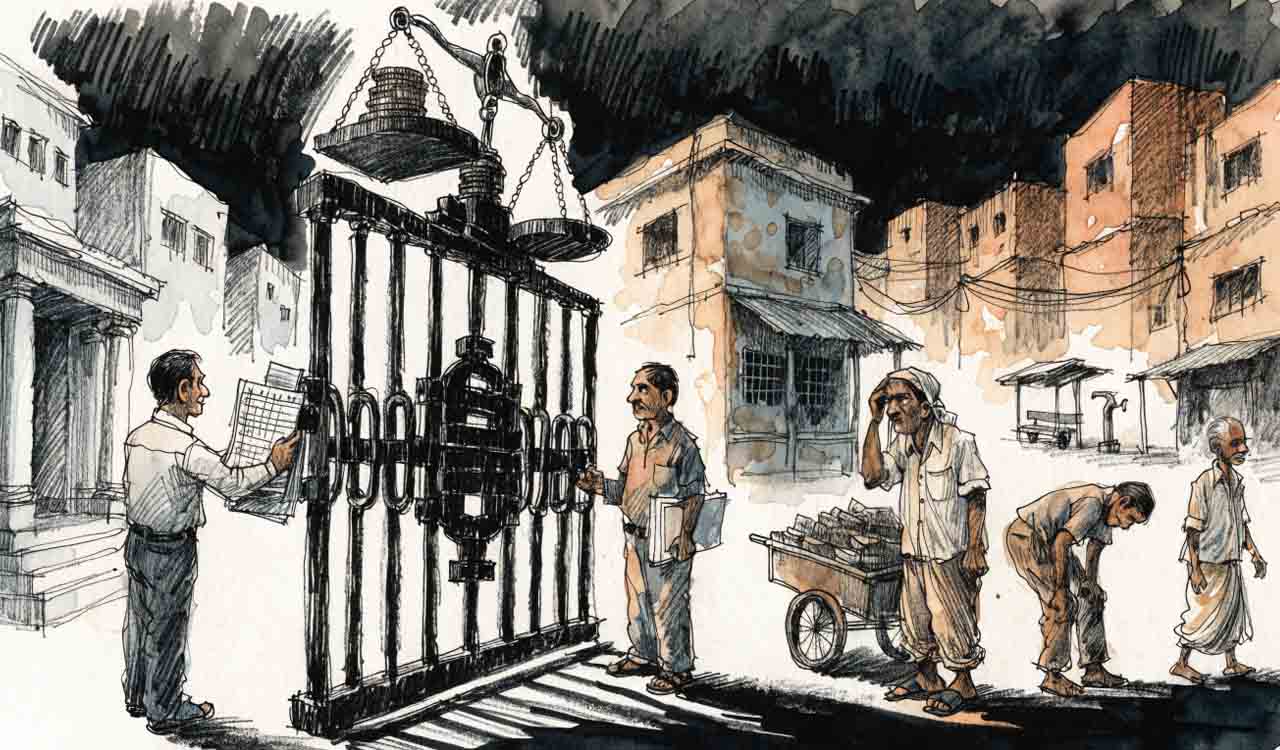
The International Labour Organisation (ILO)’s Decent Work Framework ensures dignity, security and fairness in all spheres of labour, and the way forward is in merging this framework with environmentally responsible production
For instance, the leather tanning factory releases untreated industrial waste to the environment to bypass the cost in order to attract firms with lower prices. Eventually, it impacts the entire society, (contaminating drinking water, affecting marine biodiversity and resulting in an increase in water-borne diseases etc).
Similarly, these price tussles often force the owner or management to cut labour cost and the people who are involved in these factories work under precarious work conditions without jobs or social security. This is another type of violation that has an adverse impact on human well-being. Given these two examples, cleaner production is crucial, especially in the production economy where large-scale violations take place for profit maximisation.
Misperception
We have a massive misperception that cleaner production only signifies environmental or ecological issues. But this is not so as it indicates beyond environmental issues. Only environmental-centric or social-centric policy is not sufficient to establish a cleaner production framework. That’s because if you focus on any one of them it means you are ignoring or overlooking the other aspects.
In literature, three aspects have been mentioned ie, Social, Environmental and Economic. To achieve an overall sustainable framework, we have to overcome the misperception of only one aspect, ie, the environment, and adopt a holistic approach by incorporating all three aspects.
Sustainable Future
India is rapidly emerging as a manufacturing epicentre for the Global North, drawing multinational brands with its vast labour pool and abundant raw materials. The promise of low manufacturing costs makes India an attractive destination, offering global companies a competitive edge.
However, beneath this industrial rise lies a duality of crisis. On one side, job insecurity and labour ‘footlooseness’ are at an all-time high, leaving workers in a state of perpetual uncertainty. On the other hand, small manufacturing enterprises operating under vulnerable working conditions often violate environmental standards vis-à-vis green regulations.
As India establishes its place in the global value chain, the question remains the same – can it manage economic growth while also complying with social and environmental sustainability?
To navigate this complex industrial ecology, both government and civil society must come together and uphold the cleaner production framework in the production sector. Embracing responsible manufacturing is not just an ethical imperative — it can also enhance firms’ performance, making sustainability a competitive advantage.
For over three decades, the International Labour Organisation (ILO) has been advocating the Decent Work Framework, ensuring dignity, security and fairness in all spheres of labour. The way forward lies in merging this framework with environmentally responsible production, creating a synergy between labour rights and ecological sustainability.
Only through this integrated approach can we move towards a truly sustainable society — one that upholds human well-being while fostering economic growth. It’s time for policymakers to adopt a more holistic vision, balancing economic aspirations with social and environmental responsibility.
(The author is Assistant Professor, School of Economics and Public Policy, RV University, Bengaluru)

Related News