Opinion: Modern Pompeii — questions only
Are we resisting the lessons of history and still not ready to pause, reflect and act against the mounting crises and threats?


By B Maria Kumar
Are we inclined to support Hegesias, the death crusader who advocated suicide as a means of escaping the miseries of life, while simultaneously undermining the value of precious human experience and the possibilities that life offers even amidst suffering and adversity? Are we ignoring the time-tested tenets of existentialist philosophers who threw light on how we can make our lives better through freely made choices, self-created purposes, and the pursuit of meaningful goals that enrich both ourselves and society?
Have we forgotten that there are ample ways to overcome the challenges posed by the complex problems we usually encounter in our lifetime, provided we possess the courage, patience, and volition to confront them?
Are we not aware that humanity is passing through difficult and complicated phases of collective existence largely of its own making, while hardly paying heed to the fact that we have the ability, wisdom, and resources to correct the same if only we are sufficiently determined to do so? Are we still living in the euphoria of restless pursuits driven by hyper-selfish, egotistical, and dangerous ambitions that often place personal gain above collective well-being?
Blind to Bloody Conflicts
Have we turned a blind eye to the reality of how the ongoing bloody conflicts are not just escalating by the day but also spreading into more geographical regions of the world, affecting millions of innocent people who have little role in creating such hostilities? Did we simply not care to listen to the wise words of humanistic scientists, philosophers, and intellectuals who have long been struggling to make their point about eschewing violence and embracing peaceful living, harmonious coexistence, and mutual respect?
Are we aware that every step along the path of hatred and violence risks a Samson’s option, where destruction extends far beyond the immediate target?
Have we not come to know about David Gross, the Nobel laureate who, while receiving the Breakthrough Prize for Fundamental Physics in California in April 2026, raised a red alert about the increasing possibility of human extinction arising from nuclear warfare and related existential risks?
Did he not urge humanity to devote greater time and energy to preventing such looming calamities before proceeding with many of its other long-term ambitions? Did he not remind us that numerous social, economic, and scientific achievements may lose their significance if humanity were to destroy itself through nuclear conflict and the devastating consequences that would inevitably follow?
Freudian Thought
Are we still not ready for the call to pause, think, introspect, and take immediate action to protect ourselves from mounting crises and threats, including climate disasters? Are we unknowingly enamoured of the death instinct rather than inspired by the life instinct described in Freudian thought? Did not modern neuroscience, at least to a considerable extent, uphold certain insights of the psychoanalytic perspective concerning the complexity of human behaviour, survival instincts, and decision-making?
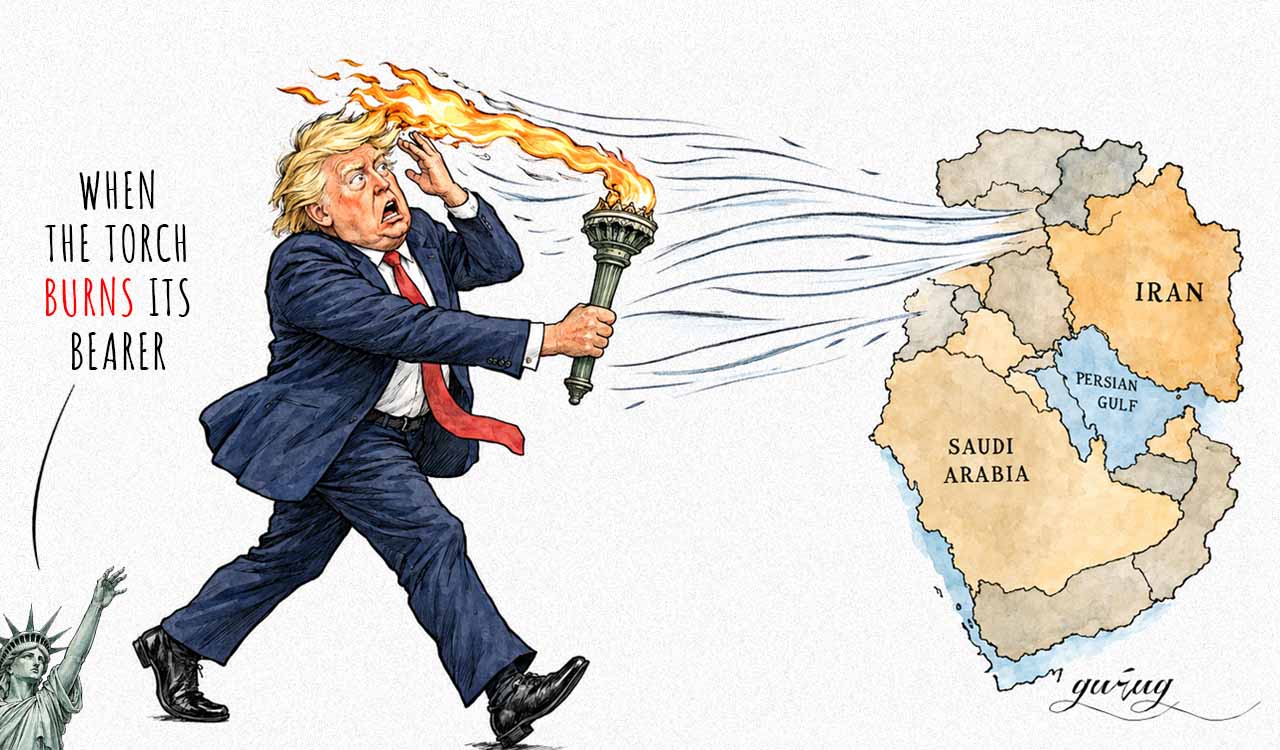
Or do we still remain obsessed with the notion of perilously adventurous war games that are prone to add fuel not only to geopolitical tensions but also to an already overheated environment and increasingly vulnerable human habitats? Do we not know that our choices, commitments, and actions are accountable, directly or indirectly, for the well-being of countless innocent lives sheltered by this planet?
Are we aware that every step we take along the path of animosity, hatred, and violence may eventually amount to what may be called Samson’s option, where destruction extends far beyond the immediate target and engulfs many others as well?
Haven’t we been not only witnessing but also experiencing the consequences of our shared decisions for quite some time, whether in Eastern Europe, the Middle East, African nations, or elsewhere? Is it not disturbing to learn that the Oslo-based Peace Research Institute recently found the number of armed conflicts raging across the globe to be at its highest level since the Second World War?
Have we not had enough of harsh weather realities that have been causing devastating impacts on agriculture, livelihoods, public health, water resources, economic stability, and the overall quality of life of millions of people across the world?
Pompeii Redux
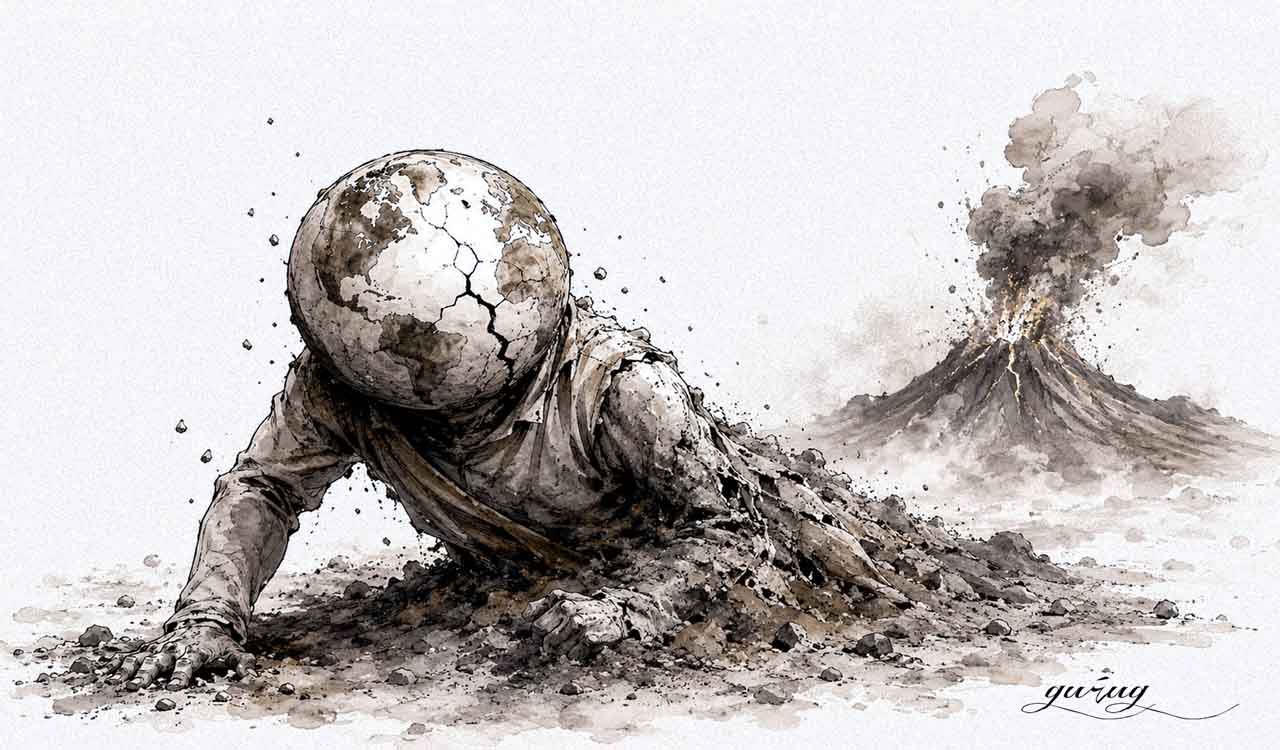
Are these indicators not reminiscent of the initial tremors that the Roman city of Pompeii experienced during the first century of this era? Is it not on record that nearby Mount Vesuvius frequently frightened the people of Pompeii with tremors and other warning signs, while continuing to remain active and potentially hazardous?
Was it not true that the inhabitants gradually became accustomed to such alerts and failed to appreciate the extent of the threat posed by the volcano? Was it not a historical fact that when the volcano finally erupted, many people were unable to reach safety in time and lost their lives as their city was buried beneath ash and debris? Was it not also a fact that they neglected an urgent existential challenge, namely self-preservation, despite receiving repeated alarming signals beforehand?
Are we, in our current times, still resisting such life lessons from history? Have we been conditioned to treat tremors as routine occurrences without adequately gauging the gravity of the impending eruption that may follow? Have we become desensitised to recurring crises, conflicts, and disasters that we no longer respond to shocks with the seriousness they deserve? Might the present risks prove even more catastrophic in view of the extraordinarily destructive nuclear weapons currently available to humanity?
Have we become accustomed to living in constant fears of uncertainty and insecurity instead of choosing safer, freer, and more fearless lives, as repeatedly cautioned by contemporary thinkers such as R Michael Fisher and Desh Subba? Are we busy painting the house while it is catching fire? Is our world the modern Pompeii in the making?
(The author, recipient of a national award for his book, is a retired IPS officer)

Related News