Opinion: Teach dissent, fear dissent–what should NALSAR impart?
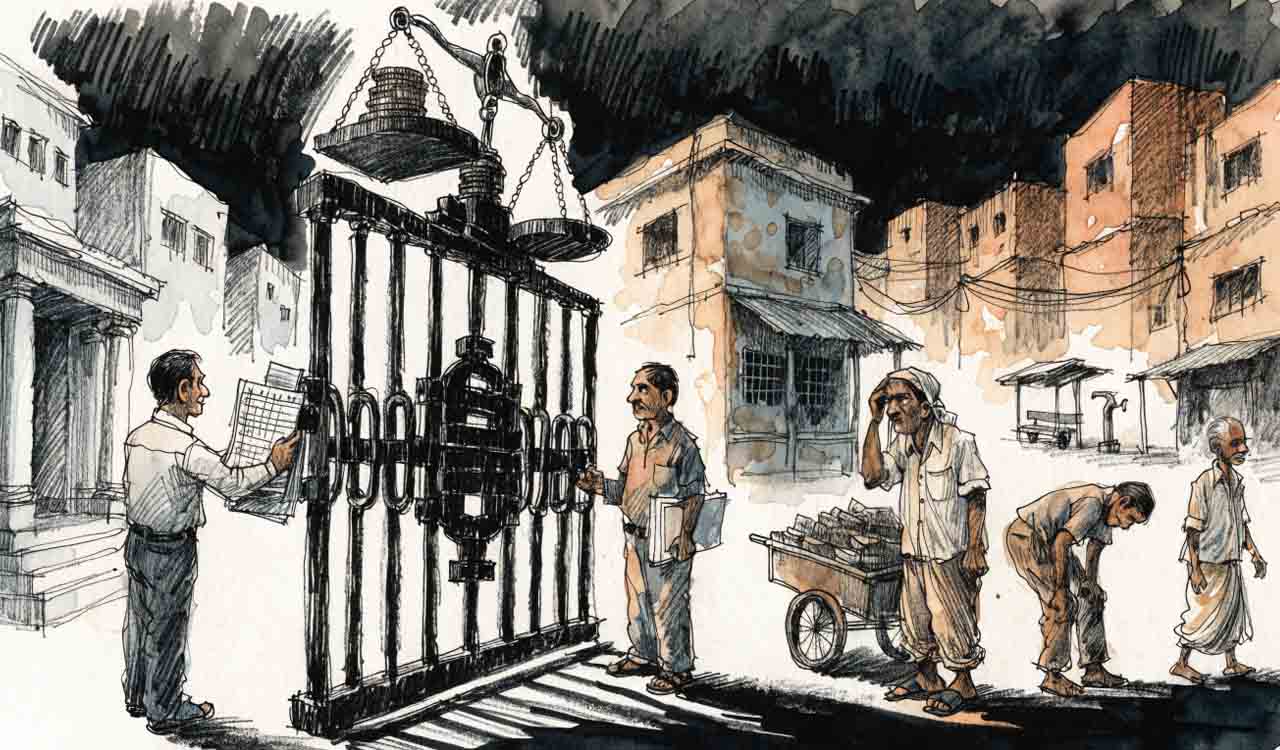
NALSAR’s decision to invite Chief Justice of India despite student objections raises a larger question: can a law school teach constitutional dissent while refusing to engage seriously with dissent within its own walls?



By Shashank Shekhar
A law school is perhaps the last place where disagreement should be treated as a disruption. Students enter law school being told to question everything. They are taught that constitutional democracy survives not because citizens agree with institutions, but because institutions remain answerable to reason, law, and dissent. They are taught to question executive power, scrutinise legislation, challenge judicial reasoning, and defend unpopular opinions.
Also Read
They study Article 19, judicial review, natural justice, proportionality, and constitutional morality. They read judgments in which courts have protected unpopular speech and challenged arbitrary state action. Yet, at the end of their legal education, they encounter an uncomfortable question: what happens when they question their own institution?
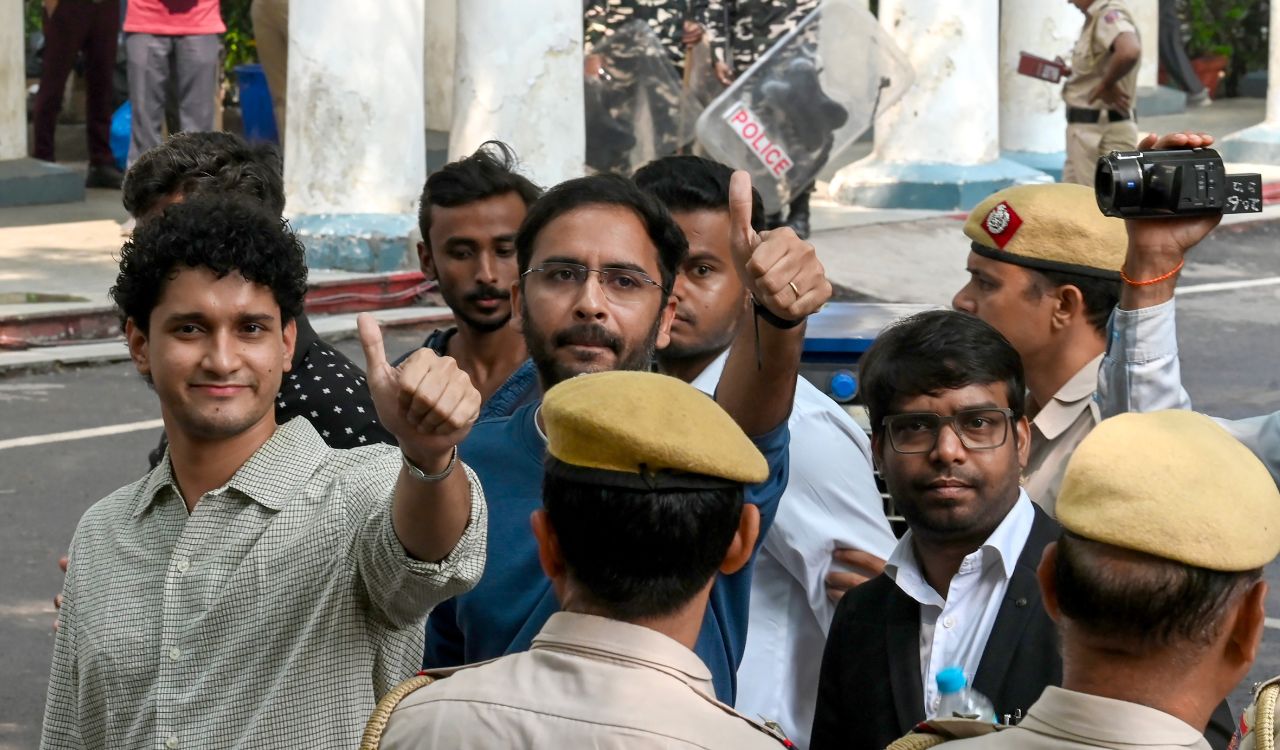
That is the question raised by the controversy at the National Academy of Legal Studies and Research (NALSAR), Hyderabad, where students reportedly objected to the invitation of Chief Justice of India Surya Kant as the chief guest for the university’s convocation. Their concerns followed proceedings concerning alleged police action against student protesters. The controversy, however, should not be reduced to whether one is “for” or “against” the Chief Justice.
The larger question is institutional: when students of a premier law school exercise dissent, does the university merely have the power to ignore them—or does it have a responsibility to engage with them?
Irony Of A Law School
For years, law students are taught the vocabulary of constitutional democracy. They study Maneka Gandhi on fairness, Shreya Singhal on free speech and Puttaswamy on autonomy and privacy. They read dissenting judgments because constitutional law is not a discipline of unquestioning obedience.
They are repeatedly told: question, criticise, reason and disagree. But what happens when the object of that questioning becomes the university itself? That is where the real test of legal education begins. A law school cannot credibly teach students that authority must be questioned when necessary, only to become uncomfortable when students question institutional authority.
Students Must Be Heard
This distinction is crucial. Dissent does not automatically make students right. Nor does criticism of a judicial decision amount to an allegation of judicial misconduct. Reports initially quoted the CJI as saying that the Court did not have time to watch videos concerning the incident. The CJI subsequently clarified the circumstances surrounding the proceedings, and the Supreme Court later agreed to hear petitions concerning allegations of police excesses.
Those developments matter. They remind us why criticism of judicial institutions must be factually careful and legally informed. But they do not answer the institutional question raised by the students. A student can disagree with a judge without disrespecting the judiciary. A student can question a judicial response without questioning the legitimacy of the judicial institution. And a student can object to a convocation invitation without suggesting that the constitutional office itself lacks dignity.
Dissent is not disrespect. That should be one of the first lessons of legal education.
Members, not Consumers
There is a deeper problem in how universities sometimes understand students. Students are expected to attend classes, pass examinations, participate in moots, write research papers, and eventually receive degrees. But a university is not merely a service provider, and students are not merely consumers. They are members of an intellectual community.
This is particularly true of a law school. A law student is being trained to become an advocate, a future officer of the court, legislator, judge, academic or public servant. If that student raises a principled objection, the institutional response should demonstrate how disagreement is managed within a constitutional culture.
The true measure of a law school is not whether its students remain silent in the presence of authority. It is whether they acquire the intellectual courage to question authority—and whether the institution has the maturity to withstand that questioning
Otherwise, we risk teaching two versions of law. One exists in the classroom. The other operates in institutional life. In the classroom, students are told that procedural fairness matters. Outside it, decisions can appear predetermined. In the classroom, they are told that reasons legitimise power. Outside it, the explanation can become simply: the decision has already been taken.
Students notice these contradictions. And they remember them long after they forget the contents of their first constitutional law examination.
The Answer
There is also a danger in framing this debate as though there are only two possibilities: cancel the invitation or ignore the students. There is another possibility: dialogue.
Why not allow the students’ concerns to be heard? Why not create a structured interaction between graduating students and the administration? Why not allow the Chief Justice, if he attends, to address precisely the concerns that produced the controversy? A convocation could then become something far more meaningful than a ceremonial speech. It could become a constitutional classroom.
There may be disagreement. There may even be discomfort. That is precisely the point. A law school should be comfortable with intellectual discomfort.
Selective Tolerance
Universities often celebrate student voices when those voices are convenient. But when students question institutional choices involving power, politics or public authority, the response can become considerably less receptive.
Law schools should resist that tendency more than any other educational institution. Because law is fundamentally about power. Who possesses it? Who exercises it? Who can challenge it? What remedies exist when it is abused? And, most importantly, who listens when someone says that power has been exercised wrongly? These are not merely examination questions. They are questions of institutional culture.
Meaningful Lesson
Perhaps the most meaningful lesson would be neither that students always win nor that institutions always prevail. The lesson should be that both sides can disagree without abandoning constitutionalism. NALSAR can retain its invitation. The students can retain their objection. The Chief Justice can attend. The administration can explain its decision. The students can continue to disagree. That is not institutional failure. That is democracy.
The true measure of a law school is not whether its students remain silent in the presence of authority. It is whether they acquire the intellectual courage to question authority—and whether the institution has the maturity to withstand that questioning.
As teachers of law, we tell our students that constitutional democracy depends upon dissent. We should mean it. Because if a law school teaches students to challenge the state, the legislature and the judiciary, but cannot tolerate students challenging the university itself, then the lesson has been reduced to a classroom exercise.
The final lesson of legal education should not be obedience to authority. It should be responsibility in the exercise of dissent. NALSAR, therefore, faces a pedagogical question: When its students say “no”, will their university simply proceed—or will it stop, listen, and explain?
For a law school, sometimes the most important lesson is not the one delivered from the convocation stage. It is the one taught by how the institution responds when its own students disagree. And that lesson will be watched—not only by the graduating class, but by every law student who is being taught, today, that dissent is a constitutional virtue.

(The author is Assistant Professor of Law, Lloyd Law College, Greater Noida, and an alumnus of NLU Delhi and Jamia Millia Islamia, New Delhi)

Related News