Opinion: Stateless of the Earth—migration, humanity and the crisis of our conscience
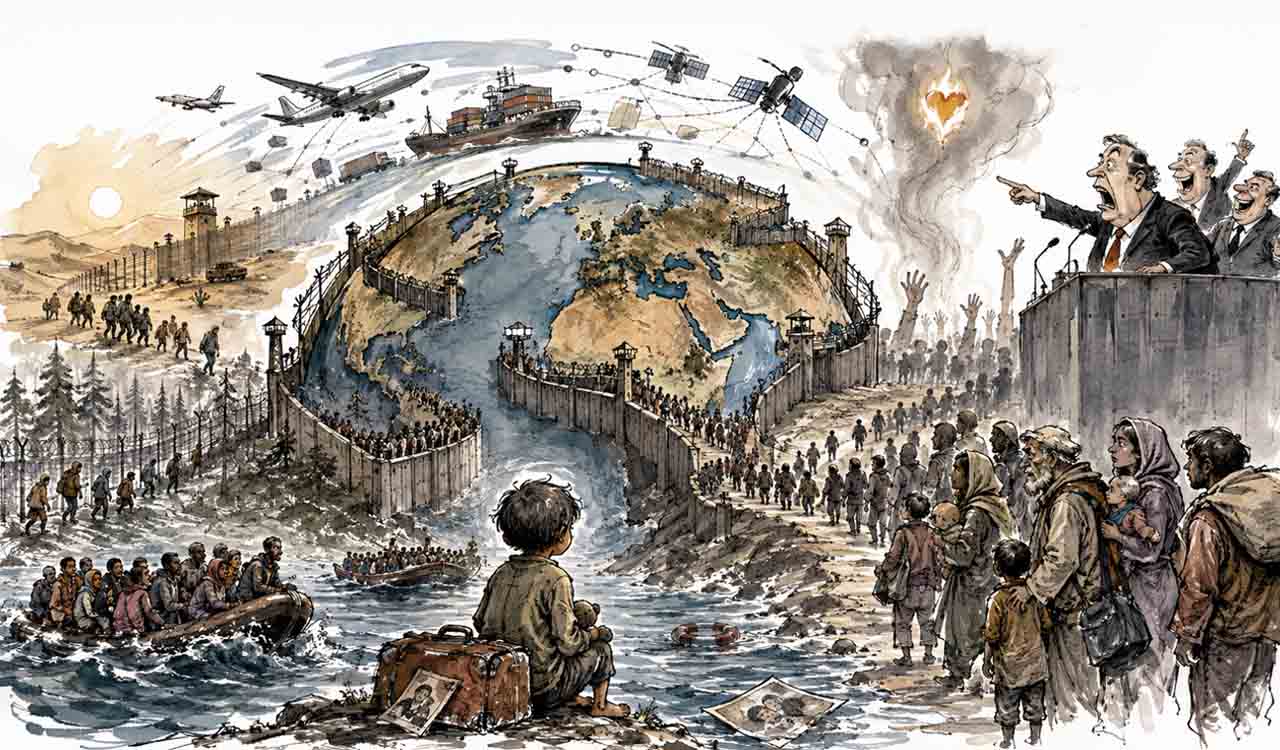
In an age celebrated for globalisation where goods travel across borders with minimal restrictions and capital flows across continents in seconds., human beings are increasingly trapped behind fences, walls and hostile immigration regimes


By Geetartha Pathak
The haunting image of thousands of desperate people risking their lives to cross a narrow stretch of sea into Spain’s North African enclave of Ceuta has once again exposed one of the greatest moral failures of our time. Within a matter of hours, over 60,000 migrants crossed into Ceuta from Morocco, while dozens lost their lives in the sea or were crushed in the chaos. Behind every statistic lay a shattered family, an unfinished dream, and a life driven to desperation by poverty, conflict, or hopelessness.
Also Read
The tragedy in Ceuta is not an isolated event. It is merely another chapter in an unfolding humanitarian crisis that stretches across continents. From the Mediterranean Sea to the Bay of Bengal, from the deserts separating Mexico and the United States to the forests between Belarus and Poland, migrants continue to perish while the world debates sovereignty, security and politics. Human suffering is increasingly becoming collateral damage in geopolitical conflicts.
The latest reports about hundreds of Rohingya refugees feared missing or dead after boats disappeared in the Bay of Bengal have again demonstrated how invisible some human tragedies become. While international humanitarian agencies expressed concern, the issue barely found sustained attention in many countries.
Denied citizenship in Myanmar, persecuted for decades and forced into refugee camps in Bangladesh, the Rohingya belong nowhere. Every attempted journey towards a safer future carries the risk of trafficking, starvation, or drowning.
History of Migration
Migration is as old as human civilisation itself. The earliest humans migrated from Africa to populate the world. Every civilisation has been built upon waves of migration. Trade routes, kingdoms, cultures, religions and languages flourished because people moved from one land to another in search of survival and opportunity. Human history is essentially the history of migration.
Ironically, in an age celebrated as the era of globalisation, migration has become one of the world’s most contentious issues. Goods travel across borders with minimal restrictions. Capital flows across continents in seconds. Information travels instantly through satellites and fibre-optic cables. Yet human beings are increasingly trapped behind fences, walls and hostile immigration regimes. Markets have become global, but compassion has remained confined within national boundaries.
Statelessness is among the deepest forms of human insecurity, stripping people not only of legal identity and basic rights, but also of hope, belonging, and dignity
For millions, migration is not a choice but a desperate act of survival. Wars destroy homes. Ethnic conflicts erase communities. Religious persecution forces families to flee. Climate change devastates agriculture. Rising sea levels swallow islands. Economic collapse leaves millions without employment or hope. Political oppression silences dissent.
The Mediterranean Sea has become one of the world’s largest cemeteries. Thousands of migrants from Syria, Sudan, Libya, Eritrea and Afghanistan have drowned while attempting to reach Europe. Similarly, thousands attempting to cross the US-Mexico border have died in deserts, rivers and mountains. Others have suffocated inside trucks abandoned by traffickers. Human desperation has become a profitable business for organised criminal networks operating across continents.
India too faces a complex migration challenge. It shares long and porous borders with Bangladesh and Myanmar. Historical migration, economic migration, displacement caused by conflict, and illegal trafficking have all shaped the demographic realities of eastern and northeastern India. Assam, West Bengal, and Tripura have debated undocumented migration for decades.
Political Slogan
These concerns cannot simply be dismissed because every sovereign nation has both the right and the obligation to regulate its borders. However, border management and humanitarian obligations should never become mutually exclusive. Democratic societies are expected to follow due process before deportation, determine nationality through lawful procedures, and protect individuals against arbitrary treatment.
Unfortunately, migration has increasingly become a convenient political slogan. Across many democracies, migrants are portrayed either as economic burdens or security threats. Populist politics often converts human tragedies into electoral opportunities.
This growing dehumanisation has dangerous consequences. Once migrants are viewed merely as statistics or “illegal infiltrators,” society gradually loses its ability to empathise with individual human suffering. A drowning child becomes a political argument rather than a humanitarian emergency.
Religious polarisation further complicates public discourse. Victims belonging to one community may receive widespread sympathy, while others remain invisible. Human rights, however, cannot depend upon religion, ethnicity or nationality. Climate change is emerging as another powerful driver of migration. Scientists increasingly warn that the 21st century may witness unprecedented climate migration involving tens of millions of people.
The international refugee protection system itself requires urgent reform. The 1951 Refugee Convention was drafted after the Second World War under circumstances vastly different from today’s realities. Modern migration involves mixed flows of refugees, economic migrants, climate-displaced persons and victims of organised crime. Governments require practical mechanisms that combine border security with humanitarian protection rather than treating them as opposing goals.
Tackling Together
Countries of origin must address corruption, unemployment, conflict and political persecution that force people to flee. Destination countries should develop orderly migration pathways while combating human trafficking networks. Transit countries require international financial support to manage humanitarian responsibilities.
The United Nations must be empowered to coordinate global responsibility-sharing, rather than leaving frontline countries to shoulder disproportionate burdens. International organisations should establish quicker mechanisms for determining refugee status, protecting children, combating trafficking and ensuring humane treatment irrespective of legal status.
Journalists should move beyond reporting numbers and begin telling human stories. Every migrant has a name, a family and a history. When journalism restores individuality, public empathy follows. When media reduces people to anonymous crowds, compassion diminishes.
Students should learn not merely about immigration laws but about human dignity. Literature, cinema and art possess extraordinary power to awaken empathy where political speeches fail. Ultimately, migration is not merely about borders; it is about belonging. Statelessness represents perhaps the deepest form of human insecurity because it strips away not only legal identity but also hope.
The greatest migration crisis of our age is not only the movement of displaced people. It is the gradual migration of compassion out of human hearts. Unless that compassion returns, no wall will ever be high enough, no fence strong enough, and no border secure enough to protect the conscience of civilisation.
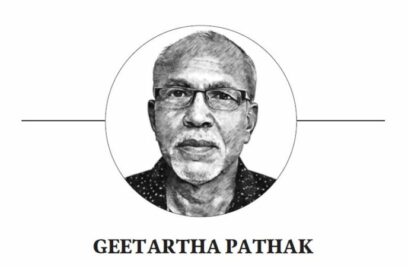
(The author is a senior journalist from Assam)

Related News
-

Opinion: Fuelling cars, emptying plates—the hidden costs of India’s ethanol policy
-
Telangana farmers, farm labourers return to migration amid water shortages, crop losses
-
Opinion: From literacy to livelihood— the missing link in women’s empowerment
-
Opinion: Don’t ‘fix’ young people — understanding India’s youth mental health crisis