Opinion: Supreme Court’s homemaker ruling marks a milestone for gender justice
By recognising homemakers as ‘nation builders’, the Supreme Court has paved the way for transformative reforms in women’s rights


By Dr GB Reddy, G Rishi Chandra Reddy
‘It is ironic to describe a homemaker as dependant on earning members, when, in reality, the household’s functioning depends substantially on the homemaker. The earning members are in fact solely dependent on the homemaker, but alas, this reality does not receive the acknowledgement it deserves’
Also Read
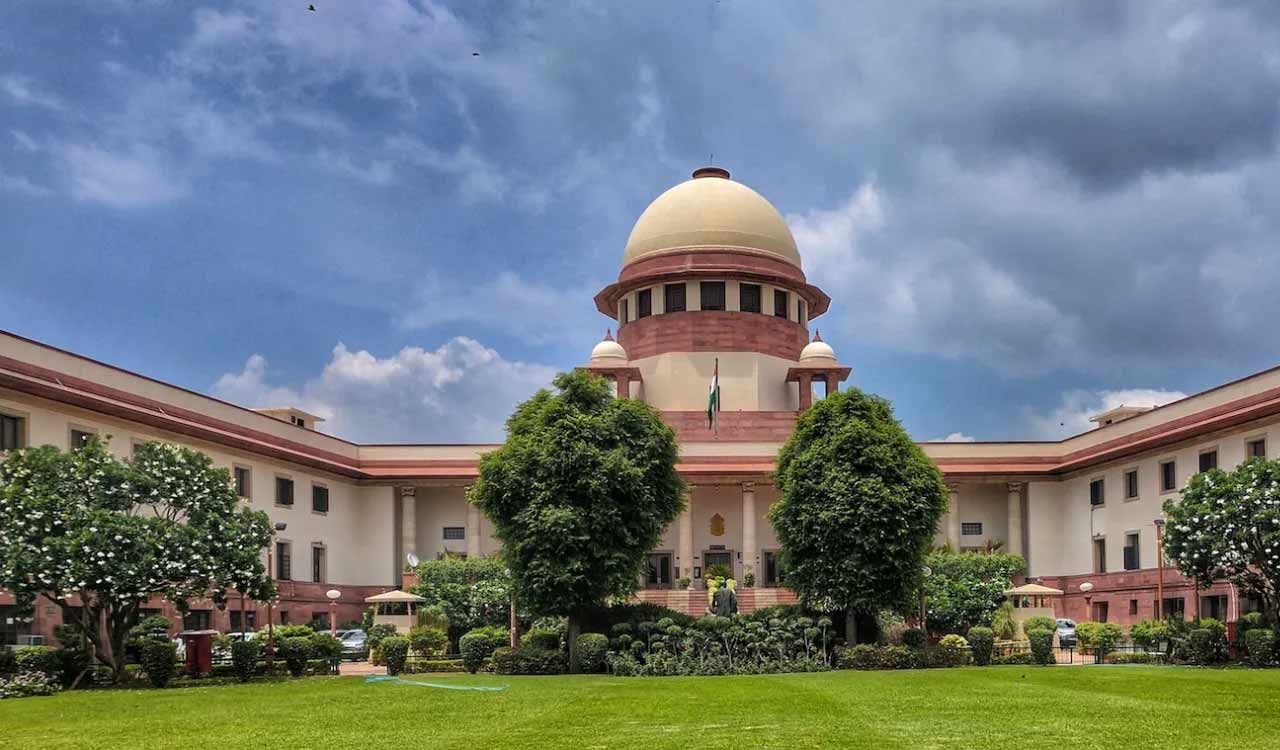
The above observations of the apex court epitomise the stark reality of modern life. The Supreme Court of India’s decision in Shishupal @ Shish Ram v Surjeet (11 June 2026) arrives at a crucial juncture and marks a transformative development in the jurisprudence of motor accident claims, particularly those involving the deaths of women homemakers.
Transformative Development
Delivered by a two-judge bench led by Justice Sanjay Karol, the decision confronts the persistent problem of excessive delay in adjudication while simultaneously breaking new ground by assigning economic value to homemakers’ contributions. The court underscored the disturbing reality that the matter had taken nearly 25 years to reach final resolution, despite the accident occurring in 2001.
While the judgment strongly condemns the deleterious effects of judicial delay—supported by an empirical analysis of 123 appellate decisions—its most enduring contribution lies in advancing the discourse on gender justice and affirming the economic significance of domestic labour.
The factual matrix of the case is that an accident occurred on 25 November 2001, in which the deceased, a homemaker, was fatally injured due to the rash and negligent driving of the respondent. The Motor Accident Claims Tribunal awarded compensation of Rs 2,42,000 in 2003; the Punjab and Haryana High Court, in 2024, enhanced it to Rs 8,43,400 with interest, initially at 7.5%, rising to 9% and 12% depending on delays in payment.
Aggrieved by the High Court judgment, the claimants approached the Supreme Court, which seized the opportunity to reflect on systemic delays and their corrosive impact on justice delivery. However, the more transformative aspect of the judgment is its recognition of homemakers as economic entities. The deceased in this case was a homemaker, and the court grappled with the challenge of quantifying her contribution.
Invoking Grihaswamini
Justice Karol invoked the cultural term grihaswamini—the woman of the house—to underscore the paradox that while society venerates homemakers symbolically, it fails to monetise their labour in legal contexts.
The court referred to prior judgments such as Arun Kumar Agrawal v National Insurance Co (2010) and Kirti v Oriental Insurance Co (2021), which recognised the value of domestic work. However, the apex court, through Justice Karol, went beyond, describing the homemakers as “nation builders” whose unpaid and unrecognised labour sustains families, nurtures future citizens, and contributes indirectly to the economy. Justice Karol rightly declared that the failure to acknowledge this contribution would perpetuate gender injustice and undervalue the women’s roles in the family system.
The Shishupal judgment not only exposes the corrosive impact of judicial delay on justice delivery but also recognises homemakers as economic contributors entitled to meaningful legal and monetary recognition
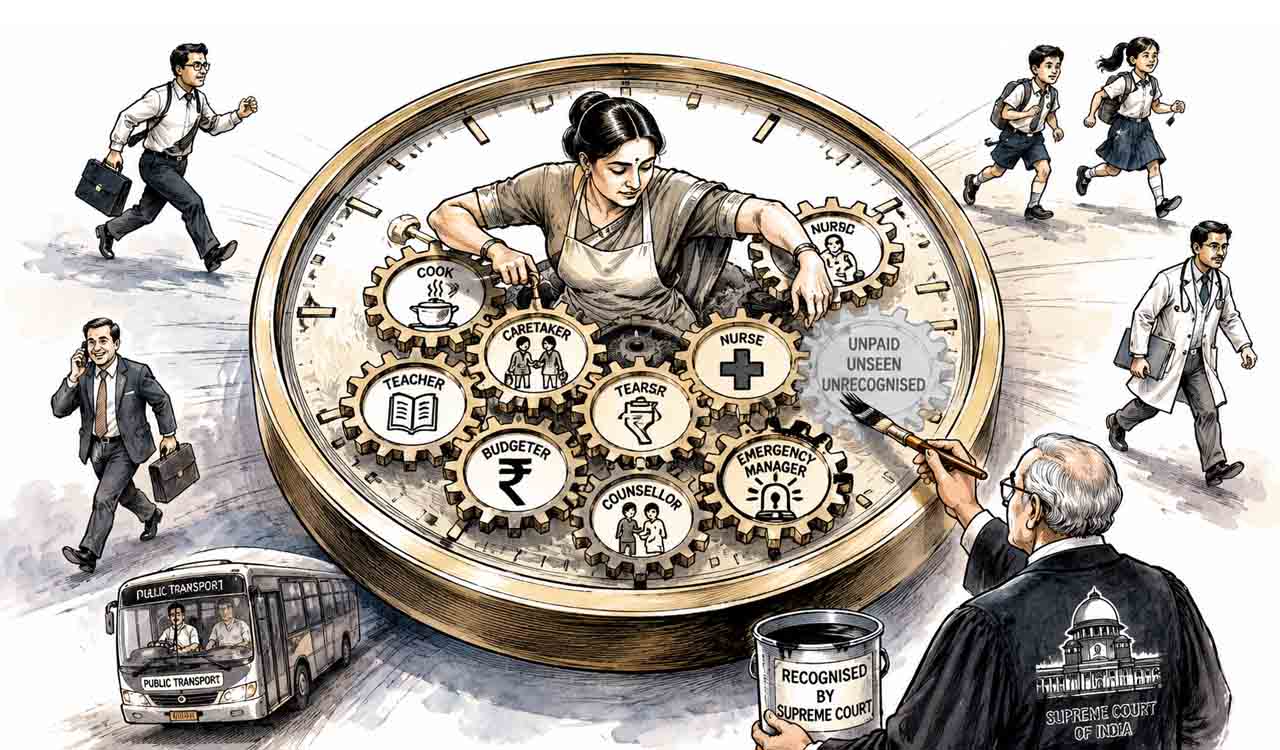
In the Indian family system, a homemaker is a person who takes care of the entire household, including the husband, children, parents, and other family members living together. Homemakers oversee daily domestic operations—such as cooking, cleaning, childcare, children’s education, budgeting, and grocery shopping — though not necessarily employed in full-time work outside the home.
A homemaker can be a spouse, a parent, or another family member, though the term is most traditionally associated with women. A homemaker may perform multiple tasks, such as a cook, babysitter, family counsellor, public relations officer, medical attendant, consort, partner in religious ceremonies, manager, accountant, and auditor. However, homemakers are not paid for the services they render without any breaks, leave, or even relaxation most of the time. On the contrary, they are denigrated as dependants, housewives, household people, and generally no deserving acknowledgement is given to them by the family and society. Whereas a maid and an attendant are paid, the homemaker is content with her status in the family.
Quantifying Contributions
While determining the value of the work performed by the homemaker who died in the instant case, the judgment proposed innovative methods for quantifying homemakers’ contributions, such as minimum-wage benchmarks, opportunity-cost models, and replacement-cost approaches, to estimate the economic value of domestic work. Justice Karol emphasised that compensation should not be tokenistic but reflective of the real economic loss suffered by the family.
The apex court also introduced the concept of “loss of domestic care” as an additional head of compensation and acknowledged that, beyond financial contributions, homemakers provide emotional support, caregiving, and household management—intangibles that are difficult to monetise but essential to family well-being. By recognising this head, the court expanded the scope of compensation to include non-pecuniary losses.
By recognising homemakers as economic entities, the judgment advances gender justice. It challenges patriarchal assumptions that domestic labour is valueless and affirms women’s dignity. This aligns with the constitutional principles of equality enshrined in Articles 14 and 15 of the Constitution. The Supreme Court’s judgment situates itself within this global discourse, but with a uniquely cultural framing—homemakers as “nation builders.”
The Shishupal judgment is a landmark in two respects: it exposes the corrosive impact of delay on justice delivery, and it elevates homemakers to the status of economic entities deserving quantifiable recognition. Justice Karol’s eloquent invocation of the grihaswamini reminds us that symbolic reverence must translate into tangible justice. The case is a clarion call for institutional reform and gender equity, ensuring that victims of accidents are not doubly victimised—first by tragedy, and then by delay.
Though the court arrived at a modest amount of Rs 30,000 per month as the value of the services rendered by a homemaker, the same is not final and requires careful determination on a scientific basis.
As rightly pointed out by the court, homemakers are responsible for laying the foundation stones on which stand the edifices of high-flying businesspersons, successful politicians, celebrated artists, sought-after lawyers and many others.
Equally, they are the silent support behind the daily grind of an everyday worker who steps out each day in the hope of making a decent living. In other words, they play a role — either entirely invisible or just partially visible — in the work of all those persons as contributing to the nation.
It is high time that the invisible was made visible, or that the veil was pierced to reveal what has long remained only partially seen. The “homemakers”, to put it directly, are the “nation builders”, and they ought to be recognised as such.
This realistic judgment should serve as a guiding principle for further legislative reforms to give women their due — ethically, socially, legally, and, more importantly, economically. Claims for monetary compensation arising from domestic violence, maintenance, and alimony under the personal and other laws, partition of property, including matrimonial property, and compensation for crime victims under criminal laws could all be addressed more effectively by following the ratio laid down in this judgment.
(Dr GB Reddy is Vice Chancellor, The National University of Advanced Legal Studies [NUALS], Kochi. G Rishi Chandra Reddy is practising advocate, Hyderabad. Views are personal)

Related News
-

Opinion: The end of American hegemony in West Asia?
-
Apex court summons senior Delhi police officer assault on women journalists covering protests
-
SC stays trial in defamation case against Rahul Gandhi over derogatory remarks against PM Modi
-
SC urged to initiate suo motu contempt action over social media post targeting CJI, INDIA bloc protest