Opinion: Telangana Hate Speech Bill — what a government criminalises tells you what it fears
The Bill raises serious questions on free speech, constitutional limits, and state power. Is this legislation or licence?


By Nayini Anurag Reddy
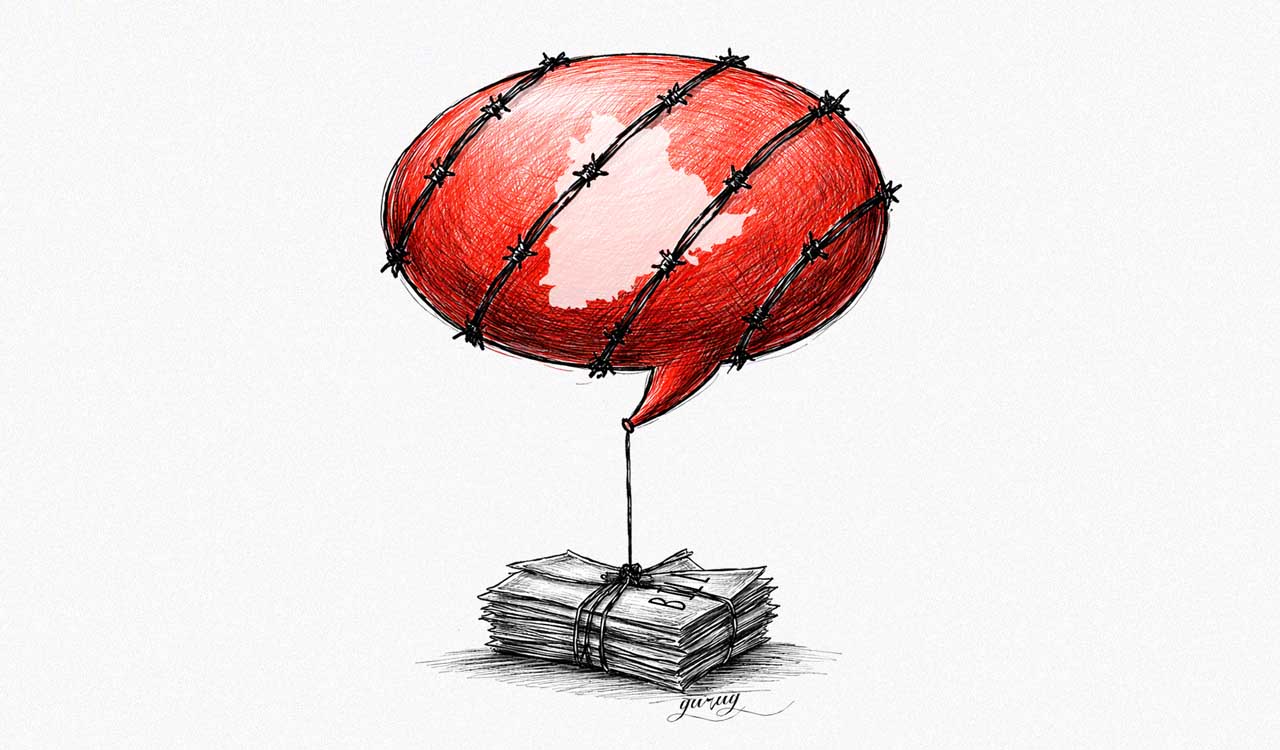
A law that cannot define its own central term is not legislation. It is a licence. The Telangana Hate Speech and Hate Crimes (Prevention) Bill, 2026, introduced in the Legislative Assembly, is premised on a word, disharmony, that it never defines. It is built upon a standard, ill-will, that no statute, court, and no constitution has rendered measurable. And upon that unmeasured, undefined foundation, it erects a criminal provision that is cognisable, non-bailable, and enforceable by a single government-appointed officer without a court order.
Also Read
This is not a technicality. It is the entire problem.
Provision and its Silences
The Bill defines hate speech as any expression — spoken, written, or digital — made with the intention to cause disharmony, enmity, or ill-will against any person, community, or group. The stated purpose — preventing communal hatred — is unobjectionable. The drafting is where the danger lives.
Nowhere does the Bill establish an objective threshold of harm. It requires no proof of actual incitement, no demonstration that the expression caused or was likely to cause measurable injury. A complaint alleging intent is sufficient to set the machinery in motion. And once in motion, the machinery is formidable: every offence under this Bill is cognisable, meaning no warrant is required for arrest, and non-bailable, meaning the accused cannot leave custody as a matter of right. A magistrate must intervene. Until then, the citizen waits.
Section 6 completes the picture. A Designated Officer, appointed by and answerable to the state government alone, is vested with the power to direct any platform, intermediary, or service provider to block or remove content from any domain, including electronic media. No court order is required. No independent threshold of harm must be demonstrated. No mechanism for appeal is prescribed. One functionary, accountable to no one but the government of the day, decides what the citizens of Telangana may access and say in the public domain.
In what conception of constitutional democracy does that sentence belong?
The Supreme Court Verdict
India has confronted this architecture before, and the Supreme Court has already delivered its verdict on it.
In 2009, the UPA government introduced Section 66A of the Information Technology Act, criminalising online speech that caused annoyance, inconvenience, or danger. Those words were undefined. They were interpreted freshly with each complaint, each officer, each political moment that demanded a convenient provision. Academics were arrested for forwarding commentary. Citizens discovered that an opinion could cost them a night in custody and a frightened household.
In 2015, the Supreme Court struck it down. Shreya Singhal vs Union of India held that a provision criminalising expression without establishing clear, objective, and demonstrable boundaries is unconstitutional under Article 19(1)(a). The court held that vagueness in a speech law is not a drafting oversight. It is a constitutional violation.
The Telangana Hate Speech Bill is that provision reconstituted. A different name. The same absence of boundary. The same invitation, structural and deliberate, to selective enforcement. The Supreme Court has already told this legislature where this road leads. The legislature is choosing to walk it regardless.
A Borrowed Failure
The Bill did not originate in Hyderabad. It is, in substance and in significant measure of language, a reproduction of the Karnataka Hate Speech and Hate Crimes (Prevention) Bill, 2025. The Karnataka Governor reserved that Bill for Presidential consideration under Articles 200 and 254 of the Constitution, citing three specific constitutional infirmities: possible repugnancy with central legislation, violation of fundamental rights under Articles 14, 19, and 21, and executive powers he described as subjective and draconian in scope.
The Bill stalled in Karnataka on precisely these grounds. What the Karnataka government could not push through, the Telangana government is now attempting — with the same provisions, against the same constitutional objections — hoping, it would appear, for a different outcome. That is not legislative confidence. It is political opportunism, borrowing a failure.
When Law Speaks Before it Acts
Here is what is most telling about this Bill, and what its critics must not overlook, it does not need to become law to begin functioning as intended.
The act of introducing this legislation in the Legislative Assembly has already delivered a message, to journalists who cover state politics, to civil society organisations that file public interest petitions, to academics who write on governance, to citizens who engage critically in public discourse. The message is this, the government of Telangana has decided that this category of speech is criminal. The precise contours of that category are undefined, and deliberately so. That imprecision is not an accident of drafting. It is the instrument itself.
A law with vague boundaries does not need to be enforced to constrain behaviour. It needs only to be visible. The uncertainty it creates, about where the line is, who draws it, and on what basis, is sufficient to prompt exactly the restraint this government may be seeking. Citizens, activists, and young voices in civic space do not wait for a conviction to conclude that caution is the safer course. They read the room. And this government, through this Bill, has redecorated the room.
Steps Bill Chose to Skip
A government genuinely committed to preventing communal hatred and protecting vulnerable communities would begin not with criminal provisions but with constitutional rigour.
It would define, with the precision the Supreme Court requires, the demonstrable and narrow category of expression that constitutes actual incitement to violence, as distinct from offence, criticism, political opposition, or discomfort. It would build institutional capacity, training enforcement officers to distinguish between targeted communal incitement and robust political expression. It would establish independent oversight and a clear right of appeal before content is removed from public access or a citizen’s liberty is touched.
What Karnataka could not push through, Telangana now attempts, hoping for a different outcome. That is political opportunism, not confidence
This Bill contains none of that. No training provision. No independent oversight. No right of appeal before a Designated Officer’s decision takes effect. What it offers instead is a broadly worded non-bailable power placed in the hands of whoever holds office today and whoever holds office after them.
A government that bypasses every step of responsible institutional design and proceeds directly to tabling a criminal provision was never building a harmony law. The question this House must put to itself, plainly and on the record, is what it was building instead.
Democracy that remains to be defended
Laws like this one rarely arrive announcing what they are. They arrive in the language of protection, of harmony, and of preventing hatred. It is precisely that language that demands the most careful scrutiny, because the more reasonable a provision sounds in its stated purpose, the more thoroughly its actual structure must be examined.
What this Bill’s structure reveals is a provision designed not for the courtroom but for the climate, one whose greatest utility lies not in conviction but in the calculation it induces in those who might otherwise speak. A democracy that governs its citizens not through enforcement but through the anticipation of enforcement has not achieved order. It has achieved something closer to its opposite.
Telangana was not handed to its people. It was built by them, through decades of insisting that their voice carried constitutional weight. That inheritance places an obligation on this legislature, and on every institution that holds authority over this Bill’s passage, to ask whether this legislation protects citizens or exposes them, whether it prevents harm or enables it, and whether a government that cannot define the law’s own central term has the standing to enforce it against anyone.
The Select Committee or the Governor of Telangana, when this Bill arrives before them, will face precisely that question in constitutional form. The citizens of this State are entitled to know that it will be answered with the seriousness it demands.
What a government chooses to criminalise tells you what it fears. What it fears tells you everything about who it intends to govern, and how.

(The author is an MBA graduate, entrepreneur, and independent policy commentator with a focus on governance accountability and civic rights in Telangana)

Related News