Opinion: Telangana’s fee reimbursement crisis threatens social progress
Mounting arrears and policy shifts put the scheme that has enabled marginalised students to access higher education at risk


By Dr Arroju Srinivas
For the past 18 years, the ‘Fee Reimbursement’ scheme (Post-Metric Scholarship – RTF) has served as the silent engine driving social progress in Telangana. By dismantling the formidable barrier of tuition fees for the underprivileged, the State government has transformed the dreams of first-generation students into reality.
Also Read
However, by 2026, this landmark welfare initiative faces two existential threats: a massive accumulation of fiscal arrears and a controversial shift in the disbursement mechanism. These hurdles now threaten to undo decades of hard-won progress.
Instrument of Social Equality
Over the past two decades, fee reimbursement has had an extraordinary impact on the economic landscape of Telangana’s marginalised communities. By providing a financial safety net for SC, ST, BC, Minority, and EWS (Economically Weaker Section) students, the scheme made professional courses accessible to the poor.
According to the 2024 Telangana Socio-Economic Survey, this initiative plays a pivotal role in human resource development and the rise of the State’s per capita income. For families earning between Rs 1.50 lakh and Rs 2 lakh annually, pursuing engineering or medicine remains an impossible dream without state intervention. Currently, the scheme supports approximately 1.4 million students. It is the policy alone that allows a student from a remote corner of Adilabad or Mahabubnagar to sit as an equal alongside affluent peers in prestigious private colleges in Hyderabad.
Economic Multiplier Effect
Research across rural and urban Telangana highlights a profound reality: a single professional degree can catapult a family from the fringes of poverty into the middle class and above.
Before graduation, many EWS, BC, SC, and ST families face dire conditions, with annual incomes stagnating between Rs 60,000 and Rs 1,50,000. Families often depend on seasonal agricultural labour or small-scale handicrafts for their livelihood. In such circumstances, a single health crisis or crop failure can push a family into a multi-generational debt trap. It is within these cycles of hardship that suicides frequently occur.
In this context, an engineering degree completed through fee reimbursement becomes a weapon against poverty. When a student secures a job in a multinational corporation (MNC) or the public sector, the family’s economic status changes overnight. An entry-level salary of Rs 70,000 to Rs 1,00,000 means the student earns in two months what the entire family previously earned in a year.
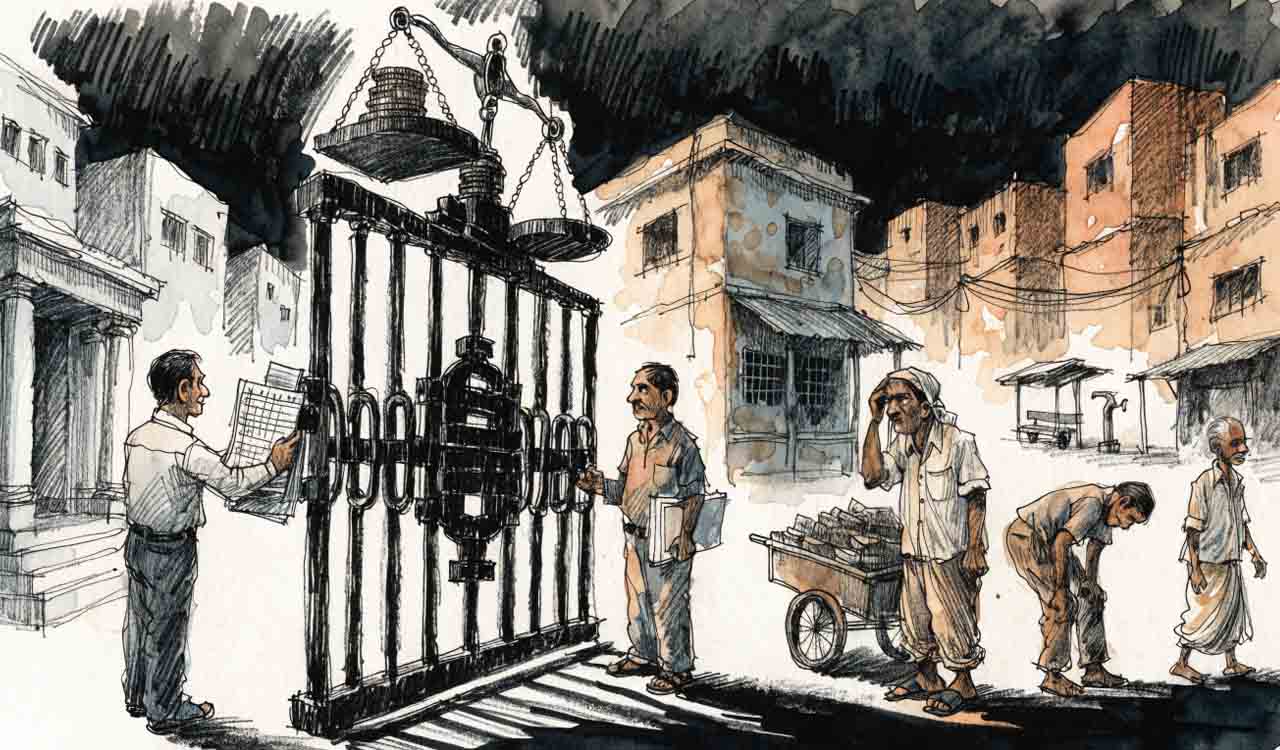
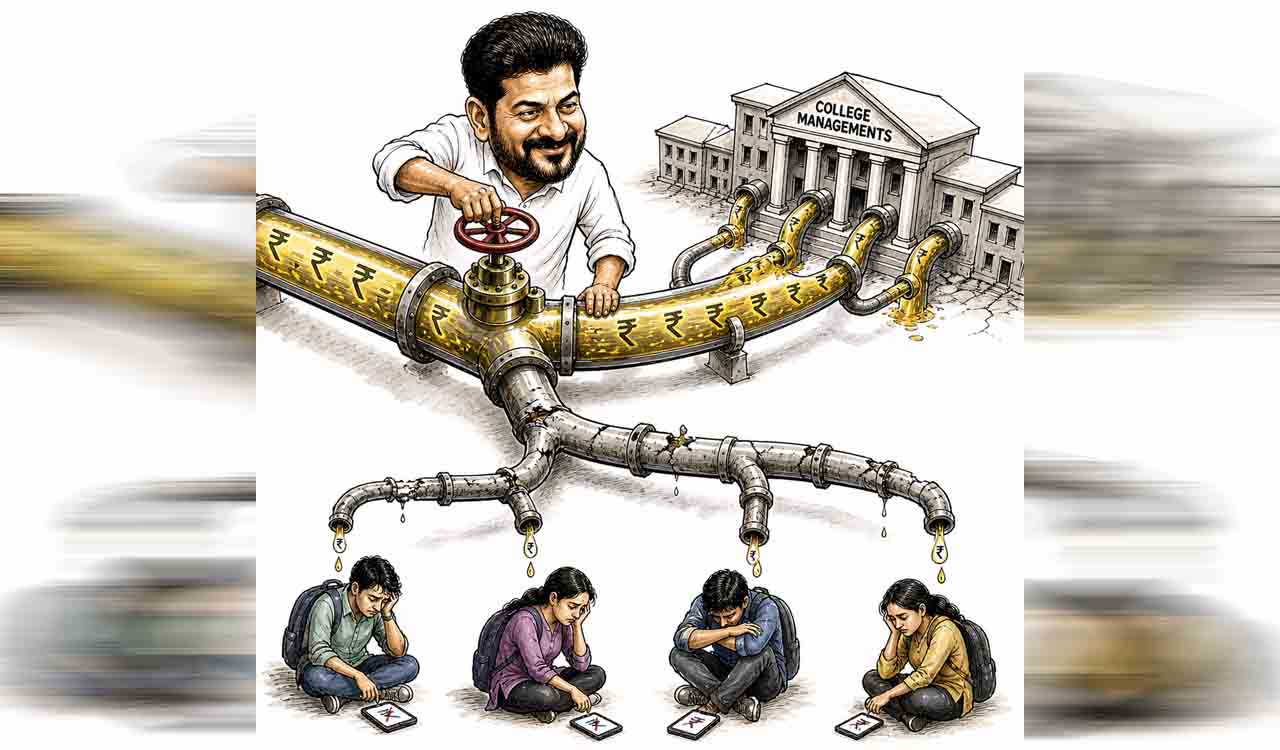
The shift to the Direct Benefit Transfer system, slated for full implementation by mid-2026, may leave students liable if government payments are delayed
This newfound wealth ignites a powerful economic cycle that begins with a profound rural transformation, in which permanent housing replaces traditional homes, and the burden of high-interest debt is finally eliminated. This financial stability paves the way for a second-generation revolution, enabling families to enrol younger siblings in superior schools and ensuring long-term educational continuity.
Ultimately, families achieve urban integration by becoming active consumers of technology, healthcare, and retail goods, effectively reinjecting wealth back into the broader economy and sustaining upward mobility.
Fee reimbursement is not merely a welfare handout. It is a ‘great economic multiplier’ that integrates marginalised citizens into the formal economy. Wealth generated in tech hubs like Hyderabad, Bengaluru, or even abroad, eventually trickles back to strengthen rural grassroots.
Arrears and Instability
Despite its noble intent, the scheme is currently in financial peril. Reports from the Telangana Education Commission in early 2026 indicate that arrears for the past four academic years have ballooned to between Rs 10,000 crore and Rs 12,000 crore. As of April 2026, RTI data reveal that Rs 557 crore is owed to minority students alone, with nearly 1.8 lakh applications pending.
The consequences of these funding delays are systemic and severe. Financial instability is forcing private colleges to compromise on academic standards and infrastructure, while simultaneously pushing impoverished families towards exploitative private loans to cover upfront costs. Consequently, the Education Commission warns of a looming crisis, as these mounting financial pressures threaten a sharp increase in dropout rates among vulnerable students.
DBT Dilemma, Legal Hurdles
The shift toward the Direct Benefit Transfer (DBT) system, slated for full implementation by mid-2026, represents a double-edged sword for educational equity. While the model is designed to enhance fiscal transparency by bypassing intermediaries and depositing funds directly into student accounts, it introduces a precarious layer of vulnerability. This systemic change shifts the financial burden of administrative delays onto the individual. If the government fails to disburse payments on schedule, students find themselves personally liable. This fiscal gap leaves them exposed to institutional penalties.
Furthermore, an interim order by the Telangana High Court in April allowed some private colleges to collect fees upfront. The long-standing “No Fee Payment” protection for SC, ST, and BC categories has been temporarily suspended until the government clears its dues. This leaves the most vulnerable students at risk of being excluded from higher education.
Strategic Interventions
To ensure the long-term viability of professional education and prevent a potential mass exodus of talent, the government must adopt a proactive and protective stance rather than abdicating its responsibilities. A robust strategic framework should begin with the introduction of interest-free “bridge loans” in partnerships with public sector banks, providing a vital cushion for students facing immediate fee demands.
Furthermore, the state must enact stringent legal protections preventing institutions from withholding academic certificates due to government arrears, thereby acting as the ultimate guarantor of a student’s professional future. For high-fee courses (above Rs 35,000), a differential DBT model should be introduced to ensure large sums are used specifically for tuition and not diverted for domestic emergencies.
Fee reimbursement is not a mere budgetary allocation. It is a commitment to social equity and collective progress. As Telangana aggressively pursues its vision of becoming a preeminent global technology hub, democratising access to high-quality education becomes a strategic imperative rather than a philanthropic gesture.
By removing financial barriers, the state is not merely offering a seat in a classroom; it is nurturing a diverse pipeline of talent capable of driving future innovation. Investing in every student’s potential, regardless of their economic background, is the most robust safeguard for the State’s long-term prosperity and social stability.
(The author is president, Telangana Adhyayana Samalochana Kendram [TASK])

Related News