Opinion: Missed the bus for decades — Rebuild India’s public transport, fix energy exploration
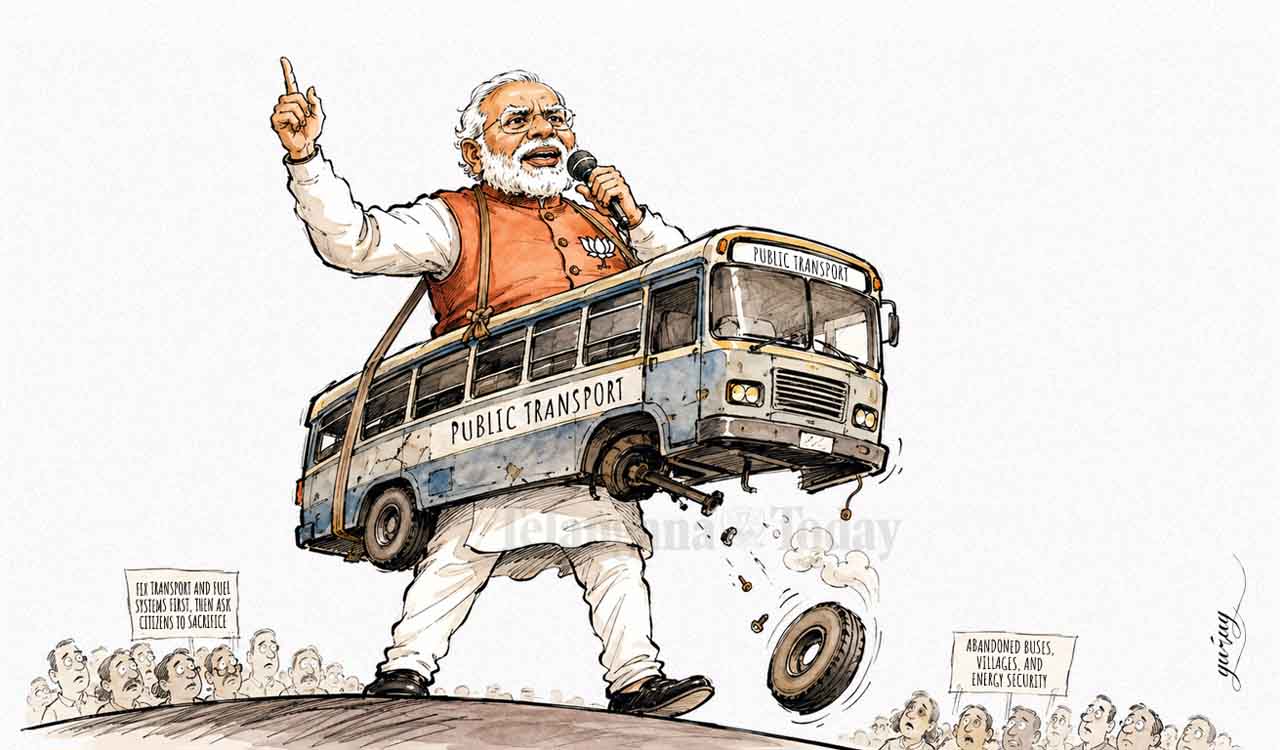
Prime Minister Narendra Modi is right: public transport is the rational choice. But governments cannot expect citizens to trust systems neglected for decades


By Mukkala Ravindar
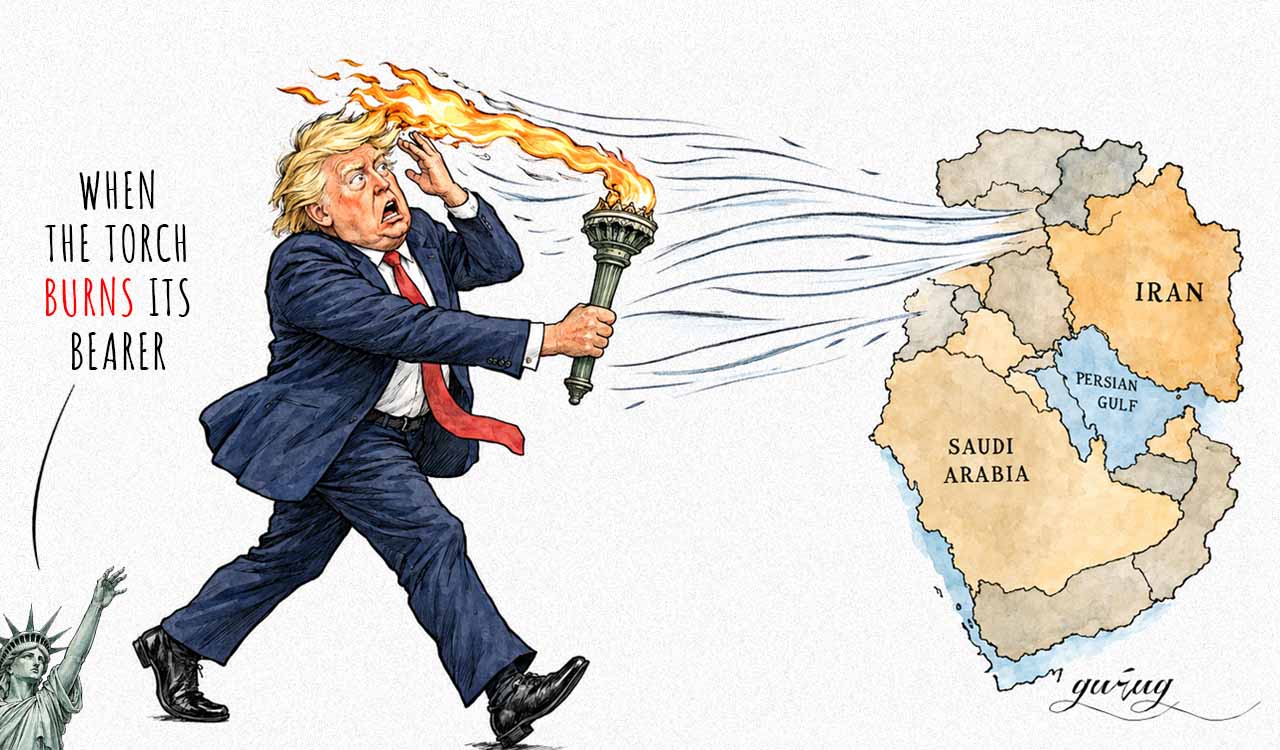
Prime Minister Narendra Modi’s call for Indians to embrace public transport — part of a broader austerity drive triggered by the precarious energy situation arising from the ongoing US-Israel-Iran conflict — is sound advice on one level. Public transport is cheaper, greener, and less congesting than private vehicles. But it carries a bitter irony: for decades, successive governments systematically starved public transport of investment, in cities and villages alike, while lavishing resources on roads and private vehicle infrastructure.
Also Read
The state now asks citizens to board a bus it largely forgot to maintain, and in rural India, a bus that often never came at all. On the energy front, the country’s domestic oil and gas exploration was equally neglected despite the nation never having reached its energy peak. This moment is uncomfortable. But if austerity provides the political cover to finally fix what is broken, it must be seized — and seized seriously.
Three Neglects, One Crisis
Urban transport is in distress. Against a city bus demand of 1,30,000 vehicles, only 46,000 formally operate across 127 cities — a deficit of nearly two-thirds. Of these, 36,000 serve just 53 large cities, leaving smaller towns virtually unserved. While Bengaluru manages 53 buses per 1,00,000 residents, which meets the national policy of 40 to 60 buses per lakh of population, Lucknow — a state capital — offers just six. The bus as a mode has collapsed to a mere 0.67% of all registered vehicles, while private vehicle registrations grew by nearly 10% annually over the last decade.
Rural transport tells an even starker story. Roads were built impressively — the Pradhan Mantri Gram Sadak Yojana received nearly Rs 4 lakh crore — but services to run on them were not. The only dedicated rural transport scheme, the Aajeevika Grameen Express Yojana, received a lifetime allocation of just Rs 127.5 crore. For every rupee spent on rural transport services, over Rs 3,000 went into building roads. Rural conveyance expenditure has nearly doubled — from 4% of household spending in 2011–12 to nearly 8% in 2023–24.
In Maharashtra, 8,700 of 14,000 state transport buses serve urban areas, leaving just 37% for the rural majority. Women, students, daily wage workers, and farmers pay the steepest price — a girl who cannot safely reach school drops out; a medical emergency without a bus becomes a tragedy.
Energy exploration has been the third neglect. Despite active policy measures, India saw a 2.5% drop in domestic crude production in 2024–25, with output falling 26% over the past decade as ageing wells declined. Only about 10% of India’s 3.36 million-square-kilometre sedimentary basin is under exploration. The principal reason is punitive taxation: fields under the pre-NELP (New Exploration Licensing Policy) regime — which account for 90% of domestic production — attract an effective tax rate of 70%, making reinvestment financially unviable. The government has launched successive bidding rounds under OALP (Open Acreage Licensing Policy), but attracting serious private and foreign investment remains an uphill challenge.
Roadmap for Reform
A National Public Transport Mission: Binding state-level targets — bus fleet ratios, rural route coverage, frequency standards, and last-mile benchmarks — is the essential starting point. India invests just 1.7% of GDP in public transport; China invests 5.5%. Bridging even half that gap would transform mobility.
Emergency bus fleet expansion: It is the most immediate need — at least 80,000 additional urban buses and 30,000 rural and intercity buses over five years, tied to electrification under the FAME (Faster Adoption and Manufacturing of [Hybrid and] Electric Vehicles) scheme. Pooled national procurement, as partially attempted under PM e-Bus Sewa, can reduce unit costs substantially.
Real austerity must begin with rebuilding infrastructure, reviving RTCs, expanding bus fleets, and reforming oil and gas taxation
Revive State Road Transport Corporations: The corporations formed under the RTC Act, 1950, were broken not by inefficiency but by political overloading and chronic underfunding. Reform must separate commercial operations from social mandates — where subsidised routes are mandated, governments must compensate fully. Boards must be professionalised and maintenance ring-fenced. Kerala and Himachal Pradesh, at their best, show this is achievable.
Rural transport as a rights issue: Every village connected by a Pradhan Mantri Gram Sadak Yojana (PMGSY) road must also be connected by a scheduled bus service — a policy mandate, not an aspiration. The Aajeevika Grameen Express Yojana deserves a tenfold funding increase and standalone status, decoupled from livelihood missions.
Formalise para-transit: Autorickshaws, e-rickshaws, shared jeeps should be treated as mobility partners rather than suppressing them to protect state monopolies. Route rationalisation to feed metro and BRT stations in cities, and formalised mini-van networks as last-mile connectors in rural areas, are proven approaches. Karnataka’s integration of BMTC buses with Namma Metro offers a template.
Design for the excluded: Low-floor accessible buses, adequate lighting and CCTV at stops, dedicated women’s compartments, and rural healthcare connectivity are essential. Antenatal visits and institutional deliveries depend on transport that simply does not exist in too many districts.
Rationalise oil and gas taxation: Taxing production based on actual output rather than estimated extraction would remove the single biggest deterrent to reinvestment in existing fields and attracting fresh exploration capital. Without this correction, no bidding round will achieve its ambition.
The Honest Ask
The Prime Minister is right that public transport is the rational choice — for the economy, the environment, and for equity. But a government cannot ask citizens to board a system it neglected for 30 years, nor draw fuel from reserves it failed to replenish, and then claim moral credit for their compliance.
India’s working poor — the daily-wage worker in Patna, the student in Coimbatore, the vegetable farmer outside Nashik — have already been absorbing the costs of these failures through longer commutes, higher fares, lost wages, and reduced life opportunities. Any genuine austerity agenda must honestly reckon with who has been sacrificing, and for how long.
Fix the infrastructure. Build the fleet. Revive the corporations. Connect the villages. Integrate para-transit. Rationalise oil and gas taxation. Then ask citizens to do their part. That is not just sound policy. It is basic governance — and long overdue.
(The author is former Executive Director, TGSRTC)

Related News