Opinion: The 2026 IT rules quietly threaten India’s democratic voice
The IT rules do not silence voices directly; they create conditions in which silence is safer. And when speech is placed under watch, democracy itself begins to fade from view


By Geetartha Pathak
At a time when democracies across the world are grappling with misinformation, artificial intelligence, and the rapid evolution of digital ecosystems, India stands at a critical crossroads. The proposed amendments to the Information Technology Rules, 2026, are being framed as a necessary response to emerging technological threats. But beneath the language of regulation and responsibility lies a deeper, more troubling shift — one that could fundamentally alter the relationship between the state, the press, and the citizen.
This is no longer just about governing digital platforms. It is about redefining the boundaries of speech itself.
The government argues that the new rules are essential to curb misinformation, deepfakes, and harmful online content. On the surface, this objective appears both reasonable and necessary. The digital age has indeed complicated the idea of truth, and the proliferation of synthetic media poses genuine risks. However, the tools proposed to address these challenges risk creating a system in which the cure may prove more damaging than the disease.
Coercive Compliance
One of the most concerning provisions is the imposition of an extremely narrow compliance window—reportedly as short as three hours—for content takedown. Such a mandate transforms platforms from neutral intermediaries into anxious enforcers. Faced with the threat of legal liability, they are unlikely to deliberate or verify. Instead, they will remove content first and ask questions later. This is not regulation. It is coercive compliance.
In such an environment, the logic of survival will inevitably override the principles of free expression. Platforms will err on the side of caution, leading to widespread over-censorship. Content that is critical, investigative, or even mildly controversial may be taken down—not because it is unlawful, but because it is risky. For independent journalism, this shift is particularly alarming.
Invading Editorial Domain
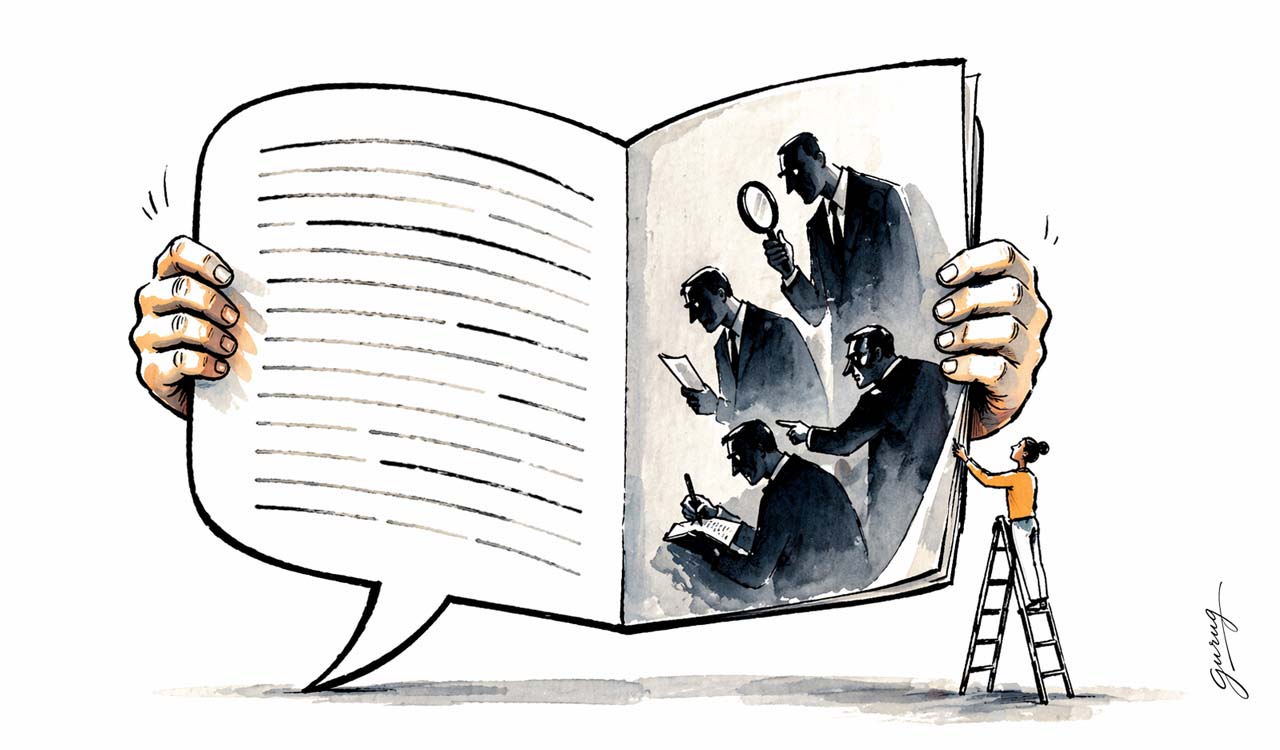
The proposed rules blur the distinction between professional news organisations and independent digital creators. By expanding the definition of “publishers” and bringing a wide range of content creators under regulatory scrutiny, the state effectively extends its influence into the editorial domain. This raises a fundamental question: who gets to decide what qualifies as news?
When journalists begin to self-censor, editors hesitate before publishing, and citizens weigh the risks of expressing dissent, freedom of speech doesn’t vanish dramatically. It erodes quietly
Once that power begins to rest, directly or indirectly, with the government, the implications are profound. The authority to define news inevitably becomes the authority to define truth. And when the state assumes that role, dissenting narratives are no longer merely contested—they are delegitimised.
Equally troubling is the architecture of traceability and metadata requirements embedded in the proposed amendments. While presented as mechanisms to ensure accountability, these measures risk undermining one of the most vital pillars of journalism: source protection. Investigative reporting often depends on anonymity and confidentiality.
If digital communication becomes traceable by design, sources will think twice before speaking, and journalists will think twice before pursuing sensitive stories. The result is not overt censorship, but something more insidious—a chilling effect.
When journalists begin to self-censor, when editors hesitate before publishing, when citizens weigh the risks of expressing dissent, freedom of speech does not disappear dramatically. It erodes quietly.
This is the true danger of the 2026 IT Rules. They do not silence voices directly; they create conditions in which silence becomes the safer choice.
Unaccountable Censorship
Another critical dimension of these amendments is the outsourcing of regulatory enforcement to platforms and, by extension, to algorithms. Automated systems, designed to detect and flag problematic content, are inherently ill-equipped to interpret nuance, satire, or context. In a high-pressure compliance environment, these systems will default to caution, disproportionately targeting content that falls into grey areas.
This leads to a new form of censorship—one that is invisible, unaccountable, and difficult to challenge. Content may vanish without explanation. Appeals may be delayed or ineffective. The process becomes opaque, leaving both creators and audiences in the dark.
Such a system fundamentally alters the public sphere. It replaces deliberation with discretion, and accountability with opacity.
Supporters of the amendments may argue that all rights are subject to reasonable restrictions. This is true. But the principle of reasonableness demands proportionality, transparency, and oversight. The current framework, however, appears to tilt heavily towards executive control, with limited safeguards against misuse.
The absence of robust judicial oversight in content regulation is particularly concerning. Decisions that affect fundamental rights should not rest solely within executive mechanisms or be delegated to private platforms under pressure. Without independent checks and balances, the potential for arbitrary action increases significantly.
It is also important to situate these developments within a broader trajectory. Over the past decade, there has been a gradual but discernible expansion of state influence over digital spaces. From intermediary guidelines to data governance frameworks, the direction has consistently pointed towards greater control. The 2026 amendments appear to be another step along this path.
Digital Democracy
The question, therefore, is not just about individual provisions. It is about the kind of digital democracy India seeks to build.
A democratic society cannot function on conditional speech. Freedom of expression is not merely a legal guarantee; it is the foundation upon which public discourse rests. It enables citizens to question authority, journalists to hold power accountable, and societies to evolve through debate.
Yes, misinformation must be addressed. Yes, technological harms must be mitigated. But these objectives must be pursued without compromising the core values that define a democracy.
The challenge lies in striking a balance—one that protects both truth and freedom. This requires a regulatory framework that is transparent, proportionate, and subject to independent oversight. It requires trust in citizens, not suspicion of them. Most importantly, it requires a recognition that dissent is not a threat to democracy—it is its lifeblood.
If the proposed IT Rules are implemented without significant safeguards, India risks creating a digital ecosystem where speech is constantly monitored, journalism is perpetually constrained, and citizens are subtly discouraged from speaking freely. That is not regulation. That is restraint.
And history has shown, time and again, that when speech is placed under watch, democracy itself begins to fade from view.
(The author is a senior journalist from Assam)

Related News
-
Opinion: Uncounted and Unprotected — India’s seasonal migrants and Digital Census
-
Elon Musk reveals proposed X feature to send money with a long press
-
Adani Group refutes social media claims over alleged tree felling near Bhimashankar Temple
-
Opinion: Poverty has no caste—the unspoken story of India’s Brahmins